
“If We Once Harvested Rice from the Soil, Corn from the Soil, and Fish from the Sea, Today We Are Beginning to Harvest from the Air”
Prof. Arif Satria, Head of Indonesia’s National Research and Innovation Agency (BRIN), Makassar, June 7, 2026
PELAKITA.ID – Amid the many challenges facing Indonesia today—from food, energy, and water security to the sweeping transformations brought by global technological change—Chairman of the Indonesian Association of Muslim Intellectuals (ICMI) and Head of the National Research and Innovation Agency (BRIN), Prof. Dr. Arif Satria, reminded the nation that the future does not emerge by chance.
The future is created by those who possess the courage to think far ahead, work tirelessly, and produce innovations that benefit humanity.
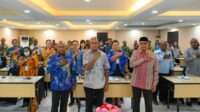
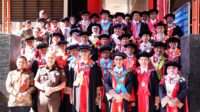
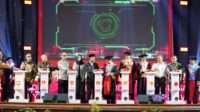
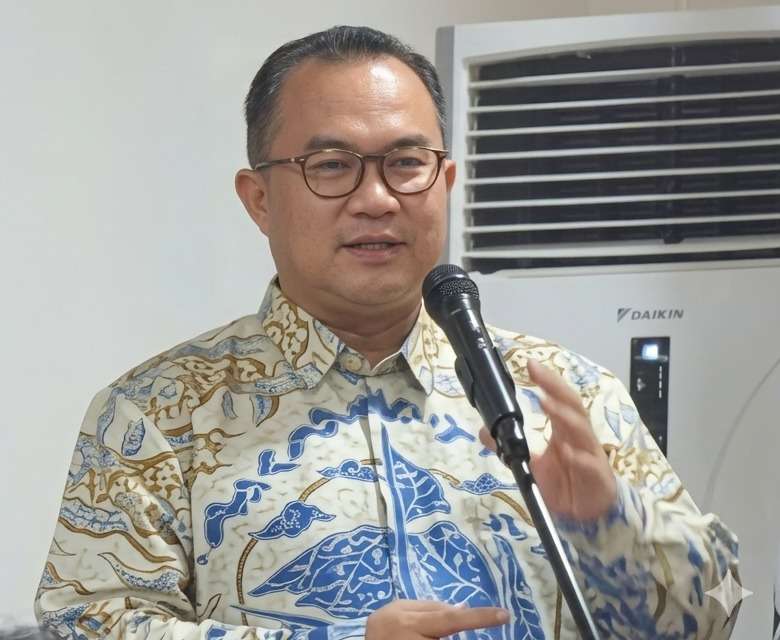
Prof. Arif delivered this message during his National Address at the inauguration of the leadership of the Center for Information and Development Studies (CIDES) of ICMI South Sulawesi at the State University of Makassar on Sunday, June 7, 2026.
Speaking before academics, university rectors, deans, regional leaders, bureaucrats, entrepreneurs, and ICMI activists, Prof. Arif began his address with an inspiring story about a scientist of Palestinian descent who grew up as a refugee in Jordan.
Living in a refugee camp, the scientist experienced firsthand the difficulty of obtaining water in an arid desert environment. The experience left a deep impression on him and remained with him into adulthood.
Years later, after becoming a scientist, he dedicated his life to solving the very problem he had once endured.
The result was extraordinary. After years of research, he succeeded in developing a technology capable of harvesting water directly from the air—an innovation that fundamentally changed the way humanity views natural resources.
“If we once harvested rice from the soil, corn from the soil, and fish from the sea, today we are beginning to harvest from the air,” Prof. Arif said.
According to him, the story demonstrates a simple but powerful truth: major innovations are born from a genuine concern for real problems faced by society.
Today, the world is entering a new era in which humanity is not only capable of extracting water from the atmosphere, but also capturing carbon dioxide (CO₂), harvesting oxygen, and developing precision agricultural systems that meet the specific needs of individual plants.
Technological progress is driving humanity toward an age of personalization. In agriculture, the precise fertilizer, water, and carbon requirements of each plant can now be calculated. In healthcare, treatments are increasingly based on genomics, allowing therapies to be tailored to an individual’s genetic characteristics.
“We once assumed that all plants required the same amount of fertilizer. Today we know that every plant has different needs. Everything is moving toward precision and personalization,” he explained.
Yet despite these advances, Prof. Arif noted that the contribution of Muslim scientists to the global scientific landscape remains relatively limited. The number of Muslim Nobel laureates is still disproportionately small compared to the immense potential of the Muslim world.
This reality is particularly striking given that Islamic civilization once stood at the center of global scientific development.
During the Abbasid era, the renowned Bayt al-Hikmah (House of Wisdom) emerged as a center of literacy, translation, scholarship, and scientific advancement.
The remarkable progress achieved during that period was fueled not by isolation, but by openness to knowledge from diverse civilizations, including ancient Greece.
“History teaches us that the greatness of Islamic civilization was built upon intellectual openness. Muslim scholars were never afraid to learn from anyone, anywhere,” he said.
For this reason, Prof. Arif encouraged young Muslims to draw inspiration from the achievements of great scientists around the world.
According to him, no major innovation is born overnight. Every breakthrough requires patience, resilience, perseverance, and extraordinary endurance.
He cited the example of Japanese researcher Susumu Kitagawa, who developed Metal-Organic Frameworks (MOFs)—a revolutionary material capable of storing gases far more efficiently than conventional technologies.
The research took nearly four decades before receiving global recognition.
“To create great benefits, great effort is required. Many of the world’s most important discoveries are the result of decades of research,” Prof. Arif said.
For that reason, he argued, the success of a scientist should not be measured solely by academic titles or credentials, but by the extent to which their work benefits society.
He referenced a saying of the Prophet Muhammad (peace be upon him): “The best of people are those who are most beneficial to others.”
In his view, the greater a person’s knowledge, authority, and position, the greater their responsibility to generate benefits for society.
“If a professor, a doctoral scholar, a regent, a governor, a minister, or even a president possesses greater knowledge and authority, then the benefits they produce should also be greater,” he emphasized.
Prof. Arif then connected this principle to the strategic role of ICMI.
He described ICMI as a unique organization because it brings together diverse segments of society within a single platform. Its members include academics, bureaucrats, regional leaders, entrepreneurs, politicians, social activists, and community figures.
This diversity, he argued, should be transformed into a collaborative force capable of addressing national and regional development challenges.
Regional leaders understand local needs. Academics possess research and analytical expertise. Entrepreneurs understand markets and industry dynamics. When these groups are brought together in productive dialogue, meaningful and practical solutions can emerge.
“ICMI must become a hub—a center that brings these different strengths together to build regional innovation ecosystems,” he said.
Turning to economic development, Prof. Arif referred to modern growth theories that place research and innovation at the heart of national progress.
Countries with high levels of innovation tend to enjoy higher per capita incomes, stronger universities, and greater economic competitiveness.
Conversely, nations that fail to innovate often remain trapped in technological dependence.
That is why, he stressed, Indonesia must be bold enough to cultivate a stronger culture of research and innovation.
As an example, he pointed to China’s transformation over the past four decades from a developing country into one of the world’s leading technological powers.
This achievement was not driven by economic capital alone, but by massive investments in research, technological development, and human capital.
China has become not merely a consumer of technology but a creator of technology.
Today, the country produces millions of patents annually, surpassing many advanced economies.
“The number of patents is one of the indicators that reflects a nation’s level of progress,” he said.
According to Prof. Arif, Indonesia has the same opportunity if it can seriously strengthen its innovation ecosystem.
However, to catch up with leading nations, Indonesia cannot afford to move only in a linear fashion. The country requires technological leapfrogging, a vision long championed by the late B.J. Habibie.
Approaches such as reverse engineering, the rapid adoption of emerging technologies, and the ability to anticipate global technological trends will be crucial.
This is why BRIN is currently developing a technological foresight approach—an effort to map future technologies and anticipate changes that may occur over the next five, ten, or even twenty years.
Through this approach, national research is expected not only to solve today’s problems but also to prepare Indonesia for tomorrow’s challenges.
Toward the end of his address, Prof. Arif delivered what may have been his most powerful message.
The future, he said, can never be predicted with complete certainty. Yet human beings possess the ability to create their own future.
He quoted the famous observation by Alan Kay:
“The best way to predict the future is to create it.”
The future should not be awaited—it should be built.
For that reason, universities, research institutions, regional governments, businesses, and ICMI must work together to become architects of Indonesia’s future.
They must not remain mere spectators of global change. They must become active participants who contribute knowledge, innovation, and meaningful solutions for the nation.
Only in this way can Indonesia make the leap toward becoming a developed country and realize its vision of Golden Indonesia 2045.
— Edited by K. Azis