
The Future Is No Longer Coming—It Is Here
Our world has turned.
MARITIMEPOSTS.COM – Climate change is no longer a distant warning delivered by scientists or debated by politicians. It is no longer a prediction. It is a reality unfolding before our eyes.
The past two years have offered a disturbing glimpse into the future: catastrophic wildfires consuming entire regions, flash floods sweeping away communities, prolonged droughts destroying harvests, and heat waves pushing human survival to its limits. Across continents, places once considered safe are becoming increasingly vulnerable.
Within the next decade, many of today’s climate disasters may become tomorrow’s baseline.
The question is no longer whether climate change will transform our world. The question is whether we can transform ourselves quickly enough to survive it.
Humanity possesses remarkable ingenuity. We already have many of the technologies, strategies, and scientific tools needed to adapt. Yet adaptation requires more than innovation. It requires foresight, cooperation, and the political courage to act before disaster strikes.
The future will not wait.
A Planet Reshaped by Rising Seas
One of the most misunderstood realities of climate change is the permanence of carbon dioxide.
Once released into the atmosphere, carbon can remain there for centuries, trapping heat long after the factories, vehicles, and power plants that emitted it have disappeared. Even if global emissions ceased tomorrow, the climate system would continue responding to the carbon already accumulated in the atmosphere.
The consequences are profound.
Scientists warn that several meters of sea-level rise may be unavoidable over the coming centuries. Such a transformation would redraw the map of the world. Hundreds of coastal cities could face partial or complete inundation. Ports, industrial centers, transportation hubs, and cultural landmarks would be forced to adapt, relocate, or disappear.
But the crisis extends far beyond coastlines.
Mass displacement would trigger economic disruption, political instability, and social upheaval. Entire populations could be forced inland, creating unprecedented pressure on housing, infrastructure, and public services.
The challenge before us is not merely protecting shorelines. It is preparing civilization itself for a different geographic reality.
The Dutch Lesson: Learning to Live with Water
Few nations understand this challenge better than the Netherlands.
Roughly two-thirds of the country is vulnerable to flooding, and about one-third lies below sea level. Yet despite these vulnerabilities, the Dutch are among the most prepared people on Earth for rising seas.
For centuries they have constructed dikes, dams, storm surge barriers, locks, pumps, and sophisticated flood-control systems. More than 22,000 kilometers of dikes protect communities from the sea.
Yet the most important Dutch innovation is not engineering.
It is philosophy.
Rather than attempting to permanently defeat water, the Netherlands increasingly seeks to coexist with it.
Through its renowned “Room for the River” program, the country has deliberately expanded floodplains, relocated infrastructure, and restored natural river systems. In some areas, land was surrendered so that rivers could safely overflow without threatening major cities.
This approach reflects a profound shift in thinking. Adaptation is no longer about reacting to disasters after they occur. It is about anticipating future risks and redesigning landscapes before catastrophe arrives.
The Dutch plan not for the next election cycle but for the next century.
That distinction may prove decisive.
Beyond Politics: Planning for Generations
Climate adaptation often fails because political systems are designed for short-term decision-making.
Governments frequently operate within four- or five-year electoral cycles, while climate risks unfold across decades.
Recognizing this mismatch, the Netherlands established the Delta Programme, a long-term framework that places climate adaptation beyond partisan politics. Scientific expertise, engineering assessments, and future projections guide decision-making rather than shifting political priorities.
The result is continuity.
Infrastructure built today is evaluated according to conditions expected many decades from now.
For a challenge as large as climate change, this type of institutional thinking may be just as important as technological innovation.
When Adaptation Goes Wrong
The consequences of poor adaptation planning can be devastating.
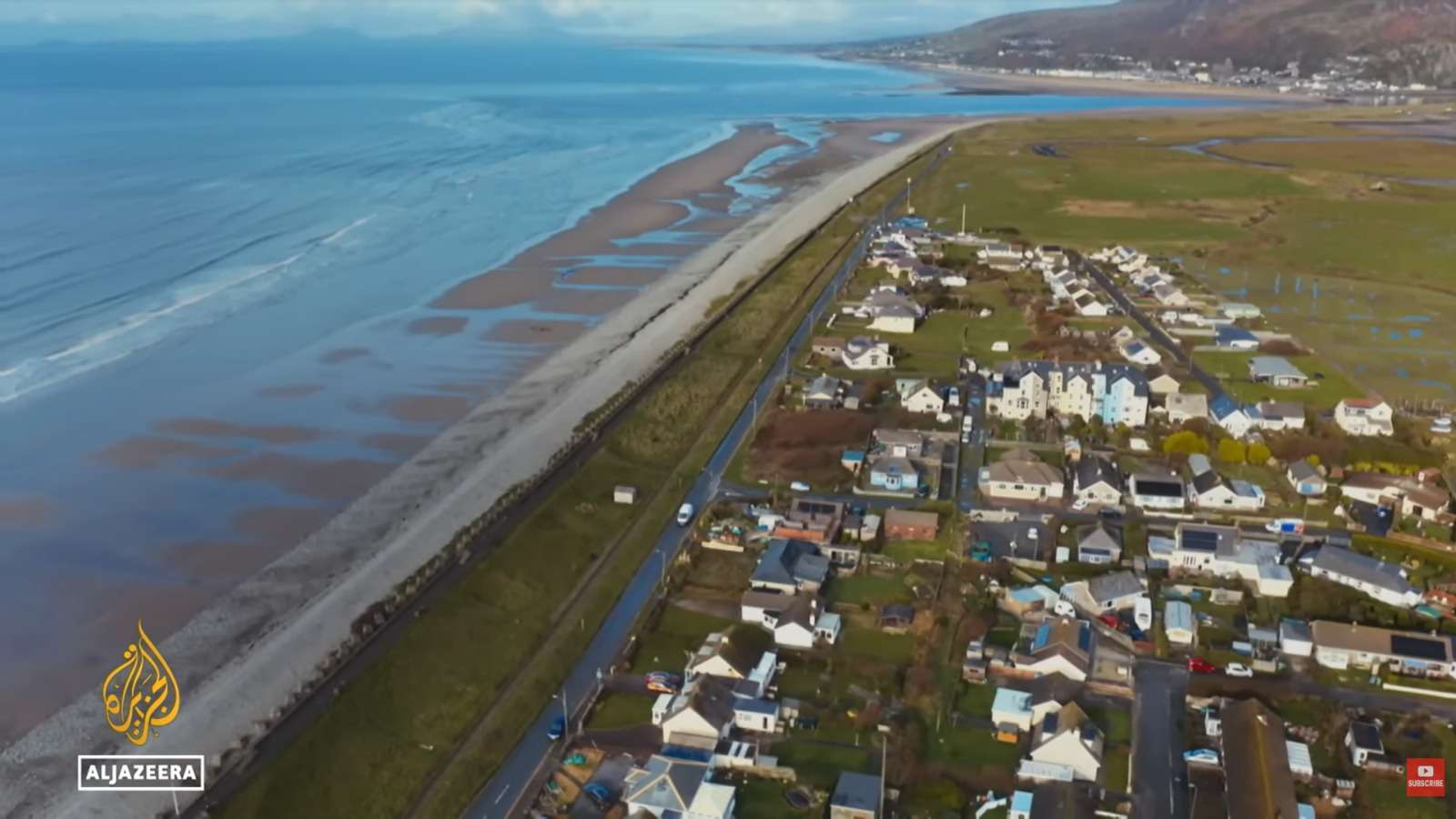
The village of Fairbourne in Wales offers a cautionary tale.
Facing rising sea levels and increasing flood risk, local authorities concluded that defending the community indefinitely would be financially unsustainable. In 2014, officials announced that after 2054, the village would no longer be protected from the sea.
The decision may have been economically rational.
The implementation was not.
Residents received little clarity regarding relocation, compensation, or long-term support. Property values collapsed. Families saw their life savings evaporate. Uncertainty became a permanent feature of daily life.
Fairbourne demonstrates that climate adaptation is not merely an engineering challenge. It is a social challenge.
People can adapt to change. What they struggle to adapt to is uncertainty.
As rising seas threaten communities worldwide, governments will increasingly face difficult questions about managed retreat. The lesson from Fairbourne is clear: if relocation becomes necessary, it must be planned with transparency, fairness, and dignity.
Bangladesh: The Power of Social Resilience
While wealthy nations often dominate discussions about climate adaptation, some of the most valuable lessons come from countries with far fewer resources.
Bangladesh sits on the front lines of climate change.
Cyclones, coastal erosion, flooding, heat waves, and rising seas threaten millions of people. Large portions of the country are densely populated river deltas where climate impacts are already a daily reality.
Yet Bangladesh has become one of the world’s most remarkable adaptation success stories.
The country’s greatest defense is not concrete or steel.
It is community.
Schools double as cyclone shelters. Children receive disaster preparedness education from an early age. Volunteer networks operate throughout vulnerable regions. Communities coordinate evacuation procedures and emergency responses with remarkable efficiency.
When disasters strike, Bangladeshis do not respond individually. They respond collectively.
As a result, deaths from cyclones and floods have fallen dramatically compared with previous decades.
The lesson is powerful.
Climate resilience cannot be measured solely by the height of sea walls or the strength of infrastructure. It must also be measured by social cohesion, trust, and the willingness of communities to protect one another.
Florida’s Billion-Dollar Dilemma
On the opposite side of the world, climate adaptation presents a different challenge.
Florida possesses some of the most valuable coastal real estate on Earth—and some of the most vulnerable.
In places such as the Florida Keys, rising seas are already flooding roads, neighborhoods, and critical infrastructure. Residents increasingly find themselves trapped between economic reality and environmental inevitability.
Billions of dollars are being considered for elevating roads, raising homes, and reinforcing infrastructure.
Yet a difficult question remains:
How much should society spend defending places that may eventually become uninhabitable?
This dilemma lies at the heart of climate adaptation worldwide.
Some locations may be too expensive to abandon. Others may be too expensive to defend. Between those extremes lies a growing need for pragmatic, evidence-based decision-making.
Adaptation will require difficult choices. Not every coastline can be protected forever.
Fire: The Emerging Threat
Water is not the only danger.
In 2023, more than a billion acres of land worldwide were affected by wildfires, shattering previous records.
Climate change is creating the perfect conditions for larger and more destructive fires. Longer growing seasons produce more vegetation. Longer droughts transform that vegetation into fuel.
Across Europe, wildfire experts warn that regions once considered relatively safe may soon face risks previously associated with Mediterranean climates.
Remarkably, some solutions are surprisingly simple.
In Catalonia, Spain, authorities increasingly use “fire flocks”—sheep and goats that graze vegetation and reduce fuel loads naturally. These animals create fire-resistant landscapes while supporting local agriculture and biodiversity.
The approach highlights a broader truth about adaptation.
Not every solution requires advanced technology. Sometimes resilience emerges from combining traditional practices with modern scientific understanding.
The Greatest Threat: Hunger
Ultimately, however, the climate challenge that could have the largest impact on human civilization is neither flood nor fire.
It is food.
Across Sub-Saharan Africa, climate change is disrupting agricultural systems that support hundreds of millions of people. Droughts arrive more frequently. Floods destroy crops before communities can recover from previous disasters.
Countries such as Malawi face a particularly difficult future.
Yet even here there are reasons for hope.
Farmers are learning to diversify crops, harvest rainwater, improve soil health, and cultivate more resilient farming systems. Communities that once depended on a single harvest now produce food throughout the year.
These adaptations are often small, local, and inexpensive.
But multiplied across thousands of villages, they become transformative.
Ensuring food security for the billions of people living in climate-vulnerable regions may be one of humanity’s most important tasks during the coming decades.
We Are Not Safe Until Everyone Is Safe
One of the most important lessons emerging from climate adaptation is that resilience cannot be built in isolation.
A flood in Bangladesh, a drought in Malawi, a wildfire in Spain, or a hurricane in Florida may appear to be local events. In reality, they are part of a global system.
Food shortages trigger migration.
Migration affects economies.
Economic instability influences political systems.
Climate impacts ripple across borders.
This interconnected reality means that adaptation is not merely a national responsibility. It is a global one.
Investing in resilience in vulnerable countries is not charity.
It is self-interest.
A stable world depends upon shared adaptation.
The Defining Challenge of the Twenty-First Century
Humanity will survive climate change.
But survival alone is not the goal.
History is filled with civilizations that failed because they could not adapt to changing conditions. The coming decades will test whether modern civilization can avoid the same fate.
Scientists warn that billions of people could eventually face living conditions unlike anything humans have previously endured. The scale of adaptation required is unprecedented.
Yet the future remains unwritten.
We know how to build resilient cities. We know how to manage water. We know how to reduce disaster risks. We know how to strengthen food systems. We know how to support vulnerable communities.
The challenge is not a lack of knowledge.
It is a lack of urgency.
Climate adaptation is no longer a discussion about the future. It is a task of the present.
Because if civilization declines under the weight of climate disruption, it will not be because we lacked solutions.
It will be because we failed to use them.
And the world our children inherit will be shaped by the choices we make today.
___
The Editorial Team