
MARITIMEPOSTS.COM – Wakatobi is often celebrated as one of Indonesia’s marine jewels. Stretching across turquoise waters in Southeast Sulawesi, the archipelago is renowned for its coral reefs, rich biodiversity, and maritime culture.
Yet behind its beauty lies a growing reality: Wakatobi is among Indonesia’s most climate-vulnerable regions.
As a chain of small and remote islands, Wakatobi faces mounting threats from rising sea levels, changing weather patterns, coastal erosion, saltwater intrusion, and increasing ocean temperatures. These challenges are not distant projections but daily realities experienced by communities whose lives depend on healthy coastal and marine ecosystems.
Recognizing these vulnerabilities, The COMMIT Foundation (Yayasan COMMIT), in collaboration with the Japan International Cooperation Agency’s Capacity Development for Climate Change Strategies (JICA-CDCCS), undertook an ambitious research initiative aimed at strengthening climate resilience at the community level.
The project sought not only to understand how local communities are already adapting to climate change but also to develop a framework capable of measuring and supporting those efforts over the long term.
Communities as the First Responders
Climate adaptation often begins long before government policies are drafted or international funding arrives. Across Wakatobi, communities have developed their own responses to environmental change, drawing on local knowledge and generations of experience living with the sea.
The research team set out to document these grassroots initiatives.
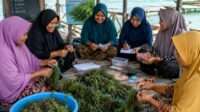
Through field surveys conducted across 20 villages on the islands of Wangi-Wangi, Kaledupa, and Tomia, community facilitators identified no fewer than 49 different activities related to climate adaptation and environmental management.
Some initiatives focused on protecting coastal ecosystems, while others involved managing freshwater resources, conserving forests, improving agricultural practices, or strengthening community preparedness for environmental shocks. Together, these actions revealed a crucial lesson: resilience is already being built at the village level, often quietly and without formal recognition.
Rather than starting from scratch, the challenge was to understand, measure, and strengthen what communities were already doing.
Building a Framework for Resilience
The project began in late 2012 with consultations involving local government officials, community leaders, researchers, and development practitioners.
The goal was to design a Monitoring, Evaluation, and Reporting (MEP) framework capable of tracking community resilience in a way that was both scientifically credible and locally meaningful.
Unlike conventional monitoring systems that focus primarily on infrastructure or economic indicators, the proposed framework recognized the interconnected nature of Wakatobi’s ecosystems. Forests, terrestrial landscapes, coastal zones, and marine environments were all considered essential components of resilience.
To develop the framework, The COMMIT Foundation organized a series of expert discussions involving academics, policymakers, and climate specialists.
These consultations helped shape the conceptual foundation of the MEP system and ensured alignment with broader climate adaptation strategies, including Indonesia’s National Action Plan for Climate Change Adaptation (RAN-API).
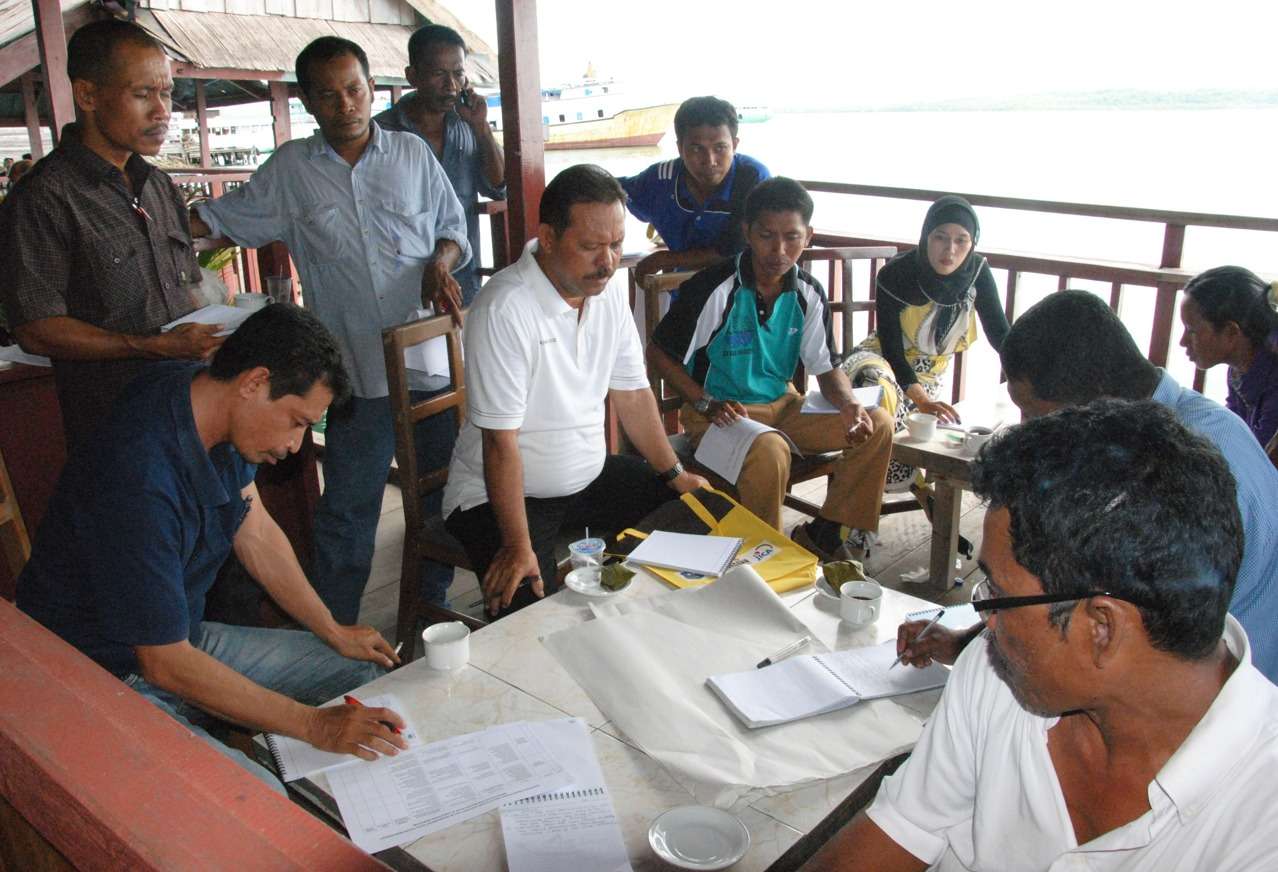
A major milestone occurred in March 2013, when stakeholders gathered in Wangi-Wangi for a workshop to share findings from the field and discuss how local adaptation initiatives could be integrated into government planning processes. The discussions highlighted the importance of connecting community experiences with policy frameworks, ensuring that adaptation strategies reflected realities on the ground.
Aligning Local Action with Green Development
One of the most significant aspects of the research was its close collaboration with the Wakatobi Regency Government.
At the time, the local administration was promoting a vision centered on “Green Policy” and “Green Strategy” principles. The research team worked to ensure that the proposed monitoring framework complemented these objectives while providing practical tools for measuring progress.
This collaboration reflected an increasingly important principle in climate governance: resilience cannot be built by governments alone. Effective adaptation requires partnerships that connect local knowledge, scientific expertise, and policy support.
The process also strengthened local capacity by involving community facilitators and government representatives throughout the research cycle. Rather than treating communities as research subjects, the initiative positioned them as active participants in identifying challenges and developing solutions.
Testing and Refining the Model
The framework underwent multiple stages of review and refinement. Draft instruments were discussed with JICA-CDCCS experts and local stakeholders before being tested under real field conditions.
This trial phase allowed researchers to identify practical challenges, refine indicators, and ensure that the system could accurately capture the realities of island communities. Feedback from village residents and local officials proved invaluable in making the framework both relevant and usable.
The final stage involved a mini-workshop where findings and recommendations were consolidated, paving the way for a monitoring system capable of supporting long-term adaptation efforts.
Lessons for Indonesia’s Small Islands
Although conducted more than a decade ago, the research remains highly relevant today. Climate risks facing small island communities have only intensified, making the need for effective adaptation strategies even more urgent.
The initiative demonstrated that resilience is not simply about building seawalls or responding to disasters. It is also about strengthening social networks, protecting ecosystems, preserving local knowledge, and creating systems that allow communities to monitor and evaluate their own progress.
For Wakatobi, the project offered something particularly valuable: a mechanism for turning scattered local initiatives into a coherent strategy for resilience.
As climate change continues to reshape coastal and island environments across Indonesia, the lessons from Wakatobi serve as a reminder that communities on the frontlines are not merely victims of environmental change. They are innovators, knowledge holders, and essential partners in building a more resilient future.
The challenge for policymakers and development institutions is to ensure that these local voices remain at the center of climate adaptation efforts. In Wakatobi, The COMMIT Foundation’s research showed that meaningful resilience begins not in distant boardrooms, but in villages where people live every day with the realities of a changing climate.
This version is suitable for a magazine feature, development publication, NGO report, or climate journalism outlet. It emphasizes human stories, policy relevance, and the significance of community-based adaptation rather than simply presenting the project chronology.
Author: Kamaruddin Azis