

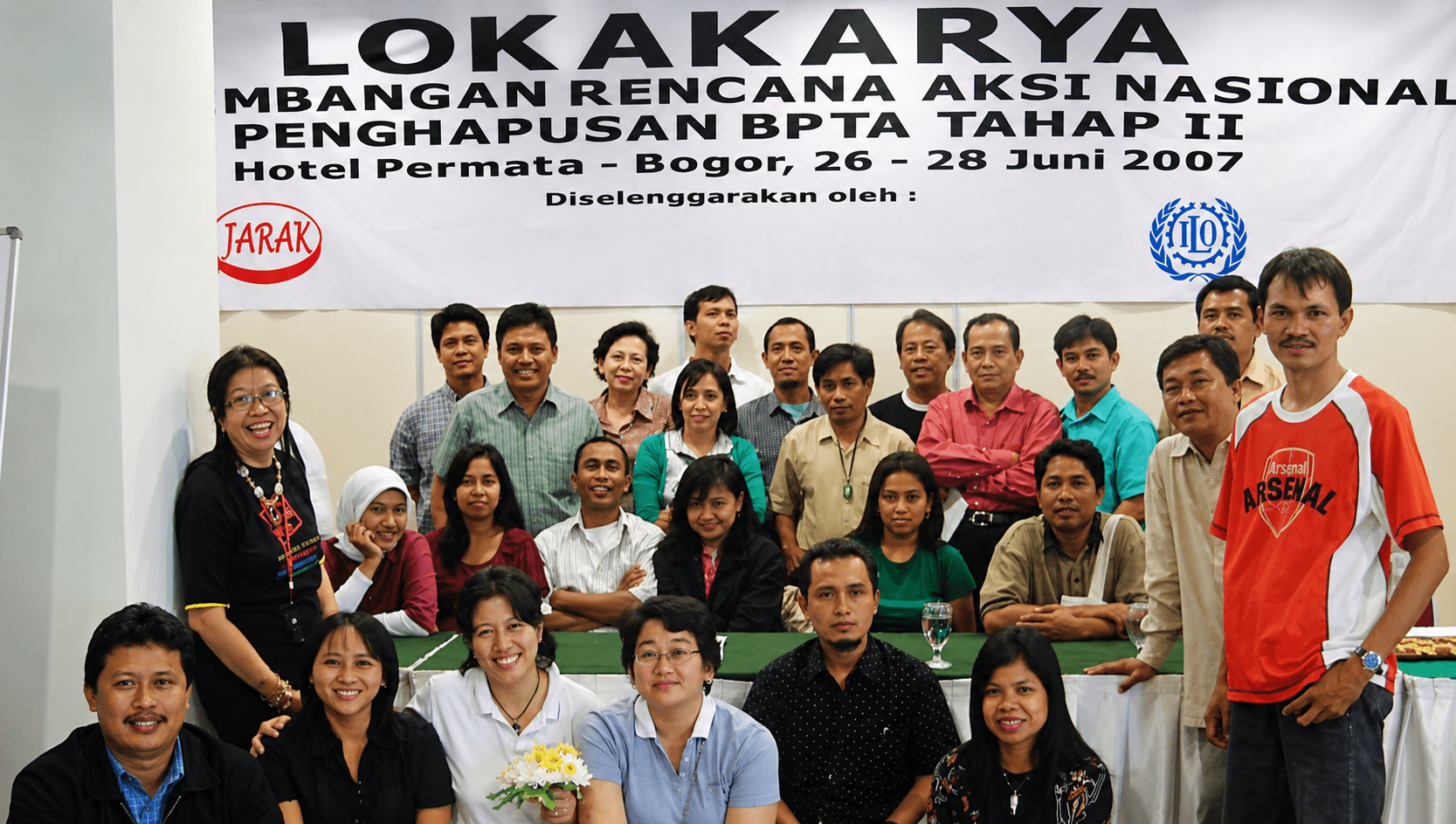
About 20 years ago, both personally and through the organization I founded, LISAN (Institute for Investigation, Study, Advocacy, Media and Children), I became part of the advocacy network for Domestic Workers and Child Domestic Workers. At that time, LISAN implemented a Community-Based Child Labor Action Research Program for children working at Pannampu Market and the Paotere Fish Landing Port, with support from Plan Indonesia.
By Rusdin Tompo (Writer, Literacy Activist, and Child-Friendly School Advocate)
MARITIMEPOSTS.COM — The Bill on the Protection of Domestic Workers (RUU PRT) was officially passed by Indonesia’s House of Representatives (DPR RI) during a plenary session on April 21, 2026 — coinciding with Kartini Day, which honors Indonesia’s pioneer of women’s emancipation.
Indonesia’s Minister of Law, Supratman Andi Agtas, stated that the ratification demonstrates the government’s commitment to strengthening protection and oversight for domestic workers (kemenkum.go.id).
The successful passage of the Domestic Workers Bill into law was undoubtedly the result of collaborative efforts among civil society coalitions, NGOs, academics, labor unions, and the media.
Several organizations were especially persistent in advocating for this law through various strategies. Among them were JALA PRT (National Network for Domestic Workers Advocacy), Rumpun Tjoet Njak Dien (RTND) in Yogyakarta, Rumpun Gema Perempuan (RGP) in Jakarta, and a number of NGOs affiliated with JARAK (Child Labor Advocacy Network).
About 20 years ago, both personally and through the organization I founded, LISAN (Institute for Investigation, Study, Advocacy, Media and Children), I became part of the advocacy network for Domestic Workers and Child Domestic Workers. At the time, LISAN ran a Community-Based Child Labor Action Research Program for children working at Pannampu Market and the Paotere Fish Landing Port, with support from Plan Indonesia.
From South Sulawesi, in addition to LISAN, there was YASPINDO (Yayasan Peduli Indonesia), which focused on child empowerment and advocacy for child workers in the Makassar Industrial Area (KIMA). YASPINDO was usually represented by Nurlan and Zaki Yasin in these activities.
Jakarta, Bogor, Yogyakarta, and Makassar became centers for discussions on domestic workers and child domestic workers.
In Makassar, we even conducted a survey on the conditions of domestic workers and child domestic workers with support from RTND and the European Union. Activities organized by activist networks were once attended by Meutia Hatta, then Minister of Women’s Empowerment in the United Indonesia Cabinet (2004–2009).
On another occasion, I participated in an audience with Meutia Hatta at her office on Jalan Medan Merdeka Barat No. 15, Central Jakarta, regarding advocacy for domestic workers and child domestic workers. This article is a recollection of my experiences while actively involved in that advocacy work.
The Legal Discourse on Domestic Workers and Child Domestic Workers
The issues surrounding Domestic Workers (PRT) and Child Domestic Workers (PRTA) were admittedly never as publicly discussed as the issues faced by migrant workers, commonly known as TKI or TKW. Yet the severity of the problems affecting domestic workers could be equally grave. The difference was that migrant worker cases often involved neighboring countries because they were cross-border labor issues.
At the time, the term “Domestic Worker” was not formally recognized within Indonesia’s legal and labor system.
The use of the word “worker” instead of “servant” was a relatively new discourse promoted by NGOs and the International Labour Organization (ILO). The change in terminology aimed to ensure domestic work was recognized as formal labor protected under labor laws.
The term “worker” was also expected to help eliminate exploitation and the various forms of violence experienced by domestic workers and child domestic workers, including psychological, physical, and sexual abuse.
Several regional draft regulations at the time defined domestic workers as “individuals who are not family members but work for one or more persons within a household to perform domestic tasks in exchange for wages.”
Child Domestic Workers referred to children under 18 years old who performed domestic labor and received wages, similar to adult domestic workers. However, the age factor made the issue even more complex.
The primary issues affecting child domestic workers were discrimination, exploitation, and violence. Discrimination in this context was closely tied to the exploitation of economically vulnerable groups by wealthier individuals, as well as the denial of rights based on differences in status, age, ethnicity, or background.
Data and the Scale of the Problem
An important moment came during the Workshop on the Prevention of Trafficking and Forced Labor Against Domestic Workers and Child Domestic Workers held at Hotel Puri Artha, Yogyakarta, on December 6–8, 2006.
During one presentation, it was revealed that South Sulawesi had approximately 62,237 domestic workers, representing 3.7 percent of total households. The largest number was found in Jakarta (801,566 workers), followed by Yogyakarta (39,914), East Java (402,762), and West Kalimantan (37,955). Unfortunately, no data specified how many of them were still children under 18 years old.
Achmad Marzuki from the Child Labor Advocacy Network (JARAK) explained that, according to Statistics Indonesia (BPS), there were 152,184 child domestic workers in Indonesia. This figure was significantly lower than the ILO’s 2003 survey estimate of 688,132 child domestic workers, or 26.53 percent of Indonesia’s total domestic worker population, which stood at 2.59 million.
Domestic workers and child domestic workers were spread across almost every major city in Indonesia. Most adult domestic workers served middle-class households, while child domestic workers were often found in younger middle-income families.
Many cases had already positioned domestic workers and child domestic workers as victims. In South Sulawesi alone, several cases surfaced in 2006, some escalating into demonstrations with ethnic and religious tensions.
These incidents were triggered by allegations of violence or sexual abuse, some resulting in the deaths of domestic workers. Cases of abuse against domestic workers and child domestic workers were not isolated incidents.
For example, two child domestic workers, identified as Sub (12) and Suh (13), were reportedly forced to work from dawn until late at night while being deprived of food. They slept in storage rooms and were frequently beaten without clear reasons (BKM, October 25, 2002).
The dominance of ethnic and religious narratives in these cases often overshadowed equally crucial issues such as forced labor and trafficking. Consequently, many people remained unaware that South Sulawesi was also considered one of Indonesia’s trafficking transit regions.
As a result, responses to domestic worker cases remained fragmented and lacked both feminist and child-rights perspectives. Legal sanctions against perpetrators often failed to deliver justice for victims.
Even when perpetrators were punished, victims rarely received psychosocial support. In many negotiated settlements among interest groups, the voices of domestic workers themselves were completely ignored.
One of the Worst Forms of Labor
Indonesia has ratified numerous ILO conventions and enacted labor-related laws, yet domestic worker issues remained inadequately addressed. In many cases, trafficking and forced labor were closely linked to domestic work.
The 2000 UN Protocol to Prevent, Suppress and Punish Trafficking in Persons, Especially Women and Children, defines trafficking as the recruitment, transportation, transfer, harboring, or receipt of persons through threats, coercion, abduction, fraud, deception, abuse of power, or exploitation for purposes such as prostitution, forced labor, slavery, servitude, or organ removal.
A broader definition linking domestic work to trafficking can be found in Presidential Decree No. 88 of 2002 concerning the National Action Plan for the Elimination of Trafficking in Women and Children.
Forced labor itself, according to ILO Convention No. 29 of 1930, is defined as “all work or service exacted from any person under the menace of any penalty and for which the said person has not offered himself voluntarily.”
Regarding children, ILO Convention No. 182 on the Worst Forms of Child Labor was ratified by Indonesia through Law No. 1 of 2000.
Subsequently, Presidential Decree No. 59 of 2002 categorized child domestic work as one of the worst forms of child labor prohibited for children.
Several factors contributed to the vulnerability of domestic workers and child domestic workers to trafficking and forced labor. Most worked in private homes, isolated from families and communities, making them highly susceptible to exploitation by recruiters, agencies, or employers.
Domestic work was also not recognized as formal employment and therefore lacked labor protections and oversight. Employers often paid extremely low wages, withheld identity documents, restricted workers’ freedom, and subjected them to psychological, physical, and sexual violence.
Despite widespread reports of abuse, these inhumane practices failed to prompt significant preventive or strategic action from either the central or local governments.
Recognition and Protection
Although Indonesia had ratified many ILO conventions and enacted labor laws, domestic workers and child domestic workers still lacked adequate legal recognition and protection. There remained a persistent dichotomy between the terms “servant” and “worker,” as well as debates over whether domestic work should be classified as formal or informal employment.
The absence of legal recognition and protection became the root cause of many of these problems.
At the time, Achmad Marzuki argued that the key issue was not whether domestic work was “formal” or “informal,” but whether domestic workers were recognized and protected.
“Our struggle is to regulate domestic workers and child domestic workers so their existence is recognized and their rights are protected,” he said.
He proposed practical measures such as formal employment contracts regulating wages, working hours, and labor rights.
Our friend Achmad Marzuki sadly passed away in 2021 due to Covid-19.
His arguments remain highly relevant, considering the widespread exploitation faced by domestic workers and child domestic workers, including unpaid wages, forced labor, and trafficking.
Ironically, domestic worker issues within Indonesia rarely received as much public attention as migrant worker issues abroad.
The Yogyakarta workshop was organized by RTND and RGP in collaboration with the European Union. Participants came from Lampung, Jakarta, Pontianak, Surabaya, Malang, Makassar, and Yogyakarta. Makassar was represented by myself from LISAN and Zaki Yasin from YASPINDO.
At the conclusion of the workshop, each region was asked to formulate follow-up action plans.
For Makassar, plans included media campaigns, community-level outreach, mapping, and needs assessments in both sending and receiving areas.
As additional information, LISAN and YASPINDO, in collaboration with RTND and supported by the European Union, conducted a survey on domestic workers and child domestic workers in Makassar.
The survey covered three districts: Tallo, Ujung Pandang, and Mariso.
The findings were later presented at the Multi-Stakeholder Public Dialogue on Handling Domestic Worker and Child Domestic Worker Issues in South Sulawesi, held at Hotel Bumi Asih, Makassar, in 2006.
Today, the debate over whether domestic workers are “formal” or “informal” workers has effectively ended. The Domestic Workers Law has now been passed.
The law defines a domestic worker as “a person employed by an employer within a household to perform domestic work in exchange for wages.”
This definition formally recognizes domestic workers as professional workers entitled to legal protection, fair wages, and humane working hours. (*)
___
Editor and Translator: Denun