

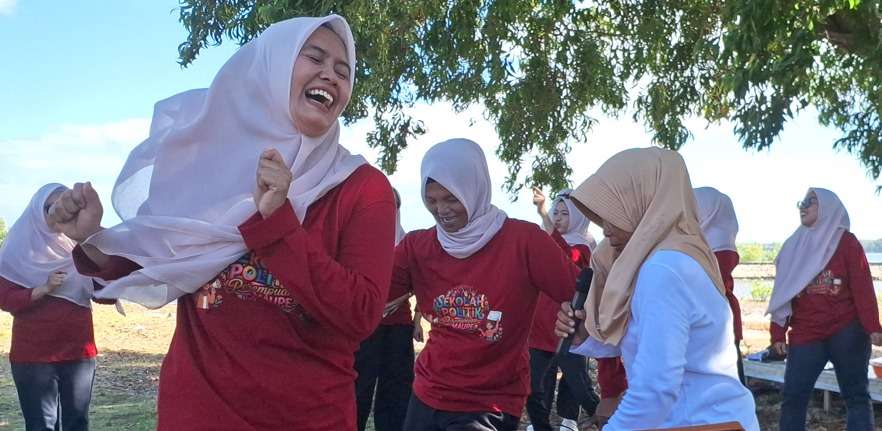
Since welcoming its first class in 2013, SPPM has empowered nearly 1,000 women through successive learning programs, leadership training, mentoring activities, and alumni networks. Those women now represent one of the most extensive grassroots leadership communities for women in eastern Indonesia.
By Kamaruddin Azis, Pelakita Founder and social activist
MARITIMEPOSTS.COM – On a breezy Saturday morning in early July, the shoreline of Puntondo Beach in Takalar, South Sulawesi, became the setting for something far more significant than a graduation ceremony.
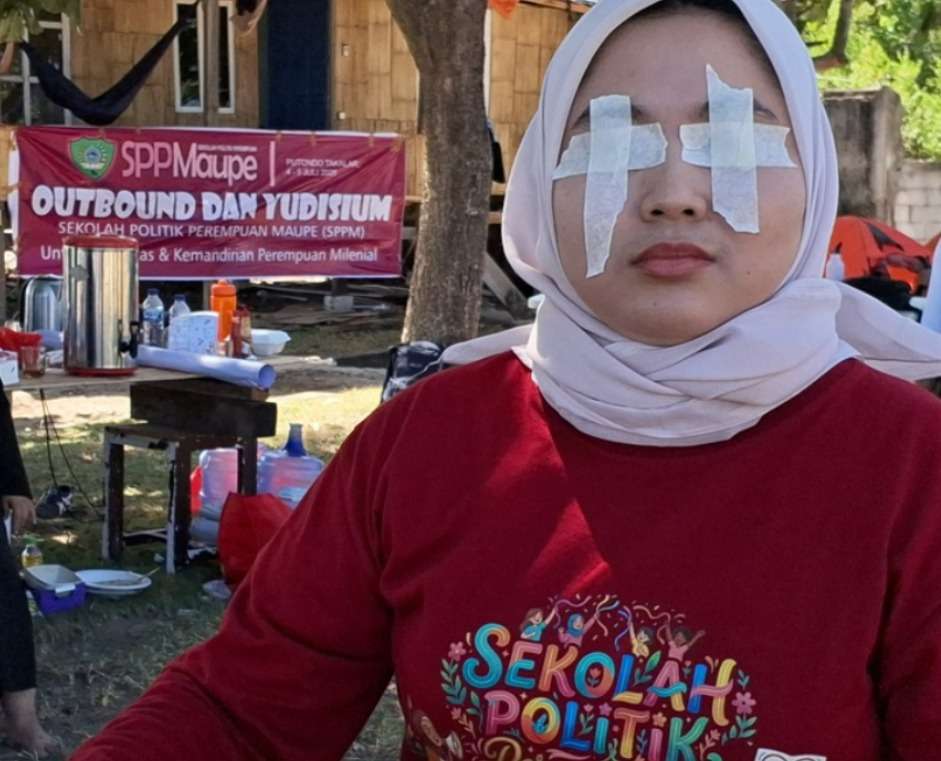
Under the shade of seaside trees, surrounded by the sound of waves rolling onto the shore, dozens of women celebrated the completion of the eighth cohort of the Sekolah Politik Perempuan Maupe (SPPM)—the Maupe Women’s Political School.
There were no academic robes, no marble halls, and no political spectacle. Yet the symbolism was unmistakable.
This was not simply the end of a course.
It was the beginning of new leadership.
For more than a decade, this modest grassroots institution has been quietly producing women leaders who now shape village governments, influence public policy, strengthen community organizations, and expand opportunities for thousands of other women across South Sulawesi.
While Indonesia often debates democracy from the halls of parliament or university campuses, one of its most compelling democratic experiments has been unfolding almost unnoticed in Maros Regency.
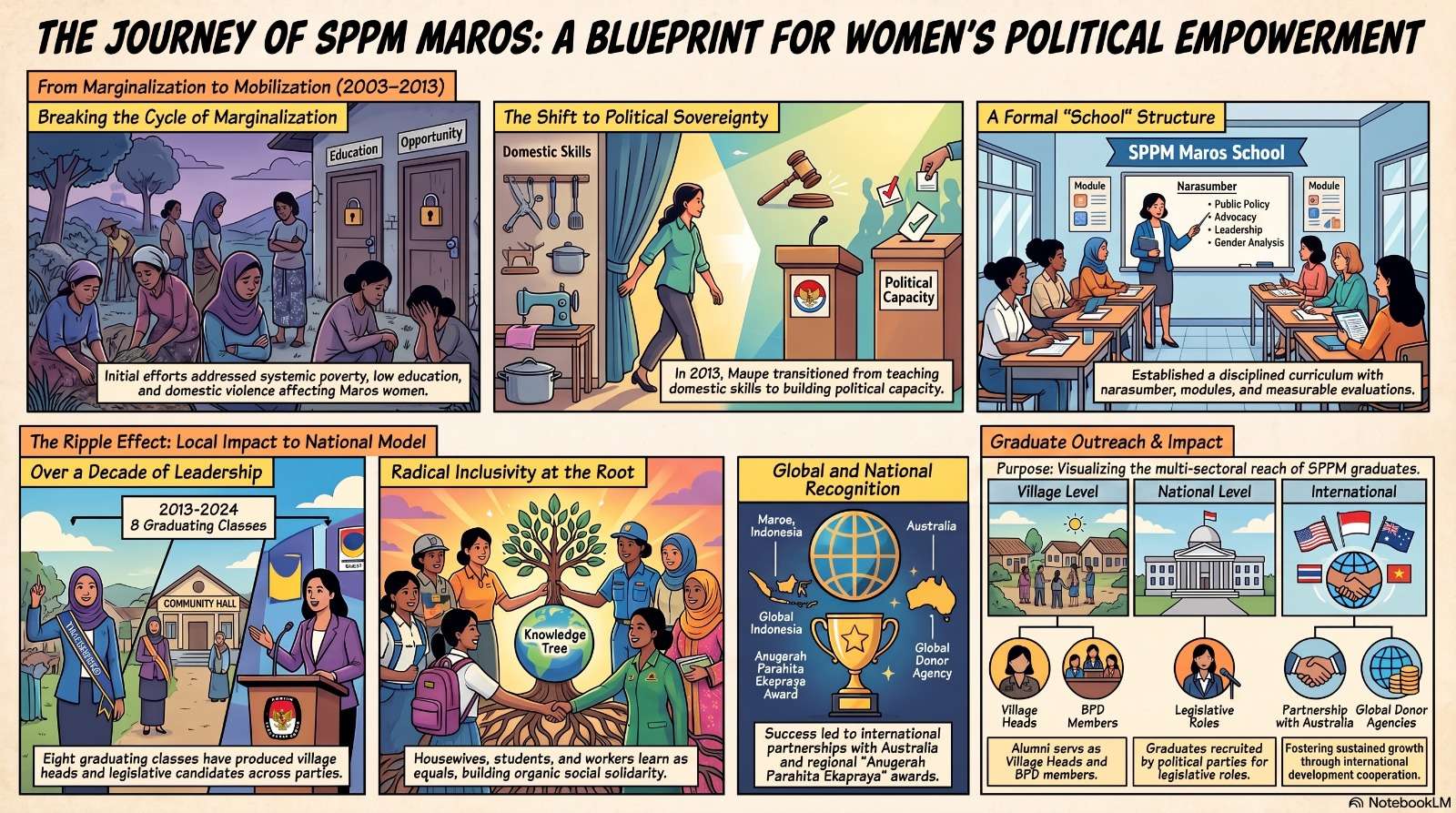
The Women Development Forgot
The story began in 2003 with what the founders of Yayasan Maupe describe as a collective unease.
Women in Maros were present everywhere—in farms, households, markets, and community life—yet they remained largely invisible where decisions were actually made. Development programs frequently treated them as beneficiaries rather than decision-makers, recipients rather than architects of change.
The challenges were deeply interconnected.
Poverty limited educational opportunities. Limited education restricted political participation. The absence of women in decision-making meant policies rarely reflected their experiences, whether concerning economic empowerment, family welfare, or protection against violence.
The founders understood something many development programs overlooked:
Real empowerment begins when women help write the policies that shape their own lives.
Beyond Sewing Machines
Like many civil society organizations, Yayasan Maupe initially focused on practical economic empowerment.
Women attended sewing classes, culinary workshops, and small-business training programs. These initiatives generated valuable income and improved household resilience.
But after several years, the organization confronted a difficult question.
As Chairperson Hj. Agusnawati recalled,
“Will women only ever learn household skills?”
The question transformed the organization’s entire philosophy.
Teaching entrepreneurship mattered.
Teaching leadership mattered even more.
A woman could become an excellent entrepreneur, yet still have no influence over village budgets, development priorities, or social programs affecting her business and family.
Economic empowerment without political participation would always remain incomplete.
The Birth of a Different Kind of School
In 2013, Yayasan Maupe entered a new chapter through collaboration with Yayasan Tifa.
Rather than creating another workshop or advocacy forum, the organization established something far more ambitious: a genuine political school.
The choice of the word “school” was deliberate.
SPPM would operate with structured curricula, learning modules, experienced instructors, regular evaluation, and long-term mentoring. Participants would not simply attend seminars; they would undergo a systematic educational process designed to cultivate confidence, analytical thinking, public speaking, negotiation skills, and ethical leadership.
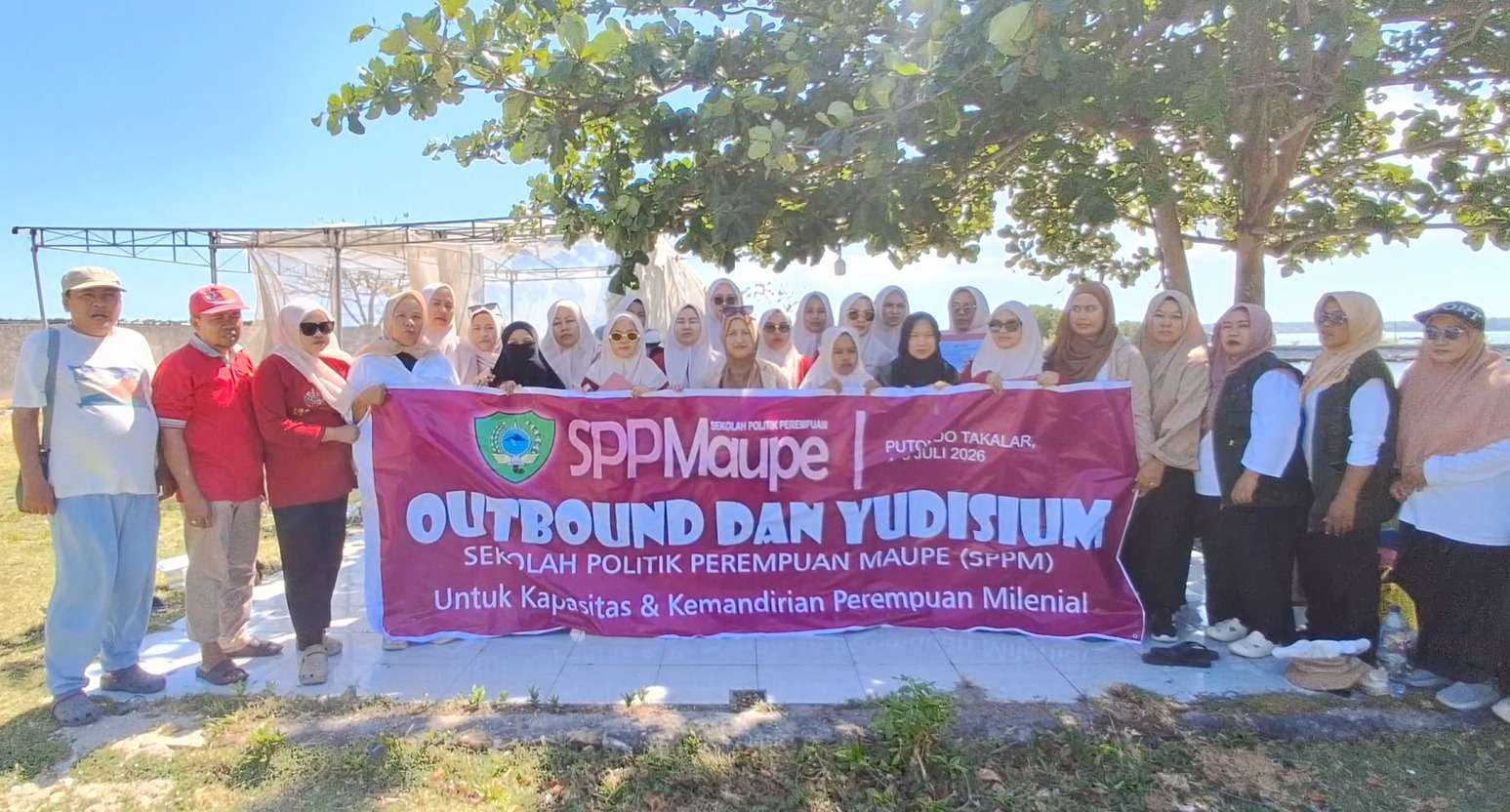
Since welcoming its first class in 2013, SPPM has empowered nearly 1,000 women through successive learning programs, leadership training, mentoring activities, and alumni networks. Those women now represent one of the most extensive grassroots leadership communities for women in eastern Indonesia.
In a country where many development initiatives disappear when funding cycles end, SPPM has endured for more than a decade.
That longevity is perhaps its greatest achievement.
Democracy Begins in the Classroom
Perhaps the most remarkable feature of SPPM is its refusal to become an elite institution.
Inside one classroom sit university students alongside housewives.
Factory workers exchange ideas with civil servants.
Village activists learn together with aspiring politicians.
There are no social hierarchies.
No privileged seats.
No distinction between those with university degrees and those who never completed formal education.
This diversity transforms each cohort into a living laboratory of democracy.
Participants learn constitutional principles, public policy, budgeting, gender-responsive governance, and community organizing. But perhaps more importantly, they learn to listen to one another across differences.
Leadership becomes a shared language rather than an exclusive privilege.
When Education Becomes Governance
The effectiveness of SPPM is measurable not through certificates but through public service.
Its graduates now serve as village heads, members of Village Consultative Bodies (BPD), political party leaders, legislative candidates, agricultural data officers, family planning partners, community facilitators, civil servants, entrepreneurs, and local development advocates.
Many continue working behind the scenes, strengthening public institutions and ensuring that women’s perspectives are included in village planning and regional policymaking.
Their collective contribution also helped Maros Regency earn the prestigious Anugerah Parahita Ekapraya (APE), Indonesia’s highest recognition for gender mainstreaming in public governance.
Rather than producing celebrity politicians, SPPM has quietly strengthened the everyday institutions that make democracy function.
Partnership, Not Polarization
At a time when discussions about gender equality often become politically polarized, SPPM offers a different philosophy.
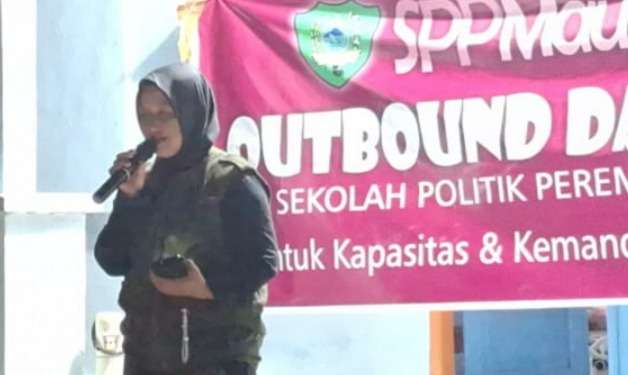
Its objective has never been confrontation.
As Hj. Agusnawati frequently reminds participants,
“At SPPM, we do not learn to fight men or feel superior to anyone. What we learn is how to share knowledge, intelligence, and experience to strengthen families, communities, and the nation.”
This collaborative approach has allowed the movement to gain legitimacy across communities with diverse social and cultural traditions.
Women are not positioned as competitors.
They are positioned as partners in development.
That distinction has made the movement remarkably resilient.
Why the Maros Model Matters
The experience of SPPM offers valuable lessons not only for South Sulawesi but for Indonesia as a whole.
First, it transforms political education into practical leadership instead of symbolic awareness.
Second, its success is measurable through real representation in local governance.
Third, it deliberately brings together women from every educational, economic, and professional background, strengthening democracy through inclusion.
Fourth, its philosophy emphasizes cooperation over conflict, making leadership socially sustainable.
Finally, it demonstrates something increasingly rare in development work: institutional endurance. More than ten years after its establishment, SPPM continues to grow, adapt, and produce new generations of women leaders.
These characteristics make SPPM not merely a successful local initiative but a model worthy of national attention.
Government institutions, universities, political parties, civil society organizations, and international development agencies could all draw important lessons from what has been achieved in Maros.
Democracy Grows from the Ground Up
Indonesia’s democratic future will not be determined only inside the national parliament or presidential palace.
It will also be shaped inside village halls, community meetings, classrooms, and neighborhood discussions where ordinary citizens decide how they wish to govern themselves.
That is precisely where SPPM has chosen to work.
Its graduates return not as political elites but as community leaders carrying new confidence, practical knowledge, and a commitment to public service.
The transformation may appear gradual.
But democracy rarely advances through dramatic moments.
More often, it grows quietly—one conversation, one village, one classroom, and one newly empowered woman at a time.
If one grassroots political school in Maros has helped empower nearly 1,000 women and reshape local leadership over the past decade, the question for Indonesia is no longer whether this model works.
The real question is:
What kind of democracy could Indonesia build if every province created its own version of the Maros model?