
MARITIMEPOSTS.COM – The government, through the Ministry of Marine Affairs and Fisheries, continues to strengthen governance in the fisheries sector by accelerating digital services, one of which is through the issuance of the electronic Certificate of Seaworthiness (e-SLO).
Through the Directorate General of Marine and Fisheries Resources Surveillance (PSDKP), this initiative plays an important role in ensuring that every operating fishing vessel meets the required administrative and technical standards.
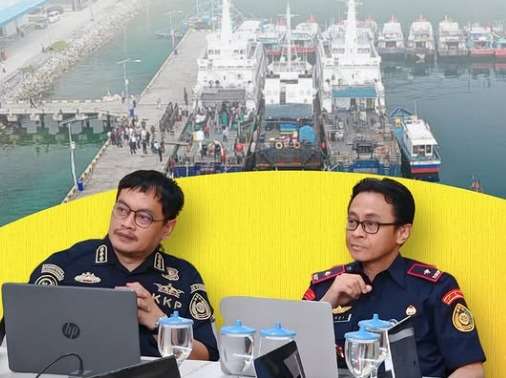
“More than just a document, the SLO is a key instrument in ensuring compliance, safety, and the sustainability of fishing activities in Indonesia,” explained Ardiansyah, Director of Fisheries Resources Surveillance at PSDKP, in a text message.
He noted that the transition to e-SLO services has brought significant changes. Processes that previously required more time can now be completed digitally and more efficiently.
According to Ardiansyah, applications can be submitted online within minutes, while administrative and physical vessel verification is conducted in an integrated and standardized manner.
“This system is also connected to various monitoring platforms such as the Vessel Monitoring System (VMS), fishing logbooks, and licensing data, thereby improving accuracy and transparency in the document issuance process. Thus, e-SLO not only accelerates services but also strengthens a data-driven monitoring system,” he added.
In its implementation, the Directorate General of PSDKP is reinforcing at least four strategic measures. First, full digitalization of services through the e-SLO system integrated with the e-PIT platform.
Second, accelerating service time through clear and measurable operational standards.
Third, integrating cross-system data to ensure the validity of vessel information and fishing activities.
Fourth, enhancing transparency and accountability through systems that can be tracked in real time. These four measures form the foundation for building modern, responsive, and reliable public services.
Ardiansyah emphasized that the acceleration of e-SLO services also provides direct benefits to fisheries businesses and fishers. With faster and simpler processes, vessels can operate without prolonged administrative delays.
At the same time, legal certainty and regulatory compliance are better ensured, creating a healthier and more equitable business climate. This effort is also part of the government’s commitment to promoting responsible and sustainable fishing practices.
Indonesia’s Minister of Marine Affairs and Fisheries, Sakti Wahyu Trenggono, has stated on several occasions that strengthening e-SLO services is expected to become the backbone of the national fisheries management system.
It will serve not only as an administrative tool but also as an effective instrument for monitoring and control, particularly in Fisheries Management Areas and the implementation of measured fishing policies.
With technological support and active participation from all stakeholders, Indonesia is moving toward better fisheries governance—where faster services go hand in hand with transparency, accuracy, and the sustainability of marine resources.
Editor: Denun