
MARITIMEPOSTS.COM – For many people living in Makassar, escaping the noise of the city often means dealing with another problem: long travel hours, expensive transportation, or beaches that are already overcrowded and poorly maintained.
A peaceful tropical island sounds ideal, but reaching one usually requires careful planning and a bigger budget.
That situation is beginning to change in the southern coastal corridor of South Sulawesi.
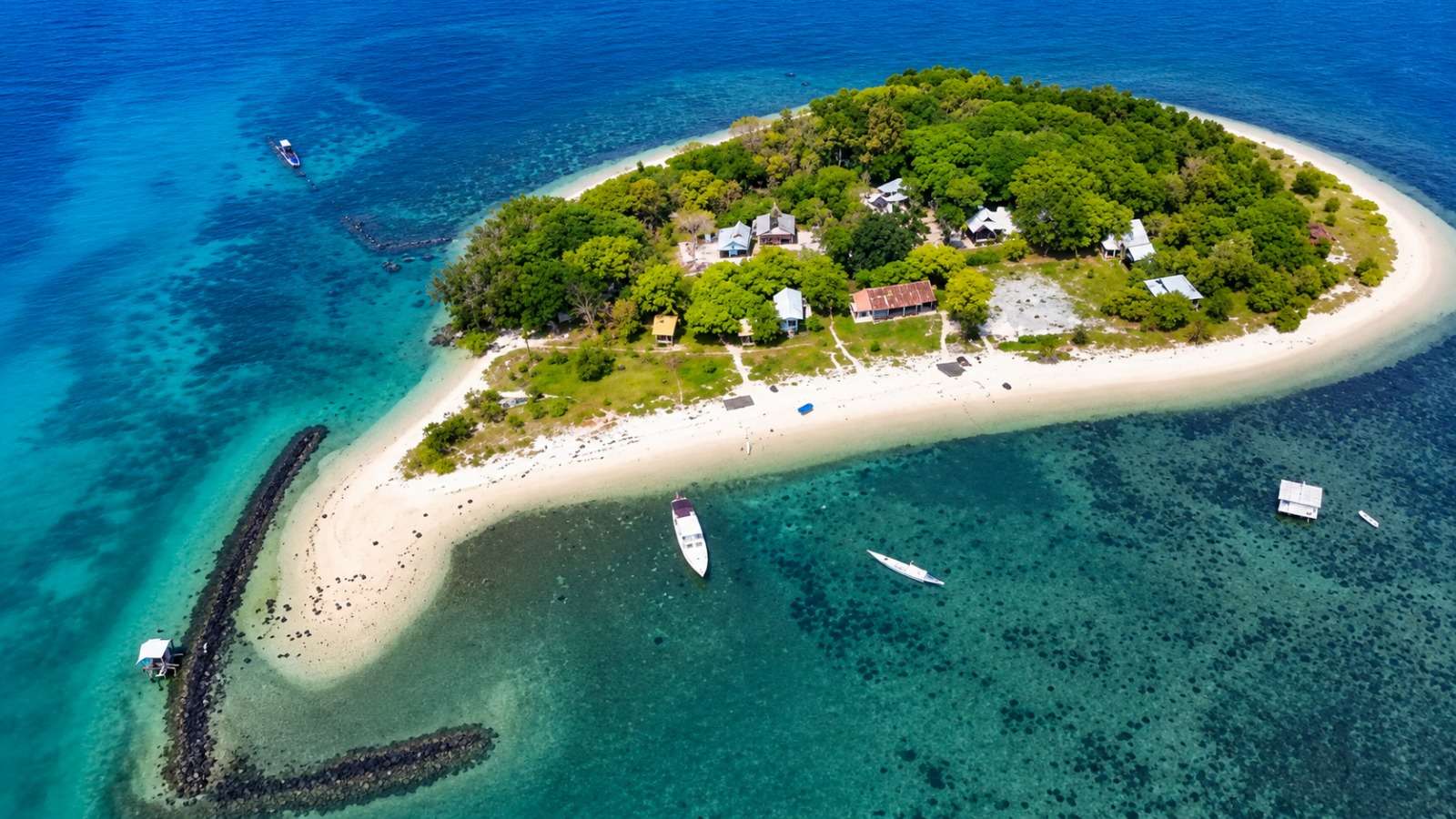
Quietly, Pulau Sanrobengi in Takalar is transforming into one of the most accessible marine tourism destinations near Makassar — a small island where visitors can enjoy white sand, calm waters, and green coastal vegetation without spending an entire day on the road.
The biggest advantage of Sanrobengi today is accessibility.
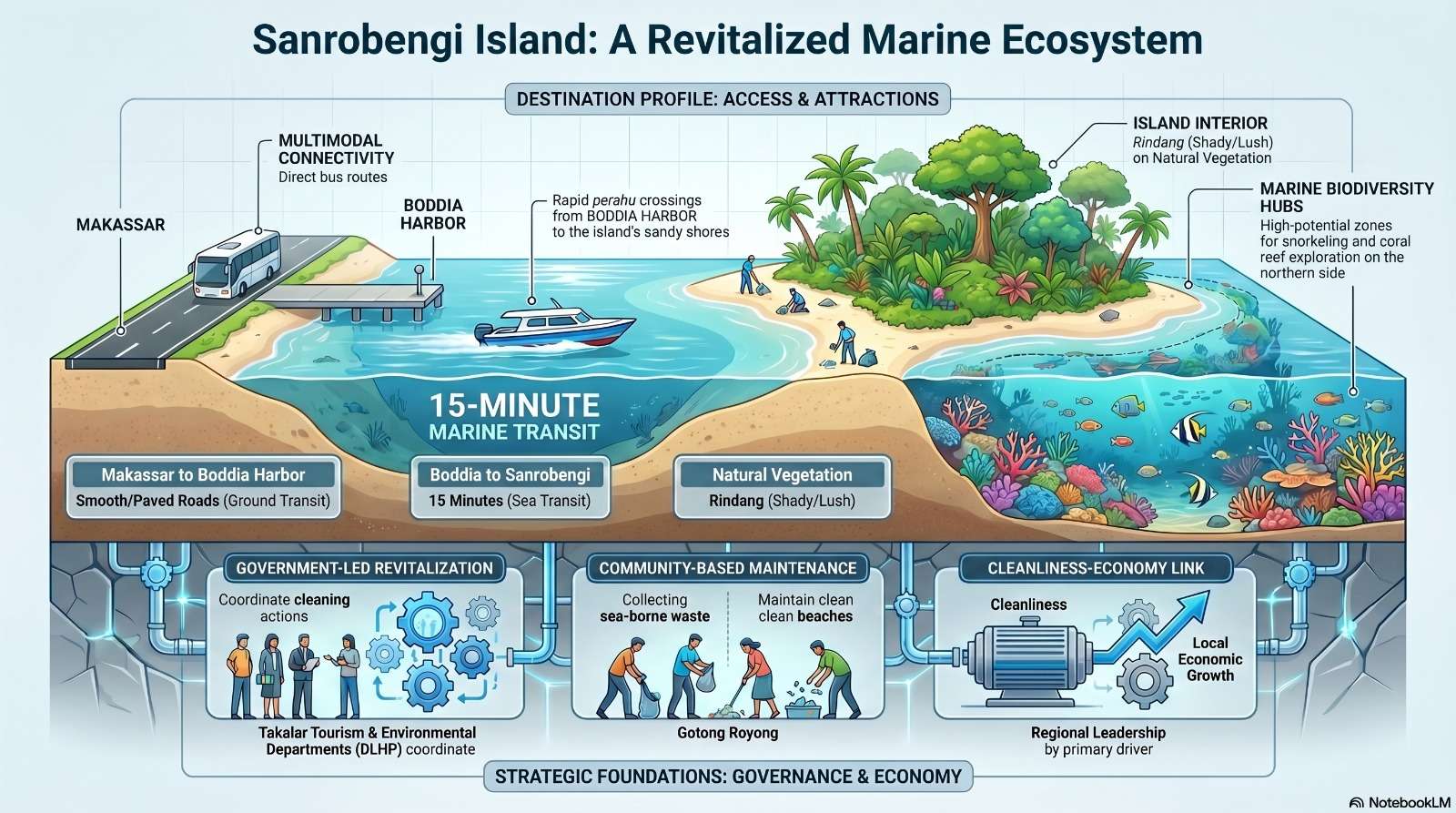
Visitors no longer need private boats or special arrangements to reach the island. From Makassar, travelers can simply take a public bus route passing through Mall Panakkukang, Pantai Losari, and Barombong toward Pelabuhan Boddia in Kecamatan Galesong.
The journey itself has become part of the experience.
The Barombong–Galesong–Bontoramba coastal road is now smoother and more comfortable than before, opening scenic western sea views along the drive southward. What used to feel like a distant coastal route has now become an easy weekend escape.
Once arriving at Pelabuhan Boddia, the sea crossing to Pulau Sanrobengi only takes around 15 minutes. Small local boats carry visitors across calm blue waters until the island slowly appears on the horizon — a stretch of white sand embracing dense green trees under the tropical sky.
What surprises many first-time visitors is how clean and organized the island has become. Sanrobengi today feels more welcoming, greener, and more comfortable than in previous years.
The shoreline is noticeably cleaner, while the shady vegetation creates a relaxing atmosphere for visitors who simply want to rest away from urban crowds.
This transformation did not happen by accident. On May 24, 2026, the Takalar Tourism Office collaborated with the Environmental and Forestry Service (DLHP) and the Galesong District government to organize a large-scale cleanup movement on the island.
Government officers, local communities, and environmental volunteers worked side by side cleaning the beaches and surrounding tourism areas.
The initiative reflects a growing awareness that tourism and environmental protection must go hand in hand.
According to Acting Head of DLHP Takalar, Irwan Rachman, Pulau Sanrobengi is one of Takalar’s important marine tourism assets whose sustainability depends on collective responsibility.
That spirit of shared ownership can be felt directly on the island. Residents increasingly understand that cleanliness is not only about aesthetics but also about preserving economic opportunities connected to tourism. A clean beach attracts visitors; visitors support local livelihoods.
Takalar Regent Mohammad Firdaus Daeng Manye also emphasized this perspective by linking environmental comfort with tourism growth. For him, people will only return if destinations remain clean, safe, and pleasant to visit.
Beyond its beautiful coastline, Sanrobengi also offers experiences for nature lovers and marine enthusiasts.
Coral reef spots can be found around the western side of the island, while calmer northern waters are ideal for snorkeling and light marine activities. Others come simply to enjoy fishing, sit under the trees, or spend quiet hours watching the sea breeze move through the island.
Unlike heavily commercialized beach destinations, Sanrobengi still maintains a simple and natural atmosphere. There are no towering resorts or noisy entertainment venues.
What visitors find instead is a peaceful island environment that feels close to nature and surprisingly close to the city.
In many ways, Pulau Sanrobengi represents a new direction for coastal tourism development in South Sulawesi — one where accessibility, environmental care, and community involvement work together.
The island is becoming proof that small destinations can grow sustainably when supported by infrastructure improvements and collective responsibility.
As more people discover this marine escape south of Makassar, the challenge ahead will be maintaining the balance between tourism growth and environmental preservation.
For now, however, Sanrobengi remains exactly what many city residents are searching for: a nearby island paradise where the sea is calm, the air feels lighter, and the crowd is finally left behind.
___
Written by K. Azis