
MARITIMEPOSTS.COM – The Maldives is globally marketed as an idyllic sanctuary of turquoise waters and vibrant coral reefs. However, this aesthetic perfection masks a volatile underwater landscape that demands unwavering adherence to safety protocols.
When these boundaries are ignored, the transition from recreation to catastrophe is often instantaneous.
The recent loss of five Italian divers and a Maldivian rescue officer at Vaavu Atoll stands as the deadliest single diving accident in the nation’s history. This event was not merely a misfortune of nature, but a catastrophic failure of risk management. It highlights the lethal consequences when high-level professionals bypass the very regulations designed to protect them.
Anatomy of a Regulatory Breach: Protocol vs. Reality
The core of this tragedy lies in a critical breach of recreational protocol. In the Maldives, legal frameworks strictly limit recreational scuba diving to a depth of 30 meters. This limit is established to mitigate the physiological risks of nitrogen narcosis and decompression sickness, yet it was deliberately disregarded by the expedition.
Investigators confirmed that the group was attempting to explore caves at approximately 50 meters, nearly double the legal limit. This move into a technical environment using recreational standards created a margin for error that was non-existent. Government spokesman Mohamed Hossain Shareef underscored the investigation’s focus on this violation:
“Recreational scuba divers were only allowed to dive up to a depth of 30m and it was not clear why the Italians went into a cave that’s 60m under water.”
Environmental Compounding: Weather and Terrain
The Risk-Stacking of Adverse Conditions and Extreme Depth
The tragedy occurred at Vaavu Atoll, roughly 100km south of the capital, Male, in a region known for complex cave systems. At the time of the dive, local authorities had issued a “yellow warning” for passenger boats and fishermen due to rough sea conditions. Despite these specific local advisories, the Duke of York yacht and its divers proceeded with an extreme-depth mission.
The Maldives military characterized the subsequent search as “very high risk” due to the intersection of rough weather and the depth of the cave system. By entering a 60-meter-deep environment during active weather warnings, the group “stacked” their risks. This environmental compounding turned a hazardous dive into a lethal trap for both the tourists and their eventual rescuers.
Risk Transfer: The Preventable Sacrifice
The High Cost of Staff Sgt Mohamed Mahdhee’s Bravery
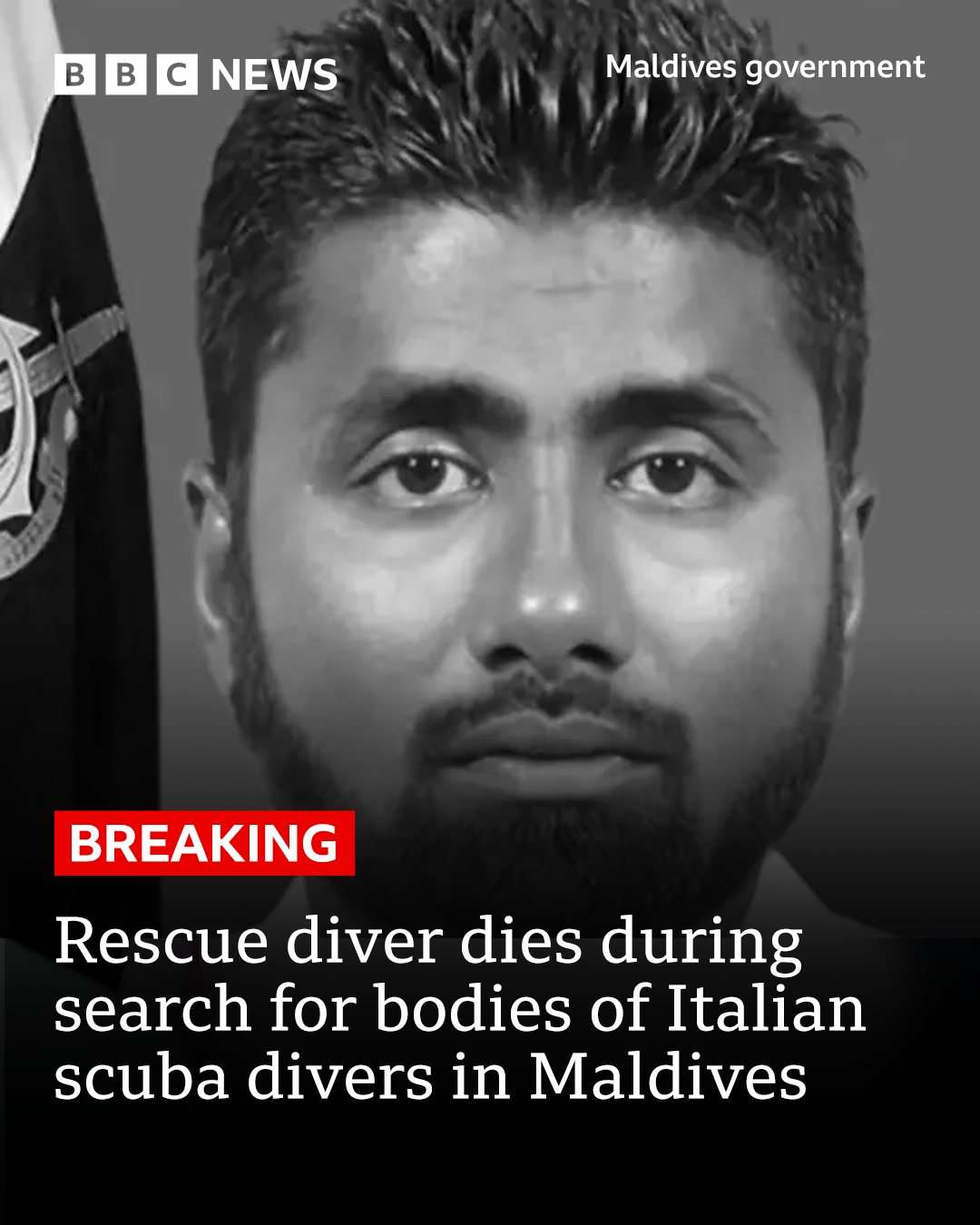
The most tragic element of this incident is the concept of risk-transfer: the shift of danger from the original violators to the emergency responders. Staff Sgt Mohamed Mahdhee lost his life attempting to recover the bodies of those who had ignored established safety limits. His death was a direct, preventable consequence of the tourists’ initial protocol violation.
Mahdhee was part of an elite eight-man team tasked with navigating the 60-meter cave system where one victim’s body was eventually located. After failing to resurface with his team, he was found to have blacked out at depth. Italian Foreign Minister Antonio Tajani highlighted the international weight of this sacrifice:
“These days of grief for Italy are compounded by the news that one of your brave soldiers… died while attempting to dive to reach the bodies of our fellow Italians. This tragedy unites Italy and the Maldives in grief and respect for the victims.”
The Expertise Paradox: A Community in Mourning
The identities of the victims add a layer of complexity to the investigation, as they were not novice tourists. The group included members of a specialized team from the University of Genoa: ecology professor Monica Montefalcone, her daughter Giorgia Sommacal, and two researchers. They were accompanied by Gianluca Benedetti, a highly experienced diving instructor and boat operations manager.
This level of expertise makes the decision to bypass the 30-meter legal limit an inexplicable paradox. While 20 other Italians aboard the Duke of York remained unharmed, the loss of such a specialized group has shocked the scientific community. The ongoing search for the remaining bodies serves as a grim reminder that technical knowledge is no substitute for regulatory compliance.
Conclusion: The Final Ponderance
The disaster at Vaavu Atoll illustrates the thin line between scientific exploration and reckless endangerment. When professionals with high-level expertise ignore foundational safety rules, they do more than risk their own lives—they imperil the lives of those sworn to rescue them. The ocean does not grant exceptions for academic credentials or professional experience.
We are left to question the human drive to push boundaries: at what point does the pursuit of discovery become an act of negligence? In the wake of this tragedy, the shared grief between Italy and the Maldives serves as a somber warning. The laws of the deep are absolute, and the cost of defying them is often measured in lives.