
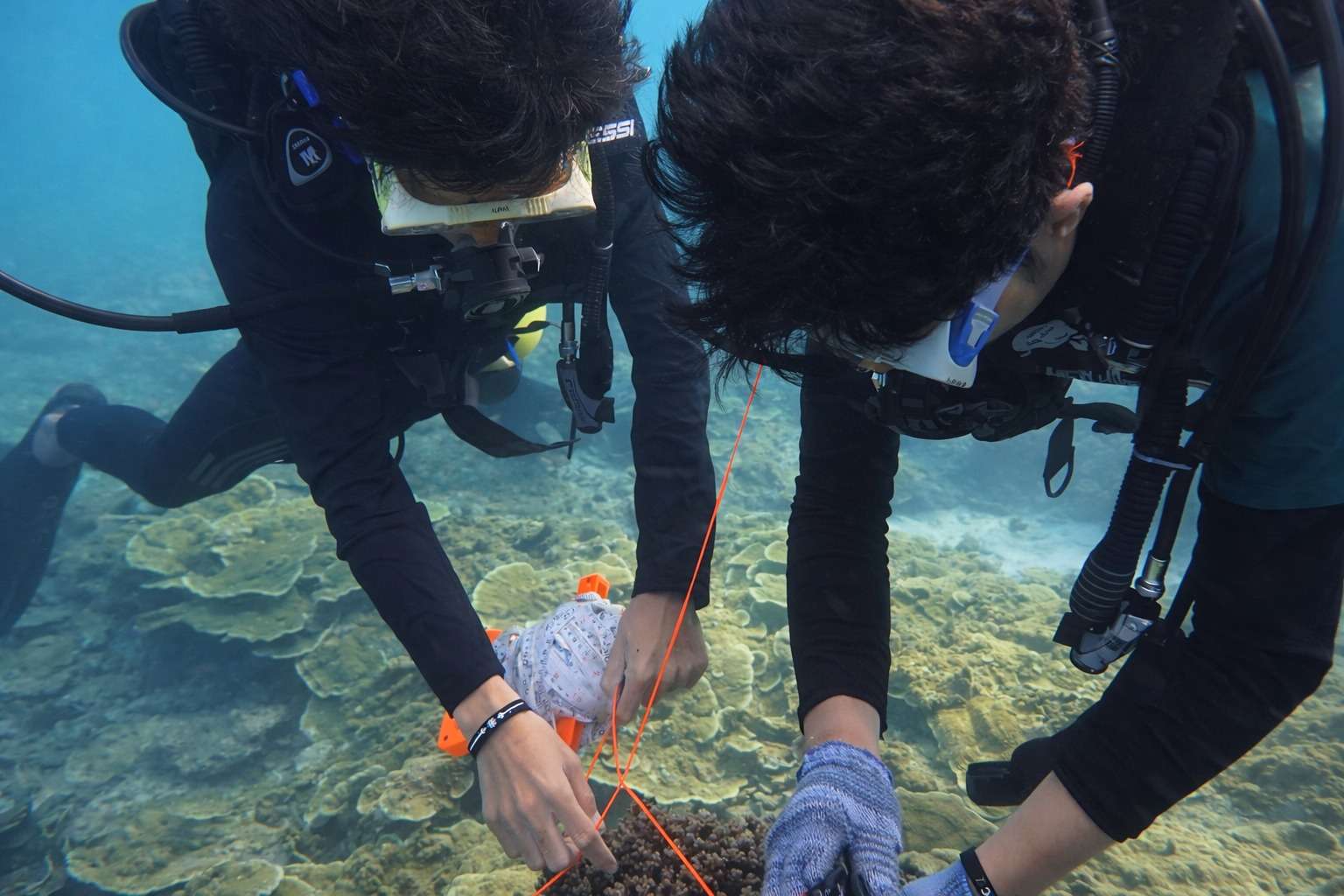
We take data collection very seriously. We use the Line Intercept Transect (LIT) method to conduct coral cover monitoring surveys. Every centimeter of the transect is documented using underwater cameras to ensure high data validity for post-field analysis.
Rizki Octavian, Lecturer, Department of Marine Science
MARITIMEPOSTS.COM – Serdang Bedagai, 20 April 2026 – Amid the waters of the Malacca Strait, one of the busiest trade routes in the world, lies a hidden gem known as Berhala Island, located in Serdang Bedagai Regency.
Recently, a practicum team from the Coralogy course of the Department of Marine Science, Faculty of Fisheries and Marine Science, University of Riau, conducted coral reef health monitoring on this island, which holds the status of a 3T region (frontier, outermost, and underdeveloped area).
The activity, carried out on 17 April 2026, was not merely an academic exercise, but a strategic mission to document the “ecosystem services” provided by Indonesia’s natural fortress in a border area directly adjacent to Malaysia and international waters.
Examining Ecosystem Services and Biodiversity
Berhala Island possesses exceptionally high ecological value. During the activity, the student team found evidence that the ecosystem remains in very good condition.
Coral reefs not only serve as seabed substrates, but also provide crucial ecosystem services: acting as natural wave breakers that protect the coastline from abrasion and storms, and serving as vital habitats for various marine species.
“The presence of charismatic species such as Giant Trevally (GT), pods of dolphins passing through the waters, and sea turtles that use the island’s beaches for landing and nesting are high-level biological indicators,” said Yabes Nathan, a representative of the diving practicum team.
“The existence of top predators like GT fish indicates that the food web in the waters of Berhala Island remains highly stable and healthy. We observed that reef complexity at depths of 5 to 7 meters supports biodiversity that sustains marine life along this international route,” he added.
Applied Scientific Methodology
Course lecturer Rizki Oktavian emphasized the importance of data accuracy in marine studies.
“We take data collection very seriously. We use the Line Intercept Transect (LIT) method to conduct coral cover monitoring surveys. Every centimeter of the transect is documented using underwater cameras to ensure high data validity for post-field analysis,” Rizki explained.
In addition to physical coverage, the team also focused on the physiological health of corals.
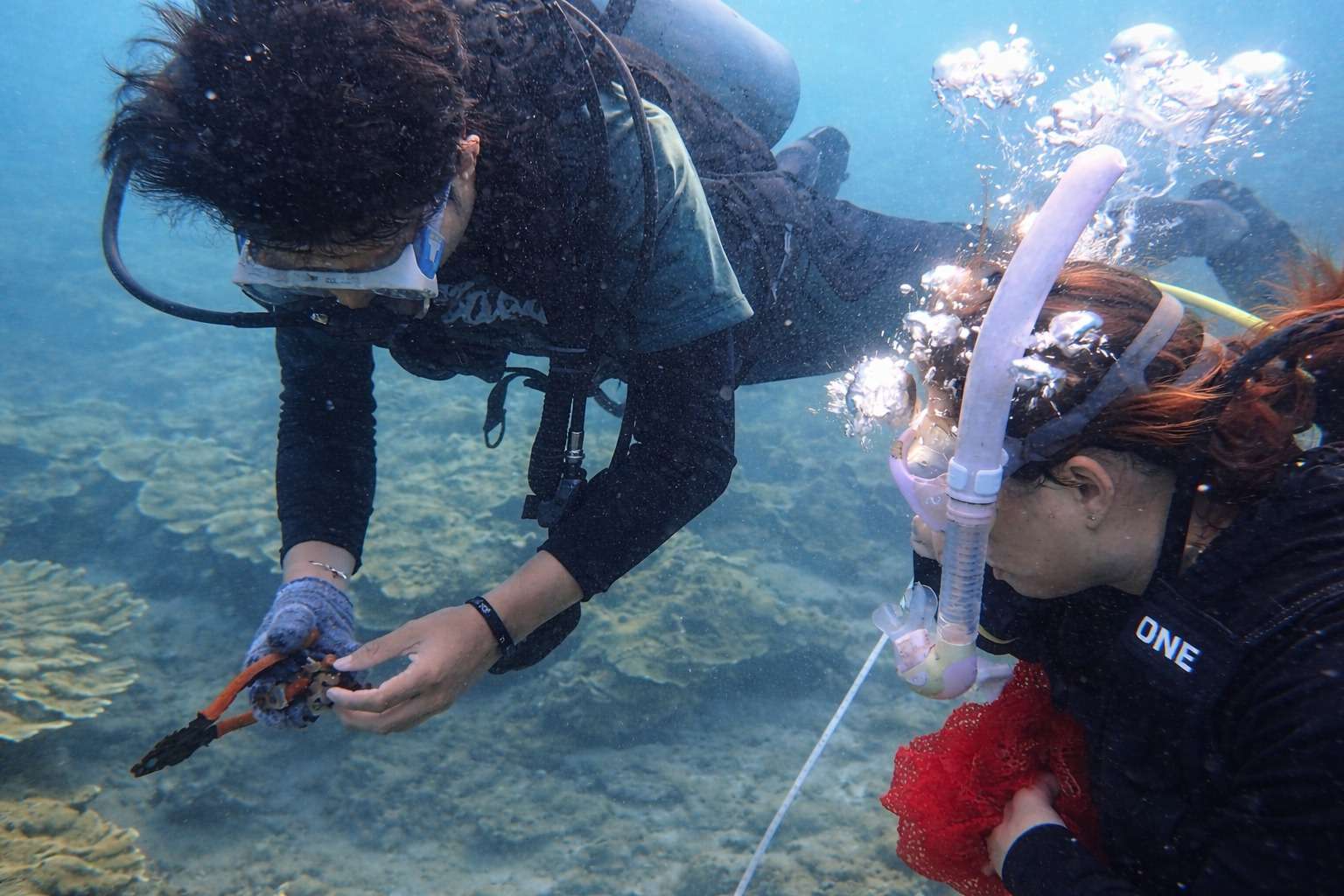
“We collected coral tissue samples to examine Zooxanthellae abundance in the laboratory. The abundance of these symbiotic algae is a sensitive indicator of environmental stress. With this data, we can predict coral resilience to global climate change, whose impacts are most pronounced in open waters such as the Malacca Strait,” he added.
Synergy with Border Guardians
The journey to Berhala Island was not without challenges.
The team faced severe weather and storms around the waters of Bagan Kuala, forcing a delay of 1.5 hours for safety reasons. However, once conditions improved, the team arrived and was warmly welcomed by the Berhala Island Marine Task Force.
The Task Force Commander, First Lieutenant Eko, shared insights on field conditions.
“Based on our routine monitoring, the coral reef conditions on Berhala Island remain very well-preserved and natural,” said Lt. Eko.
“As the frontline, we safeguard this area not only from sovereignty threats, but also from destructive practices such as illegal fishing. The students’ findings of turtle hatchlings here are clear evidence that ongoing environmental conservation efforts are yielding results,” he emphasized.
Future Implications
The data collected by the students is currently being processed at the Marine Biology Laboratory.
The results of this study are expected to become an important database for the Serdang Bedagai Regency Government and related stakeholders in formulating maritime conservation policies.
According to Rizki Oktavian, this expedition demonstrates that synergy between academics and security forces in border areas can generate meaningful contributions to science.
“Berhala Island is not merely a coordinate point on the border map, but a natural laboratory that holds insights into how a healthy marine ecosystem can serve as a fortress of national sovereignty,” he explained.
About the Marine Biology Laboratory
The Marine Biology Laboratory, Department of Marine Science, Faculty of Fisheries and Marine Science, University of Riau, is committed to conducting field-based research to support sustainable management of Indonesia’s coastal and marine resources.
Media Contact:
Rizki Oktavian, S.Pi., M.Si
Lecturer, Department of Marine Science
Faculty of Fisheries and Marine Science, University of Riau
Email: rizkioktavian@lecturer.unri.ac.id