
Cultivated shrimp experience physiological stress, particularly in their digestive systems, which become their primary point of vulnerability. Under stress, shrimp become more susceptible to disease—both bacterial and viral—which often leads to mass mortality.
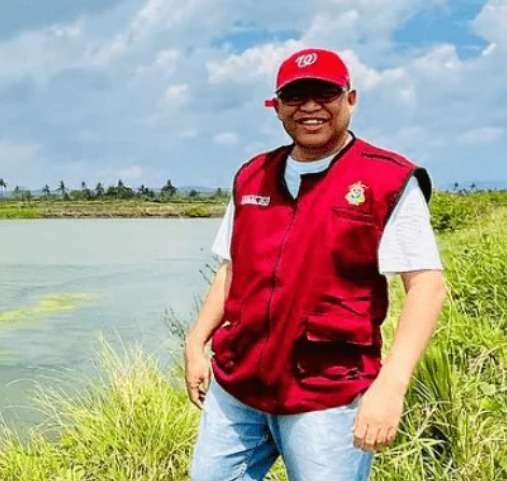
MARITIMEPOSTS.COM – Some time ago, I met a traditional shrimp farmer whose story holds important lessons about resilience and adaptation.
He was one of the early customers of shrimp fry (benur) produced by PT Sulawesi Agro Utama in the late 1980s and has managed ponds for more than three decades.
His experience reflects how traditional practices passed down through generations are now being tested by the changing times—especially by the increasingly evident pressures of climate change.
In the past, he relied on local knowledge to determine the best time to stock shrimp fry, namely during the transition from the rainy season to the dry season.
The logic behind this practice is simple yet robust: reduced rainfall increases the stability of pond water salinity, which tends to fluctuate during the rainy season. This approach proved effective for years, resulting in relatively stable production cycles.
However, in recent years, this pattern has begun to falter.
Climate change has introduced new uncertainties. Phenomena such as El Niño, predicted to occur in 2026, carry serious implications: rising water temperatures, unpredictable rainfall patterns, and unstable pond ecosystems.
Cultivated shrimp experience physiological stress, particularly in their digestive systems, which become their primary point of vulnerability.
Under stress, shrimp become more susceptible to disease—both bacterial and viral—which often leads to mass mortality.
This farmer initially felt confused in the face of such drastic changes. Pond water could become extremely hot during the day, then suddenly turn cold when heavy rains arrived. The impact was immediate: reduced appetite, suboptimal growth, and increased mortality rates.
Yet, through a series of failures, he did not give up.
He began to record, observe, and understand emerging patterns. He realized that climate change is not something to fight against, but something to understand and anticipate.
Over the past two years, he has implemented several simple yet impactful adjustments. He planted mangrove trees around his ponds to help stabilize water temperature and reduce strong winds
. He also deepened parts of the ponds to provide shrimp with refuge from extreme temperatures. In addition, he began regularly monitoring water quality—such as temperature and pH—using simple tools.
These measures have proven effective in reducing stress and mortality risks.
He also changed his feeding management. Previously, he fed shrimp fixed amounts; now, he adjusts feeding based on weather conditions and shrimp behavior.
During high temperatures, he reduces feed to prevent water pollution. He also lowers stocking density and selects shrimp fry that have undergone an adaptation (nursery) process before being transferred to grow-out ponds.
These efforts aim to maintain the balance of the shrimp’s digestive system, which plays a crucial role in resilience to stress.
Furthermore, he began using natural probiotics to maintain the health of the pond ecosystem.
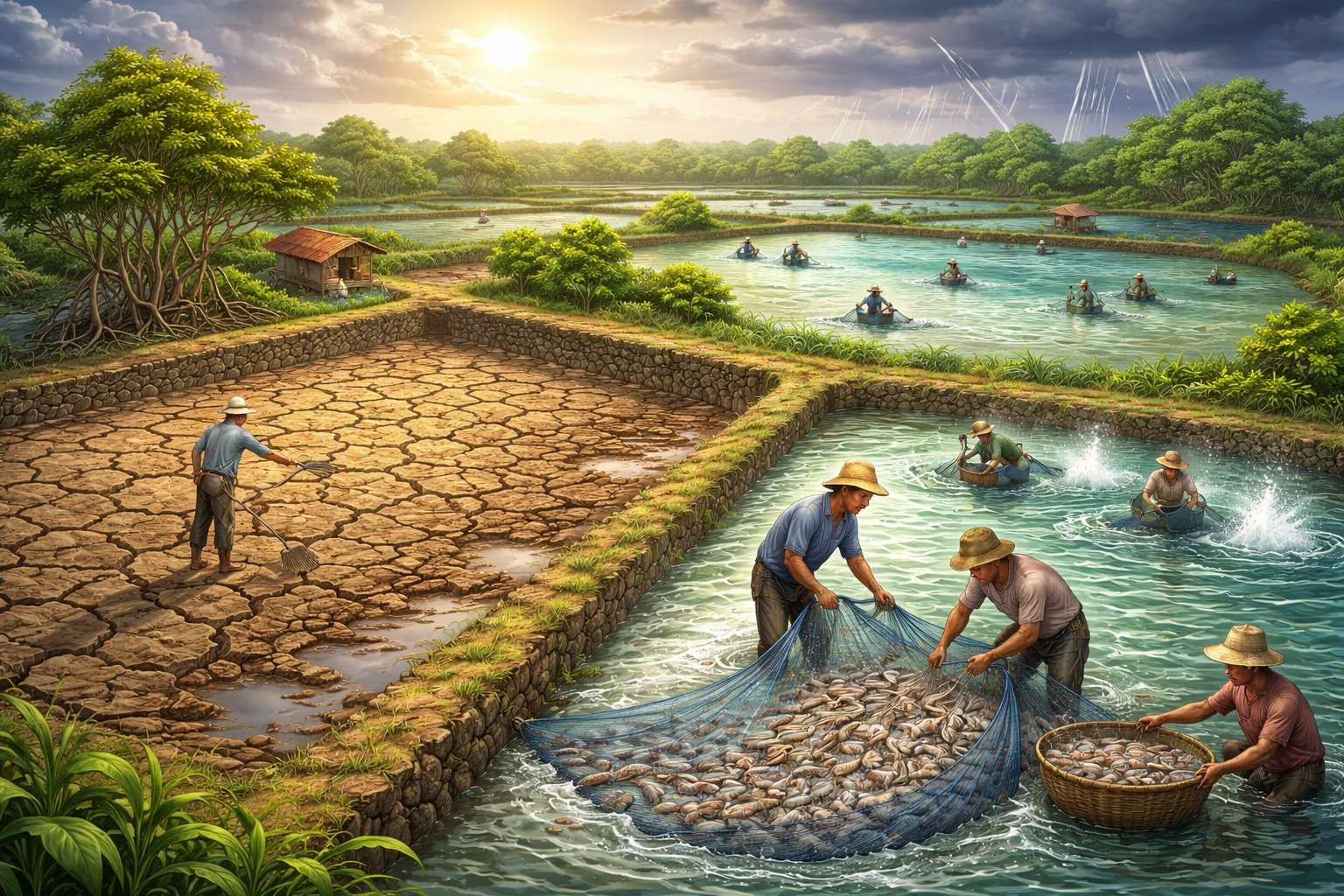
The results are starting to show. The shrimp are more resilient to extreme conditions, and harvest success rates have improved, although not yet fully returning to past levels.
He also understands that the natural carrying capacity of the ponds allows for an optimal production cycle of around 60 days.
Interestingly, the practices he has adopted align with approaches developed by several academics and practitioners, including my colleague Saenong, who has long integrated local wisdom with modern aquaculture techniques.
This approach emphasizes that innovation does not always have to be high-tech—it can emerge from a deep understanding of nature and field experience.
Today, these practices are being adopted by other farmers in his village. They share experiences, engage in discussions, and seek solutions together. From this, a collective strength emerges—an important form of social capital in facing uncertainty.
This story shows that traditional farmers have the capacity to adapt to changing times.
The key lies not in technological sophistication, but in openness to learning, courage to change, and a willingness to coexist with the dynamics of nature.
Amid increasingly complex climate challenges, it is this spirit that keeps hope alive in the modest ponds along the coast of South Sulawesi—a region that, since the 1970s, has been an important part of the early history of shrimp farming in Indonesia.
Author: Iqbal Djawad