
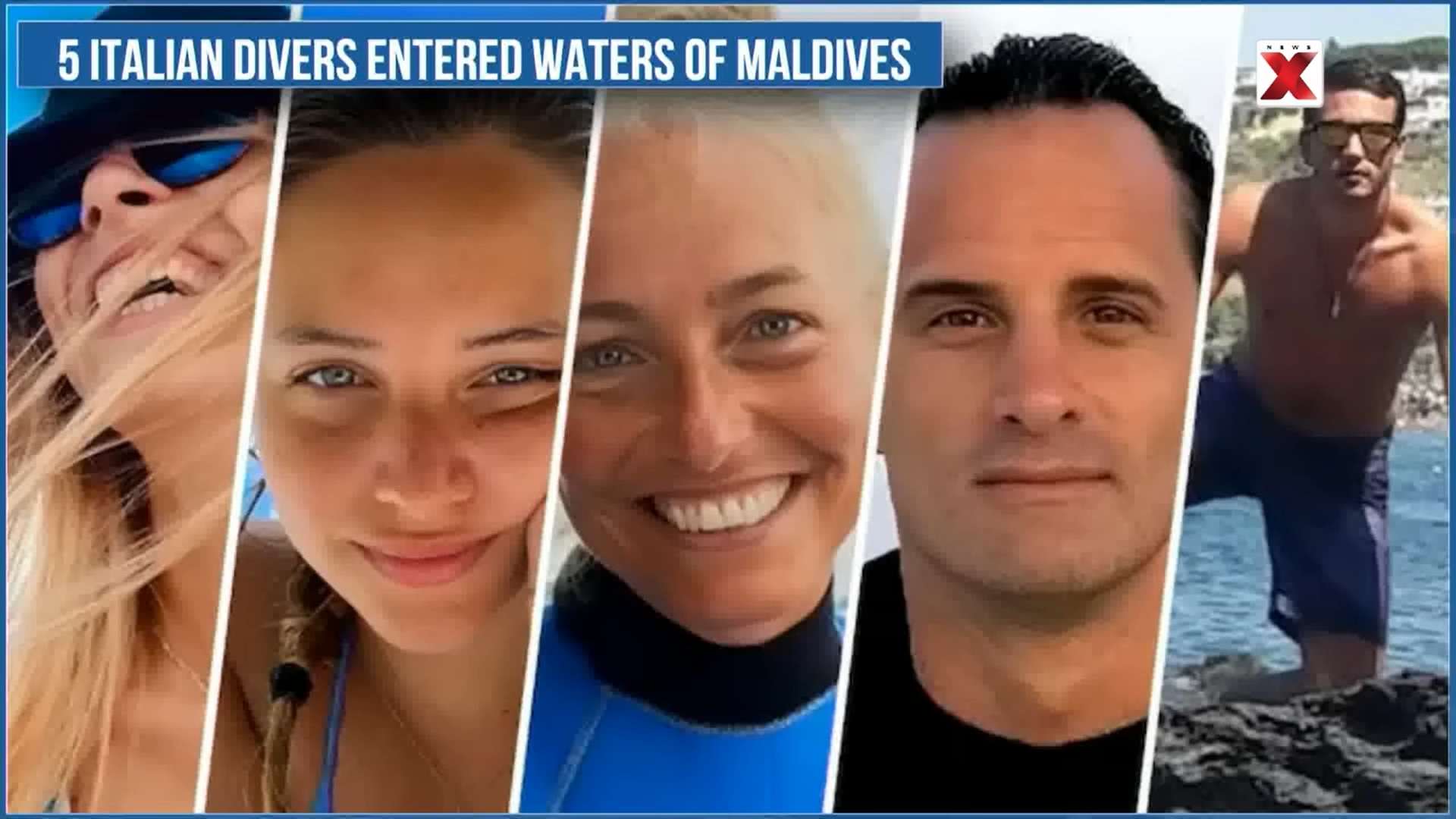
MARITIMEPOSTS.COM – The international diving community is mourning after a tragic incident in the Maldives claimed the lives of five Italian divers in mid-May 2026.
The disaster, which occurred in the waters of Vaavu Atoll, shocked not only professional divers but also sparked global discussions about deep-diving safety and the limits of human exploration beneath the ocean.
The tragedy began when a group of Italian divers, some with backgrounds in marine research, traveled to the Maldives as part of a mission related to marine ecosystems and climate change studies.
Several members were reportedly affiliated with the University of Genoa in Italy. However, authorities later clarified that the fatal dive itself was conducted privately and was not officially part of the scientific program.
On Thursday, May 14, 2026, the five divers entered an underwater cave system near Alimathaa Island in Vaavu Atoll. The location is known for its complex underwater caves, narrow passages, and challenging conditions, even for experienced divers.
Initial reports suggested that the group descended to depths exceeding 50 to 60 meters—far beyond the Maldives’ standard recreational diving limit of 30 meters.
Diving at such depths requires advanced technical training, specialized certifications, custom breathing gas mixtures, and meticulous planning.
Within the diving world, cave diving is considered one of the most dangerous forms of underwater exploration because there is little to no direct access to the surface in an emergency.
Concern arose when the group failed to surface at the expected time. Crew members aboard their support vessel, Duke of York, alerted authorities, triggering a search and rescue operation by Maldivian officials.
Rescue divers eventually recovered the body of one victim, Gianluca Benedetti, from inside the cave system at approximately 60 meters deep.
The remaining four divers were believed to be trapped farther inside the underwater tunnels, where visibility was extremely poor and currents difficult to predict.
The rescue mission unfolded under highly dangerous conditions. In addition to the extreme depth and complicated cave structure, rough weather and underwater currents significantly complicated recovery efforts.
The tragedy deepened further when Maldivian military diver Mohamed Mahudhee died while participating in the recovery operation, reportedly due to decompression-related complications.
Following the death of the rescue diver, Maldivian authorities temporarily suspended search operations for safety reasons. However, emotional appeals from the victims’ families and growing international attention led to continued recovery efforts involving international specialist teams.
The Italian government quickly responded to the incident. Italian Foreign Minister Antonio Tajani expressed condolences and assured full coordination with Maldivian authorities regarding search operations and repatriation efforts.
Italy’s ambassador responsible for the Maldives also traveled from Colombo to Malé to monitor developments directly.
As investigations continued, diving experts began discussing several possible contributing factors, including nitrogen narcosis, oxygen toxicity, cave disorientation, limited gas supply, and visibility loss caused by disturbed sediment inside the cave.
Many members of the global diving community emphasized that descending to 60 meters inside an underwater cave system is far beyond ordinary recreational diving. Even for highly experienced divers, such conditions require extraordinary discipline, technical preparation, and an almost nonexistent margin for error.
The incident has since become one of the worst diving tragedies in Maldivian history. Beyond the profound sense of loss, it has also served as a reminder that while the ocean is breathtakingly beautiful, it remains an environment that demands respect, caution, and strict adherence to safety procedures.
At the same time, diving professionals around the world have urged the public not to view scuba diving itself as inherently dangerous. Instructors and experienced divers continue to stress that scuba diving is generally a very safe activity when conducted within proper limits, training standards, and safety protocols.
Yet the Maldives tragedy leaves behind one powerful lesson: beneath the ocean surface, experience alone is not always enough. Nature still imposes boundaries that humanity must respect.