
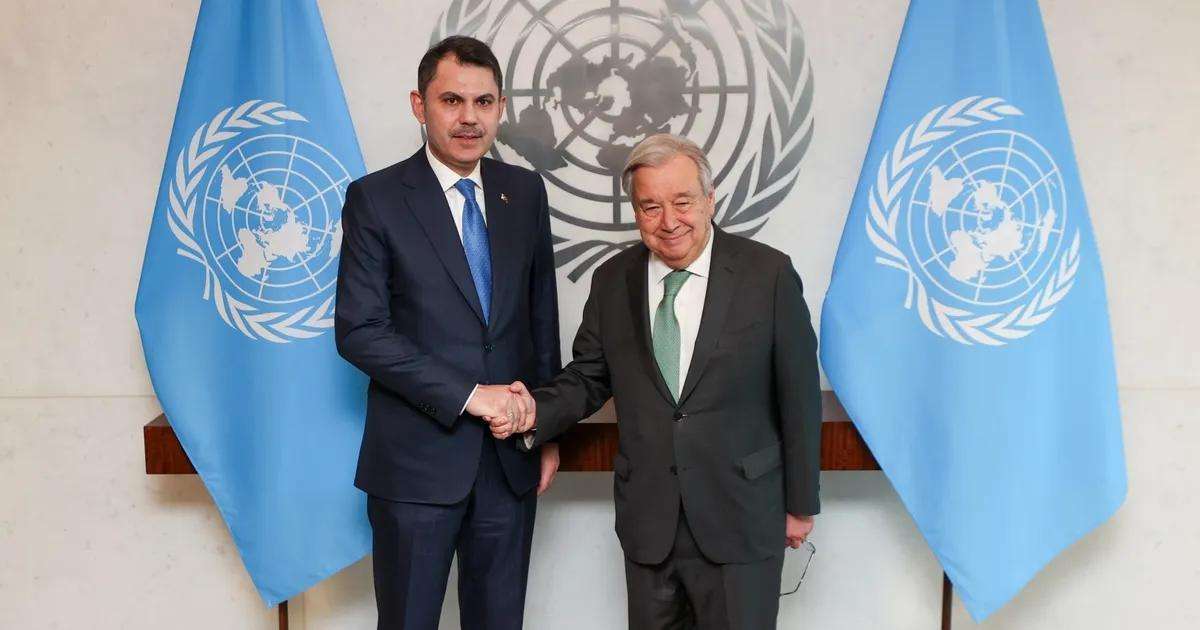
MARITIMEPOSTS.COM – As Turkey prepares to welcome world leaders and negotiators to COP31 in Antalya in 2026, one figure is increasingly stepping into the international spotlight: Murat Kurum.
Widely recognized for his work in urban development, environmental management, and post-disaster reconstruction, Kurum has become one of Turkey’s most prominent policymakers and a key actor in the country’s expanding role in global climate governance.
At a time when nations are grappling with the twin challenges of climate change and sustainable development, Kurum’s career reflects the growing intersection between environmental policy, urban resilience, and economic modernization.
His experience spans infrastructure planning, housing development, disaster recovery, and climate action, positioning him at the center of Turkey’s efforts to build a more sustainable future.
From Civil Engineer to National Policymaker
Born in Ankara on May 7, 1976, Murat Kurum studied Civil Engineering at Selçuk University, laying the foundation for a career deeply rooted in construction, infrastructure, and urban planning.
Before entering frontline politics, he accumulated extensive experience in Turkey’s housing and development sectors. His technical expertise and management capabilities enabled him to rise through the ranks of public institutions responsible for urban growth and housing policy.
A significant chapter of his professional journey was spent at Turkey’s Housing Development Administration, commonly known as TOKİ. The agency plays a central role in delivering affordable housing and managing large-scale urban development projects across the country.
Through this work, Kurum gained firsthand insight into the opportunities and challenges associated with rapid urbanization, population growth, and infrastructure expansion.
Steering Turkey’s Environmental and Urban Agenda
Kurum rose to national prominence in 2018 when he was appointed Minister of Environment and Urbanization under President Recep Tayyip Erdoğan.
His appointment came during a period when environmental concerns and climate-related challenges were becoming increasingly important both domestically and internationally. As minister, he oversaw policies ranging from urban regeneration and housing development to environmental protection and disaster preparedness.
Recognizing the growing significance of climate change, Turkey expanded the ministry’s mandate in 2021, renaming it the Ministry of Environment, Urbanization and Climate Change. The move signaled a stronger commitment to integrating climate considerations into national development planning.
Under Kurum’s leadership, the ministry has managed a broad range of responsibilities, including urban transformation initiatives, climate adaptation programs, environmental conservation, waste management, and resilience-building measures aimed at protecting communities from future risks.
He has also been one of the most visible champions of Turkey’s Zero Waste initiative, a nationwide program designed to reduce waste generation, improve recycling systems, and encourage more sustainable patterns of consumption and production.
Leading Reconstruction After National Tragedy
One of the most defining periods of Kurum’s public service came after the devastating earthquakes that struck southeastern Turkey in February 2023.
The disaster caused immense human suffering and widespread destruction across several provinces, creating one of the largest reconstruction challenges in the country’s modern history.
Kurum became a central figure in coordinating rebuilding efforts, overseeing the construction of new housing, infrastructure restoration, and long-term recovery projects. His role during this period reinforced his image as a practical administrator capable of managing complex and high-pressure situations.
The experience also strengthened the national conversation around resilience, highlighting the importance of designing cities and infrastructure that can better withstand natural disasters and future climate-related risks.
A High-Profile Political Figure
In 2024, Kurum entered one of Turkey’s most closely watched political contests when he became the candidate of the ruling Justice and Development Party (AK Party) for the mayoralty of Istanbul.
As Turkey’s largest city and economic powerhouse, Istanbul carries enormous political significance. Although Kurum was unsuccessful in his bid, the campaign significantly increased his visibility and solidified his position as one of the country’s leading political figures.
Throughout the race, he focused on issues that have become central to urban governance worldwide, including affordable housing, infrastructure modernization, transportation systems, urban renewal, and earthquake preparedness.
Climate Policy in a Changing World
While urban development has been the cornerstone of his career, climate policy has become an increasingly important component of Kurum’s work.
Turkey’s ratification of the Paris Agreement in 2021 and its commitment to achieving net-zero emissions by 2053 require substantial changes across key sectors of the economy. Achieving those goals will involve major investments in renewable energy, energy efficiency, sustainable transportation, and climate-resilient infrastructure.
Kurum has consistently emphasized the need to align economic growth with environmental responsibility. Under his stewardship, Turkey has advanced initiatives aimed at increasing renewable energy deployment, strengthening resilience against climate impacts, improving environmental management, and encouraging sustainable urban expansion.
His approach mirrors a broader trend among emerging economies that view climate action not as an obstacle to development, but as an essential component of long-term prosperity.
A Strategic Role in COP31
As host nation for COP31, Turkey is expected to play a significant role in shaping the future direction of international climate negotiations, and Murat Kurum is likely to be one of the country’s most influential voices throughout the process.
Organizing a global climate summit involves far more than logistics. It requires political leadership, diplomatic coordination, and the ability to navigate complex discussions on emissions reductions, adaptation, climate finance, and resilience.
Turkey’s unique geopolitical position gives it the ability to engage with both developed and developing nations while serving as a bridge between Europe, Asia, and the broader Global South. Many observers believe this intermediary role could become increasingly important as climate diplomacy unfolds within an increasingly fragmented international landscape.
Kurum’s background in managing large-scale development programs and environmental initiatives may prove particularly valuable as Turkey seeks to facilitate dialogue and build consensus among diverse stakeholders.
Integrating Growth and Sustainability
Perhaps the defining feature of Murat Kurum’s public career has been his effort to reconcile economic development with environmental stewardship.
Like many middle-income countries, Turkey faces the challenge of sustaining economic growth while addressing climate vulnerability, increasing energy demand, and accelerating urbanization. Kurum has consistently advocated for policies that view infrastructure development, environmental protection, disaster resilience, and climate adaptation as complementary objectives rather than competing priorities.
This integrated perspective is becoming increasingly relevant as governments worldwide seek solutions that can simultaneously support economic progress and environmental sustainability.
Looking to the Future
Murat Kurum’s career reflects the evolution of modern governance, where issues such as climate change, urbanization, infrastructure, and economic development are increasingly interconnected.
Whether regarded as an engineer, policymaker, administrator, or climate leader, he represents a generation of public officials tasked with navigating some of the most complex challenges of the twenty-first century.
As Turkey prepares for COP31 and seeks to strengthen its role in international climate diplomacy, Kurum is expected to remain a central figure in shaping both national policy and global discussions on sustainable development. His influence is likely to extend well beyond Turkey’s borders as the world searches for pathways toward a more resilient, low-carbon future.