
MARITIMEPOSTS.COM – ANTALYA — As preparations intensify for COP31, scheduled to take place in Antalya, Turkey, from 9–20 November 2026, Turkish officials are presenting an ambitious vision for the global climate conference: a COP centered on implementation, consensus-building, and practical climate action.
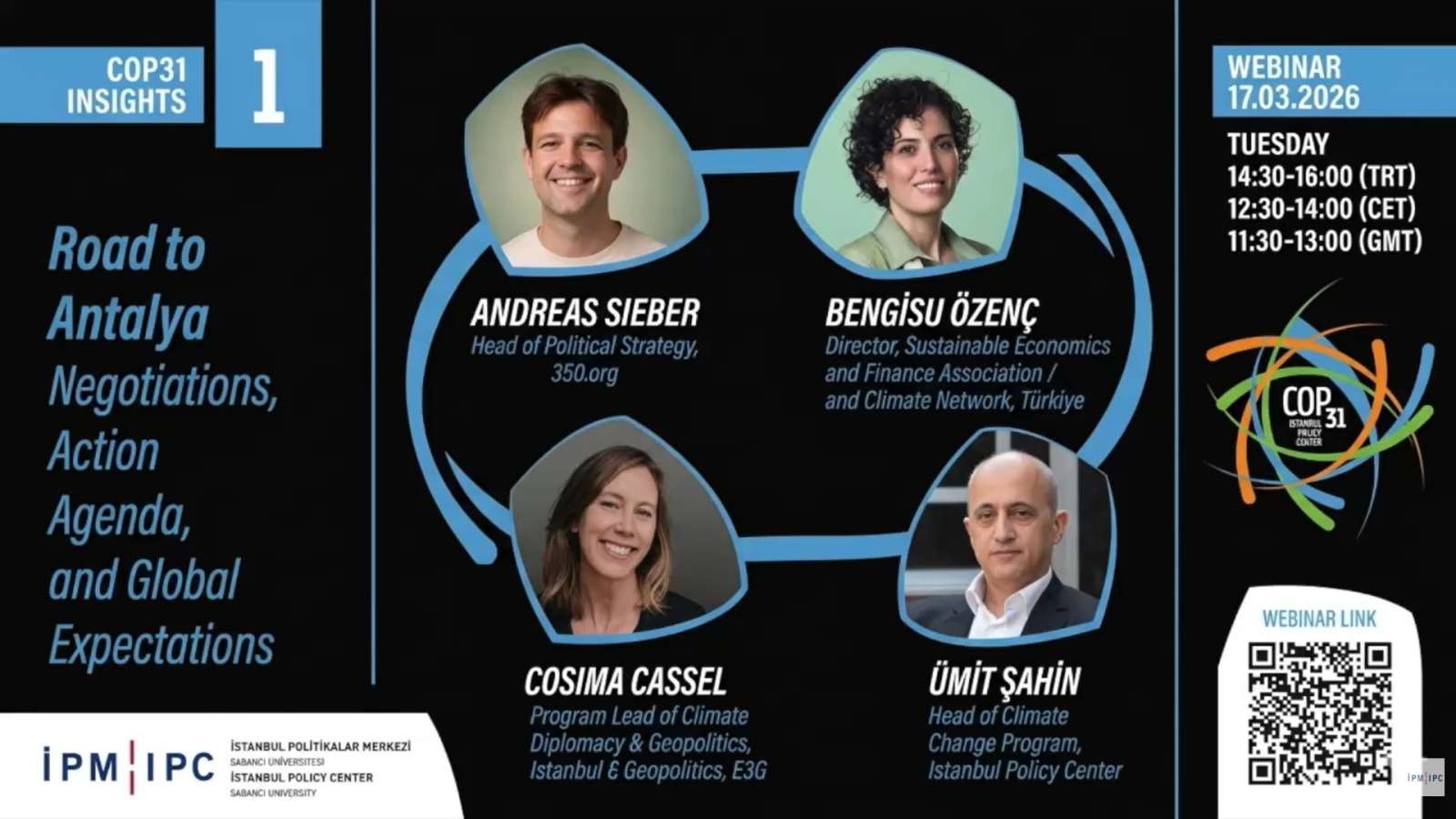
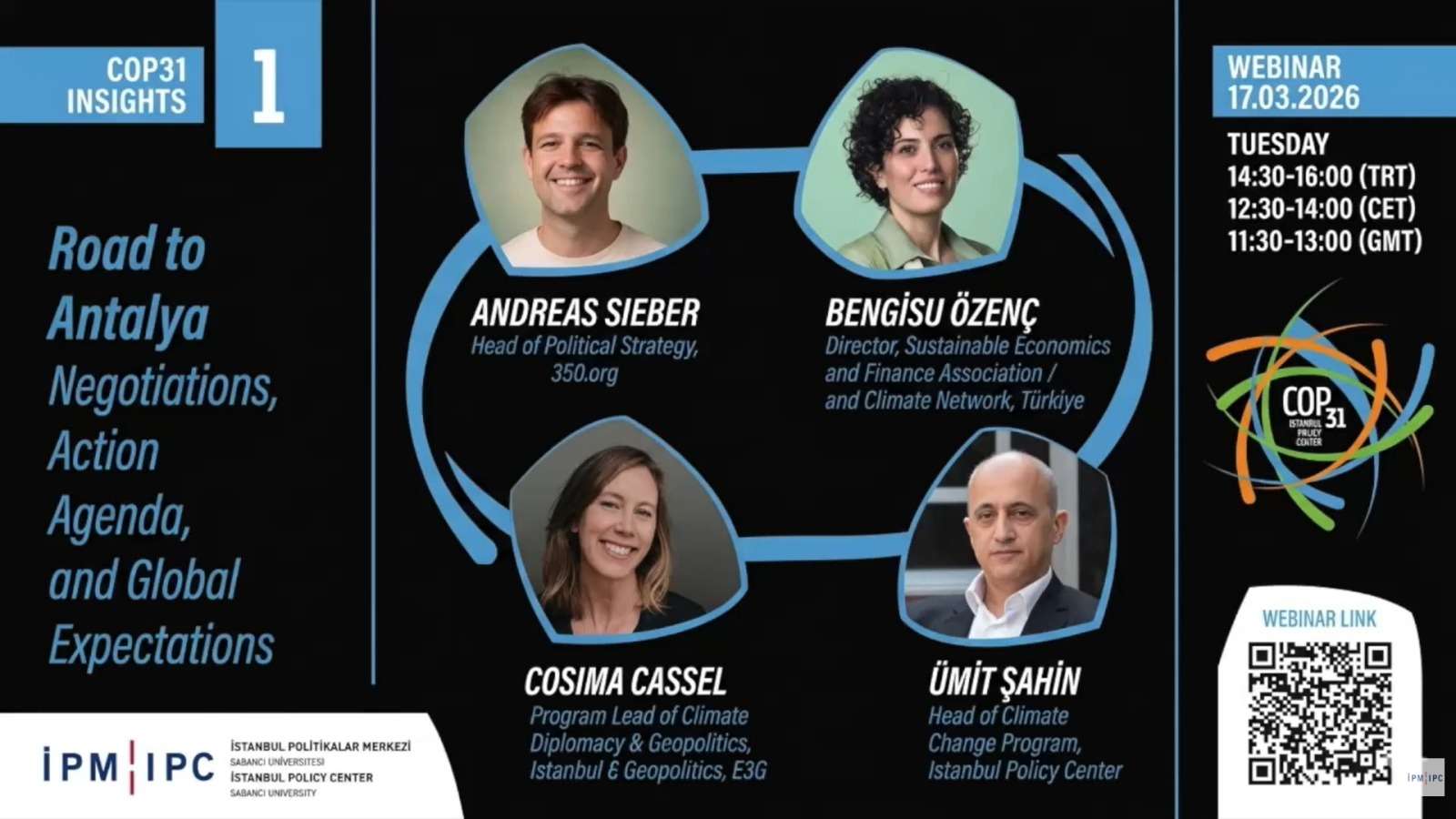
The direction was outlined during the first webinar in the “COP31 Insight Series,” organized by the Istanbul Policy Center at Sabancı University.
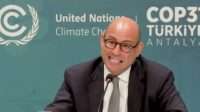
Speaking at the event, climate policy expert Ümit Şahin provided an overview of Turkey’s preparations, institutional arrangements, and emerging priorities as the incoming COP presidency.
Source:
A Unique Partnership with Australia
One of the most distinctive features of COP31 is the partnership model between Turkey and Australia.
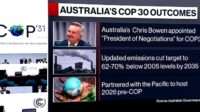
Under the agreement, Turkey will host the conference and provide the COP31 President, while Australia will appoint the President of Negotiations and oversee the negotiation process. Australia will also lead the drafting of negotiation texts and facilitate discussions under the UNFCCC framework.
Meanwhile, Turkey will be responsible for the broader COP31 vision, communications, and Action Agenda.
The arrangement also includes a Pacific dimension. Fiji is expected to host the pre-COP meeting, while Tuvalu will host a leaders’ gathering ahead of the conference, reflecting the involvement of Pacific island nations that are among the most vulnerable to climate change.
Building the COP31 Architecture
Turkey has established an extensive governance structure to manage COP31 preparations.
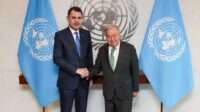
At the center is Environment, Urbanization and Climate Change Minister Murat Kurum, who serves as COP31 President-designate. Supporting him are deputy ministers, climate officials, a high-level climate champion, thematic champions, and advisory bodies.
The COP31 structure includes three thematic champion roles:
- Climate-Resilient Cities Champion
- Green Finance Champion
- Green Technology Champion
Turkey has also formed a steering committee involving multiple ministries, public institutions, local governments, and climate agencies to coordinate preparations.
“COP of the Future”
Turkey has branded COP31 as the “COP of the Future,” while also describing it as an “Implementation COP” that builds on the outcomes of COP30 in Belém, Brazil.
According to Şahin, Turkish officials consistently emphasize the importance of turning climate commitments into concrete action.
While implementation is the dominant theme, Turkey has also repeatedly reaffirmed support for maintaining momentum toward the Paris Agreement’s 1.5°C temperature goal.
“Implementation” and “action” are expected to become key narratives throughout the Antalya conference.
A Mediator Between Climate Blocs
A notable aspect of Turkey’s positioning is its attempt to act as a bridge between competing geopolitical interests in climate negotiations.
Minister Murat Kurum has described Turkey as a “balancing power” between what he called the “fossil block” and the “green block,” while also portraying the country as a mediator between developed and developing nations.
Turkey argues that its diplomatic experience in conflict mediation and peace-building can contribute to climate diplomacy by fostering dialogue, trust, and consensus among negotiating parties.
This approach aligns with Turkey’s longstanding effort to occupy a unique position between the Global North and Global South in international climate discussions.
Climate Justice and Shared Responsibility
Turkey’s climate messaging also incorporates themes of climate justice and Common But Differentiated Responsibilities (CBDR), a principle that recognizes different historical contributions and capacities among countries.
Officials have stressed that Turkey does not seek to represent a particular negotiating bloc but instead hopes to facilitate cooperation across diverse interests.
The emphasis on consensus-building reflects growing concern that increasingly polarized geopolitical conditions could complicate climate negotiations in the years ahead.
Energy Security Takes Center Stage
One of the strongest signals emerging from Turkey’s preparations is the prominence of energy issues.
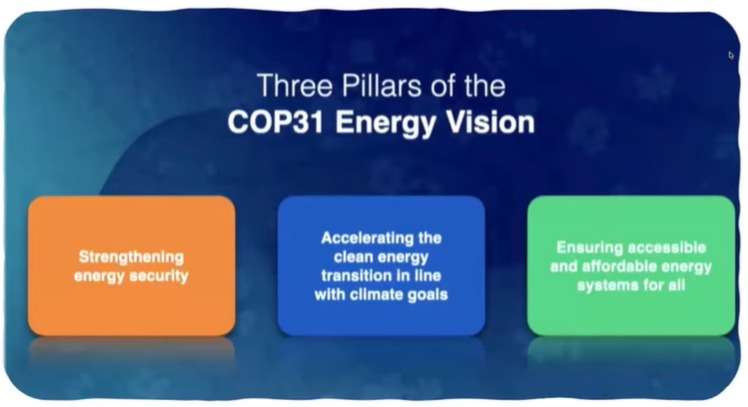
During a recent event with International Energy Agency Executive Director Fatih Birol, Turkish officials highlighted three broad priorities:
- Energy security
- Affordable and accessible energy systems
- Accelerated clean energy transition
The focus reflects growing global concerns over energy supply disruptions, geopolitical tensions, and the challenge of balancing economic development with climate commitments.
Key Priorities for COP31
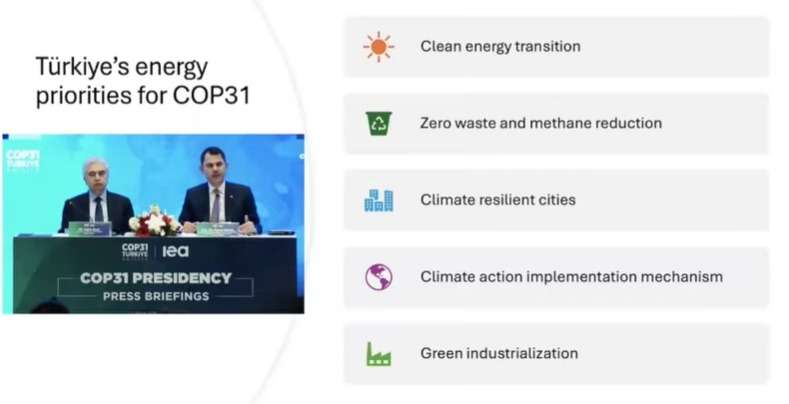
Turkey has identified several flagship themes that are likely to shape both the Action Agenda and broader political discussions at COP31:
1. Clean Energy Transition
Accelerating the shift toward renewable energy while ensuring energy security and affordability.
2. Zero Waste and Methane Reduction
Building on Turkey’s internationally promoted Zero Waste initiative while increasing attention to methane emissions as a critical short-term climate mitigation opportunity.
3. Climate-Resilient Cities
Given Minister Kurum’s background in urban development, cities are expected to feature prominently in discussions around resilience, infrastructure, energy efficiency, and adaptation.
4. Climate Action Implementation
Moving beyond pledges and commitments toward practical mechanisms that deliver measurable outcomes.
5. Green Industrialization
Supporting low-carbon industrial transformation while maintaining economic competitiveness.
Fossil Fuels Remain a Critical Test
One of the most closely watched issues at COP31 will be how the conference addresses the global commitment to transition away from fossil fuels.
Responding to questions from journalists, Murat Kurum acknowledged that previous COP decisions had already established a roadmap for transitioning away from fossil fuels.
He suggested that COP31 should build on those decisions and strengthen implementation efforts rather than reopen settled debates.
The issue is expected to remain among the most politically sensitive topics in Antalya.
Looking Ahead
As preparations continue, Turkey is presenting COP31 as a conference focused on dialogue, trust-building, and practical climate action.
Whether Antalya can deliver meaningful progress on climate finance, adaptation, fossil fuel transition, and implementation remains to be seen. However, Turkey’s early messaging suggests an effort to position itself as a mediator capable of bridging divides at a time when international climate negotiations face growing geopolitical pressures.
With less than a year remaining before world leaders, negotiators, businesses, and civil society gather in Antalya, COP31 is already shaping up as a test of whether global climate diplomacy can move from commitments to delivery.
This version reads as a professional climate-policy feature article and highlights the key elements of Turkey’s emerging COP31 strategy without reproducing the webinar transcript format.
___
Editor K. Azis