
MARITIMEPOSTS.COM – ISTANBUL — In a world increasingly defined by geopolitical tensions, trade disputes, and growing insecurity, climate action offers something many nations desperately need: stability, prosperity, and a pathway toward a more secure future.
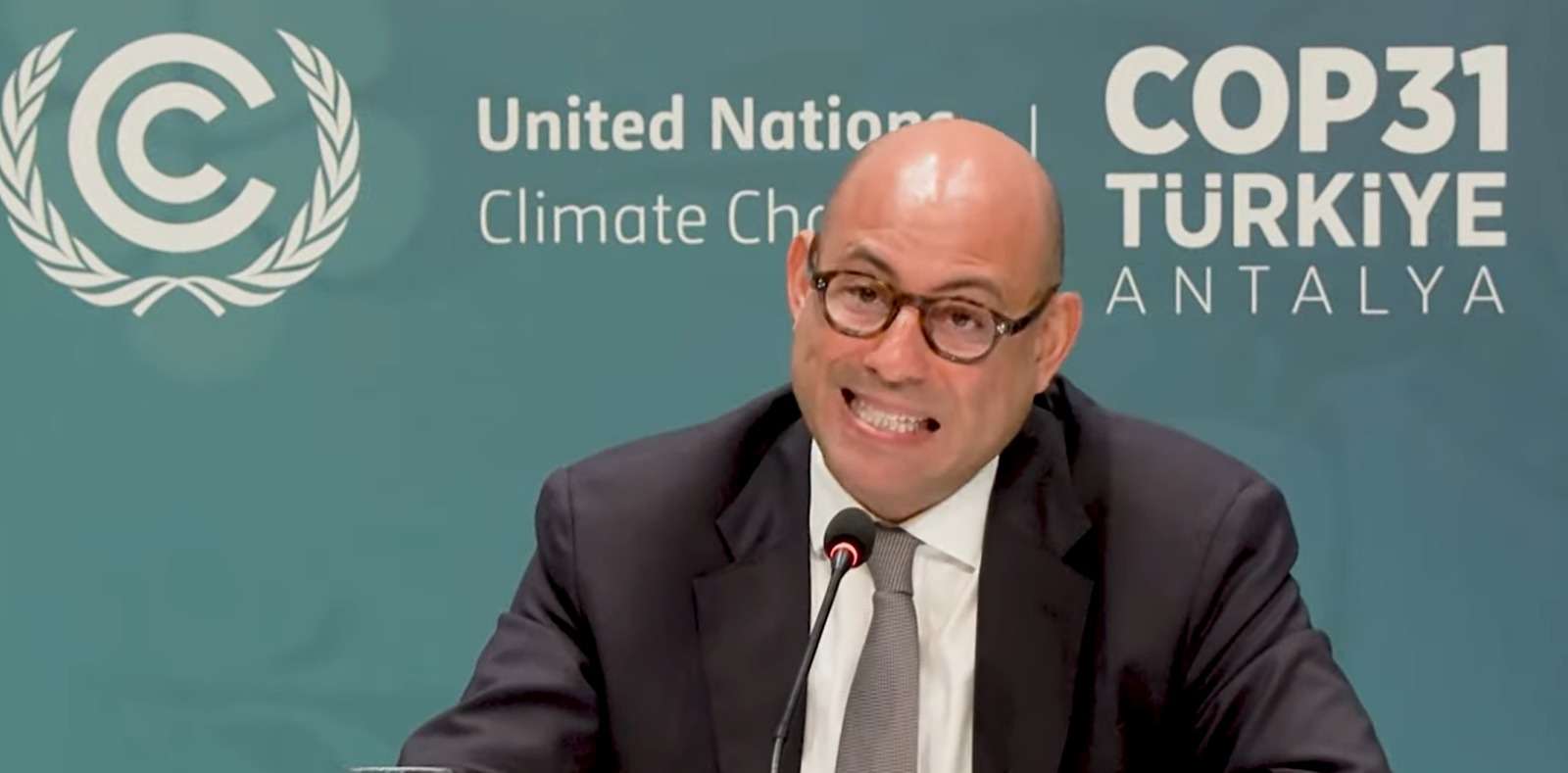
That was the central message delivered by UN Climate Change Executive Secretary Simon Stiell during a high-level climate dialogue in Istanbul, where global leaders, policymakers, and climate experts gathered to discuss the road toward COP31 in Antalya, Türkiye.
Addressing participants, Stiell thanked the Turkish government for its hospitality and praised the country’s growing leadership in areas such as renewable energy development and its ambitious zero-waste initiatives.
He also acknowledged the crucial roles of Türkiye as the incoming COP31 Presidency, Australia as President of Negotiations, Brazil as the current COP30 Presidency, and Azerbaijan as the previous COP29 host.
But beyond diplomatic courtesies, his remarks painted a stark picture of the global landscape confronting climate diplomacy.
Source:
A New Era of Global Instability
According to Stiell, the world has entered what he described as a “new world disorder”—a period marked by geopolitical fragmentation, economic uncertainty, military conflicts, and rising trade tensions.
“The very concept of international cooperation is under attack,” he warned.
Yet amid these challenges, he argued that climate action remains one of the few areas capable of fostering cooperation across political divides.
Rather than being a burden, climate action can serve as a stabilizing force in an increasingly unstable world.
“In the face of today’s chaos, we can and must drive forward a new era of international climate cooperation,” Stiell said.
From Discovery to Solutions—and Now Implementation
To explain where global climate efforts stand today, Stiell divided the history of climate action into three distinct eras.
The first era was characterized by scientific discovery and debate. Nations spent years identifying the problem of climate change while arguing about its scale and implications.
The second era focused on developing solutions. This period culminated in the landmark Paris Agreement, which fundamentally altered the trajectory of global climate action by establishing a shared framework for reducing emissions and limiting global warming.
Although the Paris Agreement did not solve the climate crisis, it demonstrated that nations could unite around a common objective and drive transformative change.
The results have been significant.
Since the Paris Agreement was adopted, annual investment in clean energy has increased tenfold—from roughly $200 billion to more than $2 trillion annually.
Even amid economic uncertainty and political headwinds, 2025 saw clean energy investments continue to grow, surpassing fossil fuel investments by more than two to one. Renewable energy overtook coal as the world’s largest source of electricity, while many countries introduced updated national climate plans designed to support economic growth while reducing emissions.
At COP30, nations collectively reaffirmed that the global transition toward clean energy is now irreversible.
“The Paris Agreement is working,” Stiell said. “Together we can make it go further and faster.”
Climate Progress Faces Growing Resistance
Despite undeniable progress, climate action faces mounting resistance.
Stiell noted that powerful interests continue to promote greater dependence on coal, oil, and gas, despite overwhelming economic and scientific evidence supporting a transition to cleaner energy systems.
These efforts, he argued, risk worsening climate-related disasters while increasing costs for households, businesses, and governments.
However, he stressed that regression is not inevitable.
An alternative path remains available: deeper international cooperation combined with stronger partnerships among governments, businesses, investors, regional authorities, and civil society.
Such collaboration forms the foundation of what he called the third era of climate action—the Era of Implementation.
The Era of Implementation
For Stiell, the next phase of climate action must focus not on negotiating new ambitions alone but on delivering existing commitments at scale.
This includes implementing the outcomes of the first Global Stocktake agreed in 2023, particularly the commitments to double energy efficiency improvements and triple renewable energy capacity by 2030.
It also requires accelerating the transition away from fossil fuels in a just, orderly, and equitable manner, strengthening climate resilience, reducing vulnerability, and ensuring that climate finance reaches communities most in need.
By the time the second Global Stocktake takes place in 2028, countries must be able to demonstrate measurable progress toward these goals.
Success, he argued, would allow nations to arrive at COP33 prepared not merely to survive climate impacts but to build stronger economies, more resilient societies, and lower-emission development pathways.
Four Priorities for Accelerating Climate Action
Stiell outlined four key priorities for turning ambition into reality.
The first is rapidly scaling up climate-related projects around the world by connecting countries with financiers, investors, and private-sector partners capable of delivering implementation on the ground.
He highlighted the growing importance of the COP Action Agenda, which complements formal negotiations by mobilizing investment and partnerships. At COP30 alone, significant commitments were announced for clean electricity grids, forest protection, climate-resilient health systems, and other critical sectors.
The second priority is dramatically increasing climate finance.
Developing countries require affordable capital and expanded financial support to implement their Nationally Determined Contributions (NDCs) and National Adaptation Plans. Multilateral development banks, private investors, and financial institutions must play a greater role in lowering capital costs and increasing investment flows.
Third, Stiell emphasized the importance of maintaining momentum among the most ambitious countries and coalitions. This includes developing roadmaps for transitioning away from fossil fuels, ending deforestation, and advancing initiatives such as Mission 1.5, the Global Implementation Accelerator, and the Baku-to-Belém Roadmap toward mobilizing $1.3 trillion in climate finance.
Finally, he argued that international climate processes themselves must evolve. Climate governance should move closer to the real economy, focusing more directly on implementation and tangible benefits for people and communities.
Climate Action Is a Security Strategy
One of the strongest themes of Stiell’s address was the link between climate action and security.
While security dominates political discourse worldwide, he argued that many leaders still define the concept too narrowly.
For any government genuinely concerned about national security, climate action should be considered mission-critical.
Unchecked climate change fuels food insecurity, displacement, conflict, economic instability, and humanitarian crises. Rising greenhouse gas emissions increase the frequency and intensity of climate extremes, placing additional strain on governments and societies.
By contrast, renewable energy offers a pathway toward greater energy independence and protection from geopolitical shocks.
“Renewables are the clearest and cheapest path to energy security and sovereignty,” he said.
Likewise, climate adaptation represents one of the most effective ways to protect billions of people from escalating climate impacts.
As climate disasters increasingly disrupt food systems and drive inflation, resilient supply chains and climate-resilient infrastructure become essential components of economic stability.
Why Cooperation Still Matters
Despite today’s fractured geopolitical environment, Stiell expressed confidence that international climate cooperation can continue to deliver meaningful progress.
His optimism rests on a simple premise: climate action aligns with every nation’s self-interest.
It lowers energy costs, improves public health through cleaner air, creates millions of jobs, expands energy access, and supports economic development.
More than 700 million people worldwide still lack access to electricity. Expanding clean energy access means new opportunities for businesses, better educational outcomes for children, improved healthcare, modern food storage, and safer living conditions in a warming world.
For developing nations in particular, climate action represents not only an environmental necessity but also an economic opportunity.
Antalya and the Road to COP31
Looking ahead, Stiell described Türkiye as uniquely positioned to help advance global climate cooperation.
Situated at the crossroads of continents and civilizations, Türkiye serves as a bridge between different regions, perspectives, and political realities. That role, he suggested, will be invaluable as countries prepare for COP31 in Antalya.
“There is a huge amount of work before us,” Stiell said.
But he remains convinced that climate cooperation can serve as an antidote to the instability and uncertainty defining the current era.
With the support of the United Nations, Türkiye, Australia, Brazil, and future presidencies, the goal is clear: ensure that COP31 delivers tangible results for people, prosperity, and the planet.
At a time when global cooperation is increasingly difficult, climate action may prove to be one of the few forces capable of bringing nations together around a common future.