
Research conducted by The COMMIT Foundation found that ocean currents began changing around 2006 and became increasingly unpredictable after 2012. Residents also reported rising sea levels, with water levels increasing by approximately 20 centimeters during low tide and up to 80 centimeters during high tide.
By Kamaruddin Azis
Founder, The Maritime Posts
MARITIMEPOSTS.COM — Morning had just broken over Mola Raya when seawater began creeping beneath the stilt houses that line the coast. To visitors, the scene might appear ordinary.
After all, the sea has always been an inseparable part of the Bajo people’s lives, a community that has lived alongside the waves for generations.
But for local residents, something has changed.
High tides now rise higher than they remember. Ocean currents move in increasingly unpredictable patterns. The seasons no longer arrive according to the traditional calendar passed down by their ancestors. Out at sea, fish species that were once abundant near shore seem to have drifted away from their fishing grounds.
“We used to know when the winds would shift and when it was safe to go fishing. Now it’s difficult to predict,” said Abdul Manan, President of the World Bajo Community from Mola, recalling findings documented during field research conducted by JICA and The COMMIT Foundation.
What Manan describes is more than a personal observation. The study, conducted between 2012 and 2013, identified a range of ecological changes indicating that Wakatobi is facing serious environmental pressures.
In a region recognized as one of the world’s centers of marine biodiversity, climate change is no longer a future threat. It has already become part of everyday life.
A Sea Losing Its Rhythm
For centuries, the people of Wakatobi have relied on nature as their guide.
“Names such as Timu, Salata, Bhetopariama, and Wakampopo are not merely local terms for winds. They represent navigational knowledge passed down through generations,” explained Abdul Manan, who at the time also served as Head of Wakatobi’s Regional Development Planning Agency.
Through these environmental signals, fishers determined when to sail, farmers decided when to plant, and coastal communities prepared for changes in weather conditions.
Today, that knowledge is becoming less reliable.
Research conducted by The COMMIT Foundation found that ocean currents began changing around 2006 and became increasingly unpredictable after 2012. Residents also reported rising sea levels, with water levels increasing by approximately 20 centimeters during low tide and up to 80 centimeters during high tide.
The situation has been exacerbated by the increasing intensity of a local storm phenomenon known as Latogo.
“The storms feel much stronger than they used to,” said Jumiadin, a resident of Tomia who participated in the research.
For communities living only a few meters from the shoreline, these changes are far more than unusual weather events. They pose direct threats to homes, jetties, and entire living spaces.
While changes at sea are visible from people’s front doors, another transformation has been unfolding quietly on land.
The JICA-COMMIT study found that large-scale tree exploitation has been occurring since the 1920s. Over decades, forest areas have steadily diminished as land was cleared for settlements, public facilities, agriculture, and plantations.
“As a result, many species have lost their habitats,” emphasized Ruslan Situju, a COMMIT research coordinator based in Kendari.
Ruslan noted that local communities report seeing fewer wildlife species that were once common, including Buritti, herons, doves, and Maa birds. Populations of Wakatobi’s iconic bird species, including several types of cockatoos and eagles, have also declined significantly.
“The loss of wildlife is often viewed purely as a conservation issue. But for small-island communities, animals and vegetation are integral components of ecological systems that maintain water resources, soil quality, and local microclimates,” Ruslan explained.
“When forests shrink, the entire life-support system weakens.”
Fish Moving Further Offshore
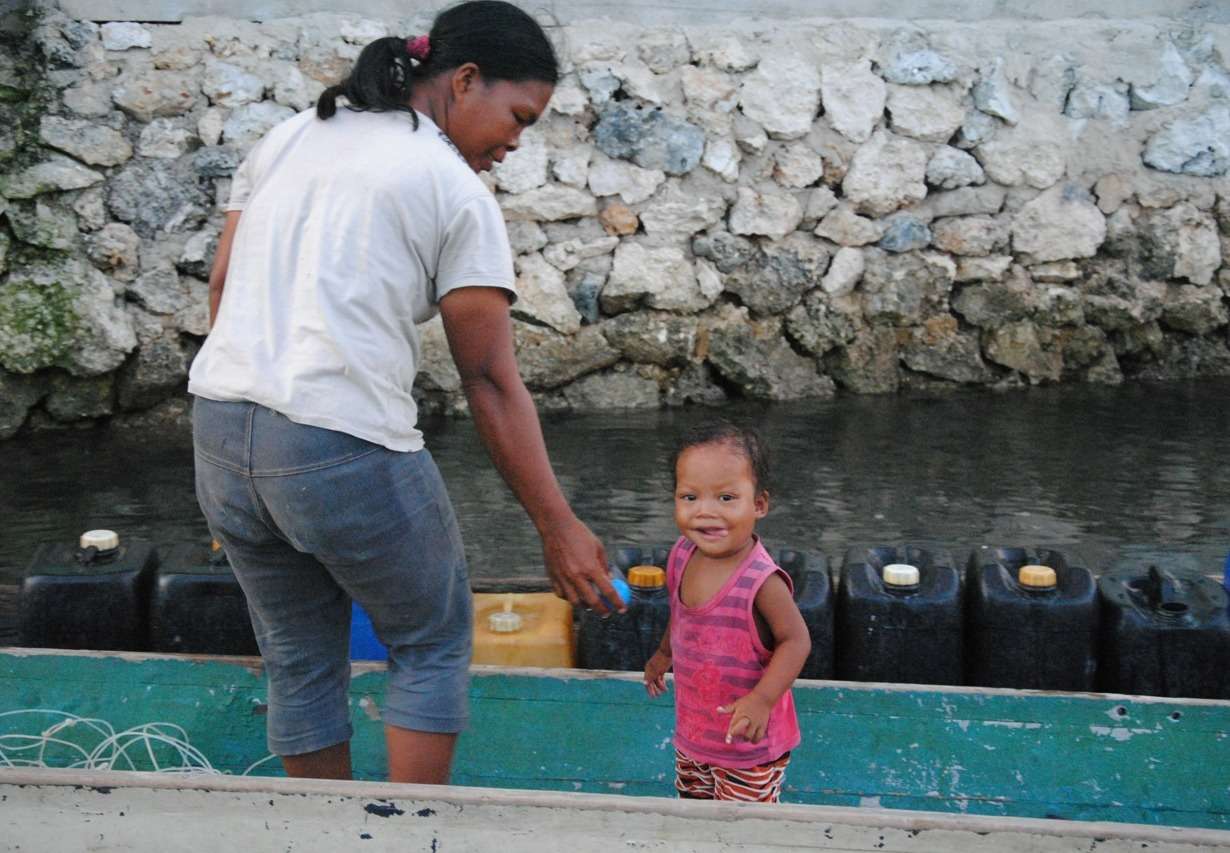
Perhaps no group feels these changes more acutely than fishers such as Hasanuddin from Tampara Village on Kaledupa Island.
“In many coastal villages, residents say their catches have steadily declined compared to the past. Several important commercial fish species, including katamba, snapper, taruda, lompa, and opuru, are now found much farther offshore,” Hasanuddin told Kamaruddin Azis, then COMMIT’s secretary and a member of the research team.
“In the past, fishing near the village was enough. Now we have to travel much farther into open waters,” he added.
This shift forces fishers to spend more on fuel, spend longer hours at sea, and face greater safety risks.
Amid declining catches, another puzzling phenomenon emerged.
“In 2012, residents across Wangi-Wangi, Kaledupa, and Tomia reported the mass appearance of a previously unknown fish species. Locals called it ‘Pogo Baru’,” Abdul Manan explained.
Researchers suspect the emergence of this species may be linked to changing ocean conditions and rising sea temperatures that are altering the distribution of marine organisms.
For scientists and policymakers such as Abdul Manan, phenomena like this often serve as biological indicators that marine ecosystems are undergoing significant shifts.
When Fresh Water Becomes a Luxury
One of Wakatobi’s greatest ironies lies in its freshwater crisis.
Surrounded by vast expanses of ocean, many island communities are finding it increasingly difficult to secure clean drinking water.
“Over the past several years, many household wells have become brackish due to seawater intrusion. At the same time, water discharge from springs and cave water sources has declined,” said Saoruddin Ludi from Kaledupa.
“The water tastes different now. It’s becoming salty,” he said.
These changes have directly affected household expenses. Some families are forced to purchase water, while others must travel longer distances to access safe drinking water.
For low-income households, the burden is substantial.
Adapting to Survive
Despite mounting pressures, the people of Wakatobi have not given up.
They adapt.
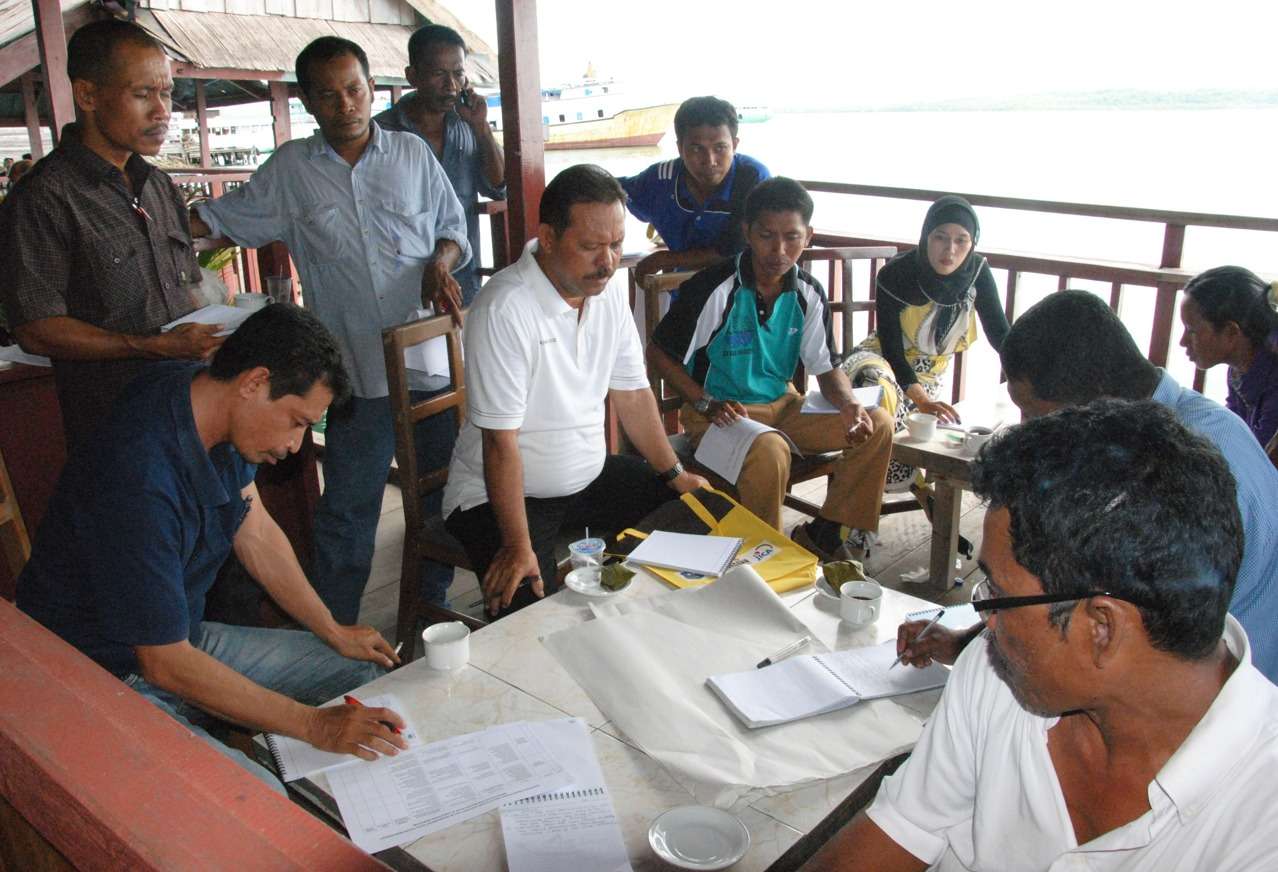
“Fishers have modified their fishing gear to reach deeper and more distant waters. Farmers have adjusted the Heresoi farming system, which has long been part of local agricultural knowledge,” Hasanuddin explained during a meeting with Jumardi Lanta, Kamaruddin Azis, and Ms. Noguchi of JICA-CDCCS on Kaledupa Island.
Some residents have made even more drastic decisions: leaving home altogether.
“Since the early 2000s, migration has become increasingly common. Taliabo, Ternate, Maluku, and Papua have become new destinations for residents seeking economic opportunities,” Hasanuddin said.
These shifts demonstrate that environmental crises never occur in isolation.
When the sea changes, the economy changes as well.
“When water becomes scarce, social structures begin to shift. When fish catches decline, young people start looking for a future elsewhere,” Hasanuddin lamented.
A Warning from Small Islands
For decades, Wakatobi has been celebrated globally as home to one of the richest marine ecosystems on Earth.
Yet behind its image as a world-class tourism destination, these small islands are sending a clear message.
They stand on the frontlines of the climate crisis.
The JICA and The COMMIT Foundation study shows that the changes unfolding here are not limited to rising temperatures or sea-level rise. They are affecting the very foundations of community life—from freshwater supplies and fisheries to forests and migration patterns.
The question is no longer whether these changes are happening.
The people of Wakatobi are already experiencing them.
The remaining question is whether attention, policy interventions, and adaptation investments will arrive quickly enough before these transformations outpace communities’ ability to cope.
Because if Wakatobi—long regarded as the heart of the world’s marine biodiversity—is struggling to maintain its balance, then what is happening here today may well foreshadow the future of thousands of small islands across Indonesia.
___
Author: Kamaruddin Azis is the Founder of The Maritime Posts.