
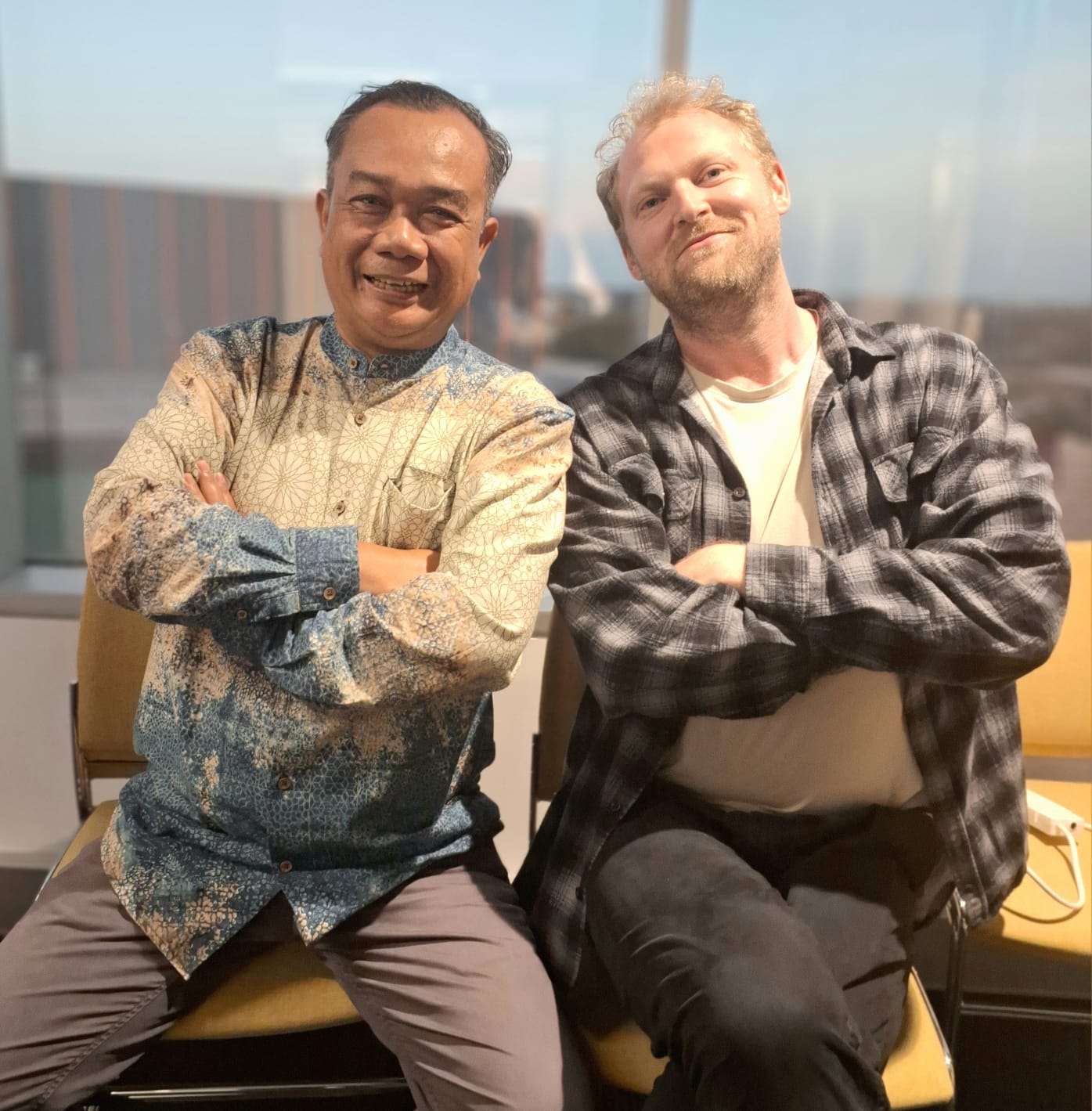
MARITIMEPOSTS.COM – MELBOURNE — One of the most valuable moments during my visit to Melbourne for the climate journalism workshop organized by Monash Climate Change Communication Research Hub and the Australia-Indonesia Centre on 14 May 2026 was meeting and learning directly from freelance journalist Zacharias Szumer.
The session was not merely about writing techniques. It became an important reflection on the deeper meaning of journalism itself — how stories should not only present information, but also uncover realities, amplify public voices, and critically examine issues that affect society.
Szumer, known for his writings in several respected publications including Michael West Media, The Monthly, Jacobin, and The South China Morning Post, shared perspectives on feature writing that felt both practical and intellectually challenging.
His approach emphasized the importance of going beyond surface-level reporting.
One lesson that stood out strongly was the need for journalists to “deep dive” into stories. According to him, important issues cannot be understood only through official statements or statistical reports.
Journalists must spend time listening carefully to respondents, understanding the experiences of citizens, and observing the broader social context surrounding an issue.
For me, this perspective was highly relevant, especially in reporting climate change, environmental crises, fisheries, and coastal communities in Indonesia.
Often, the most meaningful stories emerge not from government podiums, but from conversations with ordinary people whose lives are directly affected by policy decisions, ecological damage, or economic inequality.
The workshop also highlighted the importance of comprehensive storytelling.
A feature story should not only explain what happened, but also why it matters, who is affected, and how the issue connects to larger structural realities. Szumer encouraged participants to build narratives that are rich in detail, emotionally grounded, and supported by strong investigation.
What I found particularly inspiring was his emphasis on critical journalism without losing humanity. He explained that journalism should challenge power and expose important truths, but at the same time remain deeply connected to people’s lived experiences.
That approach resonated strongly with many participants in the workshop, including journalists from Indonesia who are increasingly facing the challenge of reporting complex issues such as climate change, environmental degradation, social vulnerability, and public policy.
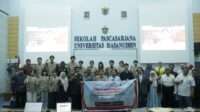
The workshop at Monash University’s Caulfield Campus became more than an academic discussion. It was also a space for reflection, collaboration, and cross-cultural learning between Indonesian and Australian journalists, researchers, and communication experts.
It is about patience in listening, courage in questioning, depth in investigation, and commitment to telling stories that truly matter to society.
As journalism continues to evolve in the digital era, where information moves rapidly and attention spans become shorter, the workshop served as a reminder that meaningful journalism still depends on one timeless principle — understanding people deeply before telling their stories.
Takeways from Mr Szumer
“Thank you so much for attending yesterday’s workshop on the challenges and complexities of reporting climate change within today’s evolving media ecosystem. It was a pleasure meeting all of you, and I hope there will be opportunities for collaboration in the future. Below are some of the articles I mentioned during the session,” said Szumer via email.
He also shared several investigative reports on carbon credits in Australia, which he described as important references for understanding the political, economic, and social dimensions of climate reporting.
“Dollars in the Dust: Is Outback Scrub Really Saving the Planet?”
“‘Parasites’, ‘Cowboys’: The Carbon Companies Dividing Rural Australia”
“Australia Carbon Credits: Behind the Private Sector’s Cash-In on Indigenous Practices”
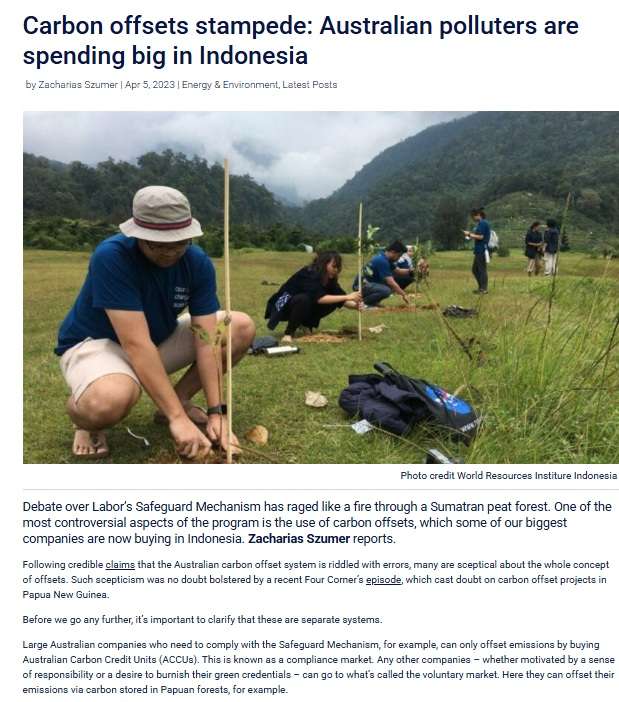
The article I wrote in 2023 about Australian companies purchasing Indonesian carbon offsets:
“Carbon Offsets Stampede: Australian Polluters Are Spending Big in Indonesia” – Michael West
Some strong articles from an SBS series about people displaced by the massive bushfires in Australia in 2020.
“How Black Summer Turned Ordinary Australians into Activists”
“It Was an Ordinary December for These Aussies. Then It Turned ‘Armageddon’”
___
Written by Kamaruddin Azis