
“It is not merely about presenting facts from the field, but about how, in a holistic way, we can present possible solutions and show what communities themselves can do.”
— Suriani Mappong, Antara journalist
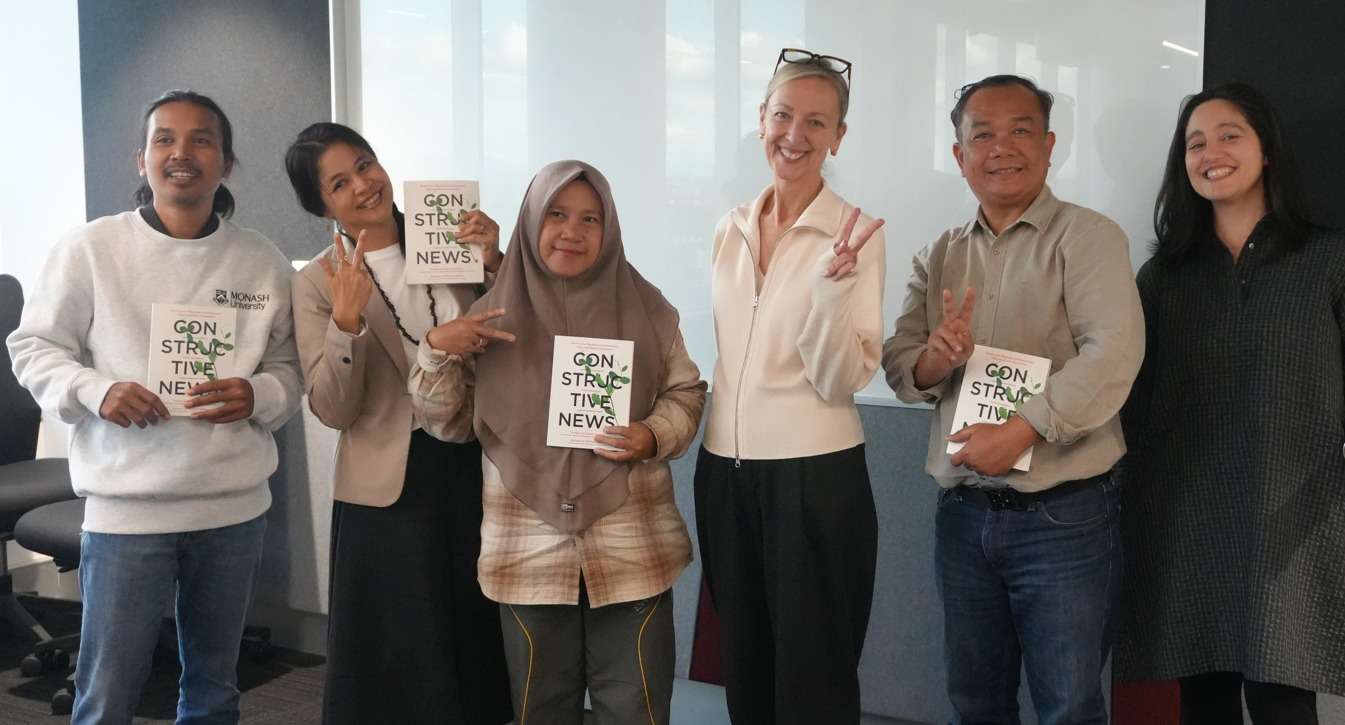
MARITIMEPOSTS.COM – Melbourne became a meaningful learning space for Suriani Mappong, one of the participants in the Climate Change and Journalism Writing Workshop that brought together Indonesian journalists, academics, researchers, and climate communication experts in Australia.
During her four days in Melbourne, Suriani and three other Indonesian participants joined a series of workshops, discussions, and knowledge-sharing sessions on the importance of strengthening climate journalism.
The program was organized by the Australia-Indonesia Centre with support from Monash CliComm at Monash University’s Caulfield Campus. The event took place from May 13–14, 2026.
In a relaxed interview before departing for Sydney, Suriani expressed her gratitude for the opportunity to participate in the program.
According to her, the workshop was not merely an academic forum, but also a reflective space for rethinking how the media should communicate climate change issues to the public.
“Here, we gained a lot of inspiration, including sharing sessions from professors and doctors invited as speakers,” she said.
One of the most important lessons she learned was the approach of constructive journalism.
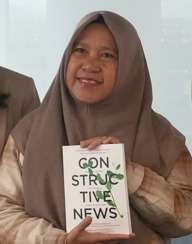
According to Suriani, the media should not only present surface-level facts about disasters or the impacts of climate change. Journalists also need to provide context, explain the causes, and highlight solutions that communities can understand and apply.
She pointed to environmental disaster reporting as an example. So far, media coverage has often focused only on the number of victims or the scale of losses.
However, she believes the public also needs to understand why disasters happen, what the root causes are, and what actions should be taken to prevent similar events from recurring.
“It is not merely about presenting facts from the field, but about how, in a holistic way, we can present possible solutions and show what communities themselves can do,” she explained.
For Suriani, journalism plays an important role as a facilitator between society and policymakers.
The media should be able to deliver information that is understandable to the public while also serving as a bridge for policies that support the environment and affected communities.
She observed that climate change issues are now receiving greater attention in newsrooms. A decade ago, climate reporting was often considered less important than politics or economics, but that perspective is beginning to change.
As the impacts of climate change are increasingly felt across society, the media no longer sees climate issues as peripheral concerns.
“Now climate change issues stand alongside economic and political issues in the newsroom,” she said.
According to her, digital media also offers greater opportunities for climate reporting because it is less constrained by space limitations compared to print media. This allows journalists to produce deeper and more comprehensive coverage.
Beyond understanding the importance of constructive journalism, Suriani also emphasized the need for stronger collaboration between the media and academic communities.
She believes many environmental and climate-related research findings are highly important, yet they have not been widely communicated to the public.
For this reason, she hopes media organizations can work more closely with researchers and universities so that research findings do not remain confined to academic circles, but instead become references for society and policymakers in shaping future decisions.
“Research conducted by academics needs to be exposed and integrated so that the findings can be implemented within society,” she said.
The workshop became a transformative experience for Suriani, offering a new perspective on how journalism can contribute to addressing the climate crisis.
Not only by reporting disasters, but also by presenting hope, solidarity, and solutions that encourage real change within society.
About Suriani Mappong
Suriani is a graduate of the Communication Department, Faculty of Social and Political Sciences, Hasanuddin University. She currently works for Antara News Agency, based in Makassar, and has participated in various writing classes and reporting projects.
She once completed a one-month internship in the Philippines and has covered a number of specific issues, including renewable energy, the pandemic, and coral reef conservation.
About the Program
Supporting Climate Reporting in Indonesia and Australia
Monash Climate Communication Hub (Monash CliComm) organized a two-day knowledge-sharing workshop in Melbourne, Australia, bringing together Indonesian and Australian journalists, climate scientists, communication experts, and researchers.
The event was part of the Supporting Climate Reporting in Indonesian Newsrooms project, conducted in collaboration with the Australia-Indonesia Centre (AIC) and supported by the Australia Indonesia Institute through the Australian Department of Foreign Affairs and Trade (DFAT).
The workshop aimed to strengthen journalists’ capacity to understand climate change issues, improve the quality of science-based reporting, and build collaboration between media organizations, academics, and researchers in communicating climate-related information to the public.
Indonesian participants included Kamaruddin Azis from Pelakita.ID and Maritimeposts.com, Suriani Mappong from Antara News Agency, Irmawaty, a freelance journalist with more than 15 years of experience at Tempo, and Alfian from Tribun Timur Network.
Throughout the workshop, participants discussed a range of important topics related to climate change and public communication, including the current state of the climate and future projections, approaches to effective climate communication, strategies for addressing misinformation and disinformation, and how Australian journalists develop narratives around climate and energy reporting.
Discussions also explored the systems and processes required to build effective international collaboration in climate reporting, local Indonesian climate research case studies, and constructive journalism approaches that not only present problems but also offer solutions and hope for audiences.
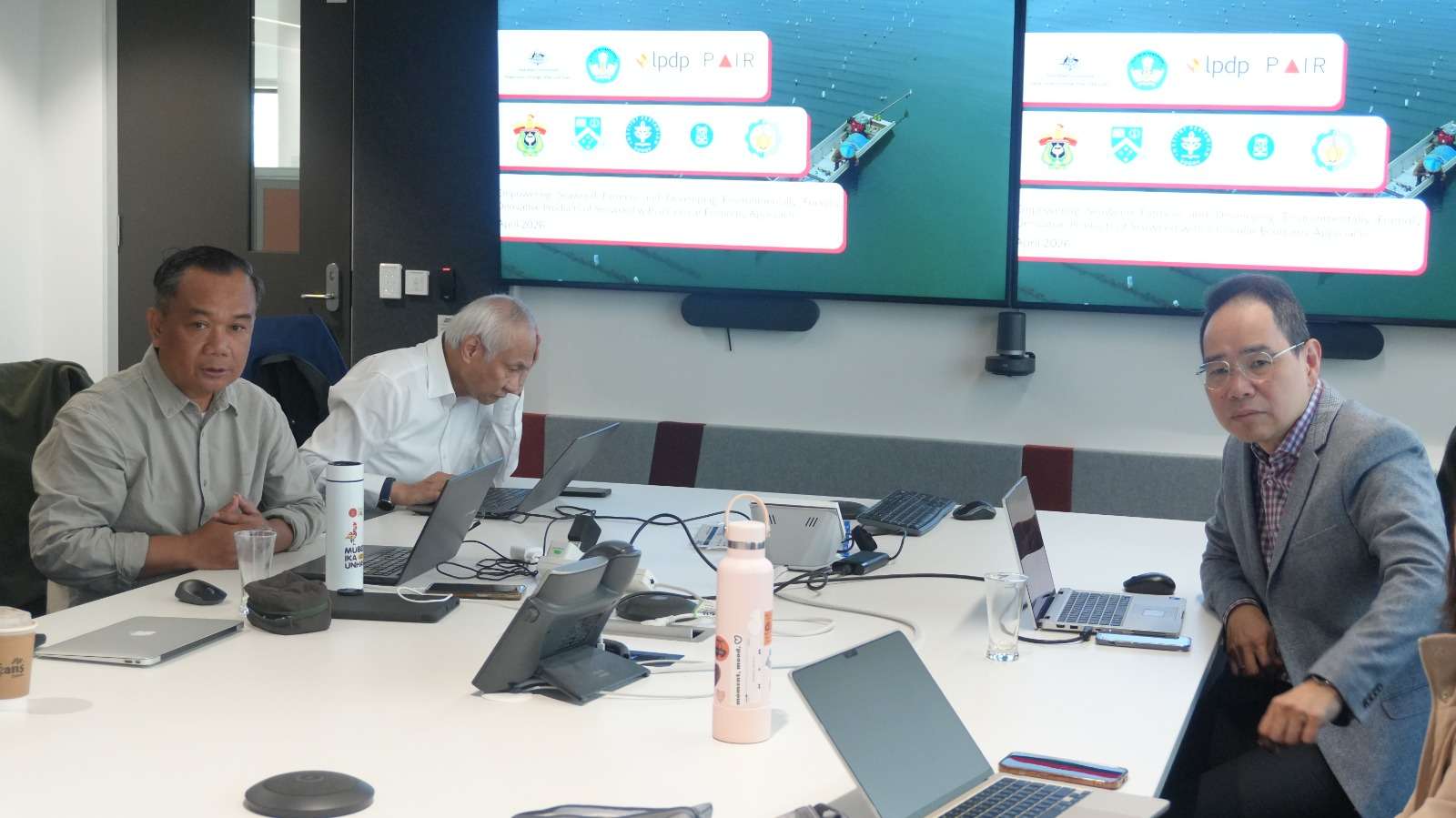
As part of the program, four researchers from the AICPAIR initiative met with journalists from Sulawesi to discuss the relationship between research and climate reporting.
The meeting was significant because the researchers are conducting projects in Sulawesi, which is also the home region of the participating journalists.
The discussions featured Professor Lu Aye and Professor Sherah Kurnia from the University of Melbourne, as well as Professor Daniel Prajogo and Professor Juliana Sutanto from Monash University.
They shared perspectives on the transition toward net zero emissions, sustainable seaweed farming, and climate and health issues affecting coastal communities.
These research projects are part of the PAIR Sulawesi program, jointly funded by the Australian Government through DFAT and the Indonesian Government through the Ministry of Higher Education, Science, and Technology (Kemdiktisaintek) and the Indonesia Endowment Fund for Education (LPDP).
As a follow-up to the workshop, the research team is scheduled to continue activities in Makassar to present findings from the broader research study.
The outcomes of this program are expected to help shape approaches and supporting tools for climate journalism that is science-based, relevant to local community needs, and capable of encouraging public awareness and collective action in addressing climate change.
Written by Kamaruddin Azis