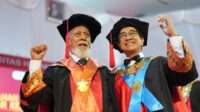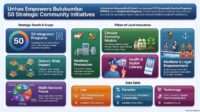

When Universitas Hasanuddin broke into the world’s top 950 universities in 2025, the achievement was more than just a number in a global ranking. It symbolized a collective effort across generations: foundations laid by predecessors, continued by successive leadership, and strengthened by alumni contributions across various sectors.
— Jamaluddin Jompa
MARITIMEPOSTS.COM – The relationship between universities and their alumni often gets trapped in nostalgia—memories of student life, campus romance, and warm stories that tend to remain as recollections.
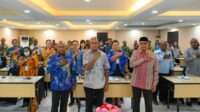
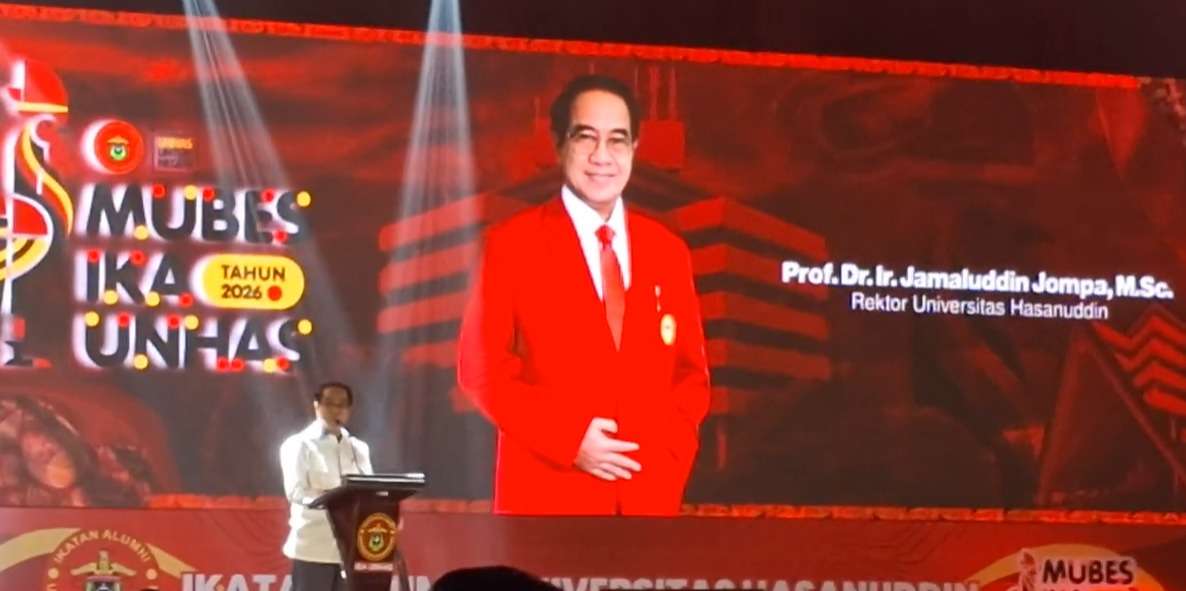
However, during the General Assembly of the Alumni Association (IKA) of Universitas Hasanuddin, an important reflection emerged: this relationship is undergoing a fundamental transformation, as emphasized by Prof. Jamaluddin Jompa, Rector of Unhas, in his remarks.
He noted that the connection between Unhas and its alumni is no longer merely emotional—it has evolved into an ecosystem.
The Rector stressed that today’s alumni network is no longer a loosely connected group of individuals, but rather interconnected nodes of strength that reinforce one another.
From government bureaucracy and industry to professional and sports communities, alumni are present across a wide spectrum.
This diversity is not merely variation; it is a strategic asset that, if well managed, can become a driving force for the advancement of the alma mater.
This marks a crucial shift: from nostalgia to collaboration.
Reputation as Collective Energy
In the global landscape, a university’s reputation does not belong solely to the institution—it is also embedded in its alumni.
A prestigious campus name can open doors, build trust, and enhance individual competitiveness. Conversely, alumni contributions across sectors reinforce the university’s reputation.
This relationship is reciprocal—mutually reinforcing.
When Universitas Hasanuddin entered the world’s top 950 in 2025, the achievement was not merely a ranking milestone. It represented a collective, intergenerational effort—built on strong foundations, sustained leadership, and widespread alumni contributions.
Similar progress can be seen in other achievements: recognition in global corporate standards and a top national ranking in the implementation of Sustainable Development Goals (SDGs).
All of this sends a clear message: universities are no longer judged solely by classrooms and laboratories, but also by their adaptive capacity to respond to contemporary challenges.
Behind these accomplishments lies a deeper message: the need to build collective confidence.
There is no room for inferiority. Being an alumnus of Universitas Hasanuddin is an identity to be proud of—not because of slogans, but because of proven achievements.
Students, Achievements, and Character Transformation
This reflection also touches on a critical aspect: students as the face of the university’s future.
Their achievements at national and international levels, including in the arts such as choral performances, demonstrate that quality is no longer in question.
More interesting, however, is the transformation in character.
From past stigmas, students are now seen as more driven and militant in pursuing achievements. They are not only competitive but also adaptive and ready to compete on the global stage.
This signals a cultural transformation within the campus—one that may not always be visible, but is deeply impactful.
A Major Challenge: 10,000 New Alumni Each Year
Every year, around 10,000 to 12,000 new graduates enter the real world. This is not just a statistic—it is a structural challenge.
The fundamental question is simple yet crucial: where will they go?
At this point, the role of alumni becomes strategic. Universities cannot operate alone. The job market, industries, and professional networks largely exist beyond campus walls—and this is where alumni serve as bridges.
The Rector’s call is clear: those who are already established are encouraged to open pathways, create opportunities, and help the next generation rise together. This is not merely solidarity, but a long-term social investment.
Ultimately, the quality of future alumni will determine the strength of the network itself.
Innovation and Self-Reliance: From Campus to Nation
This reflection also highlights another crucial direction: the push toward self-reliance through innovation.
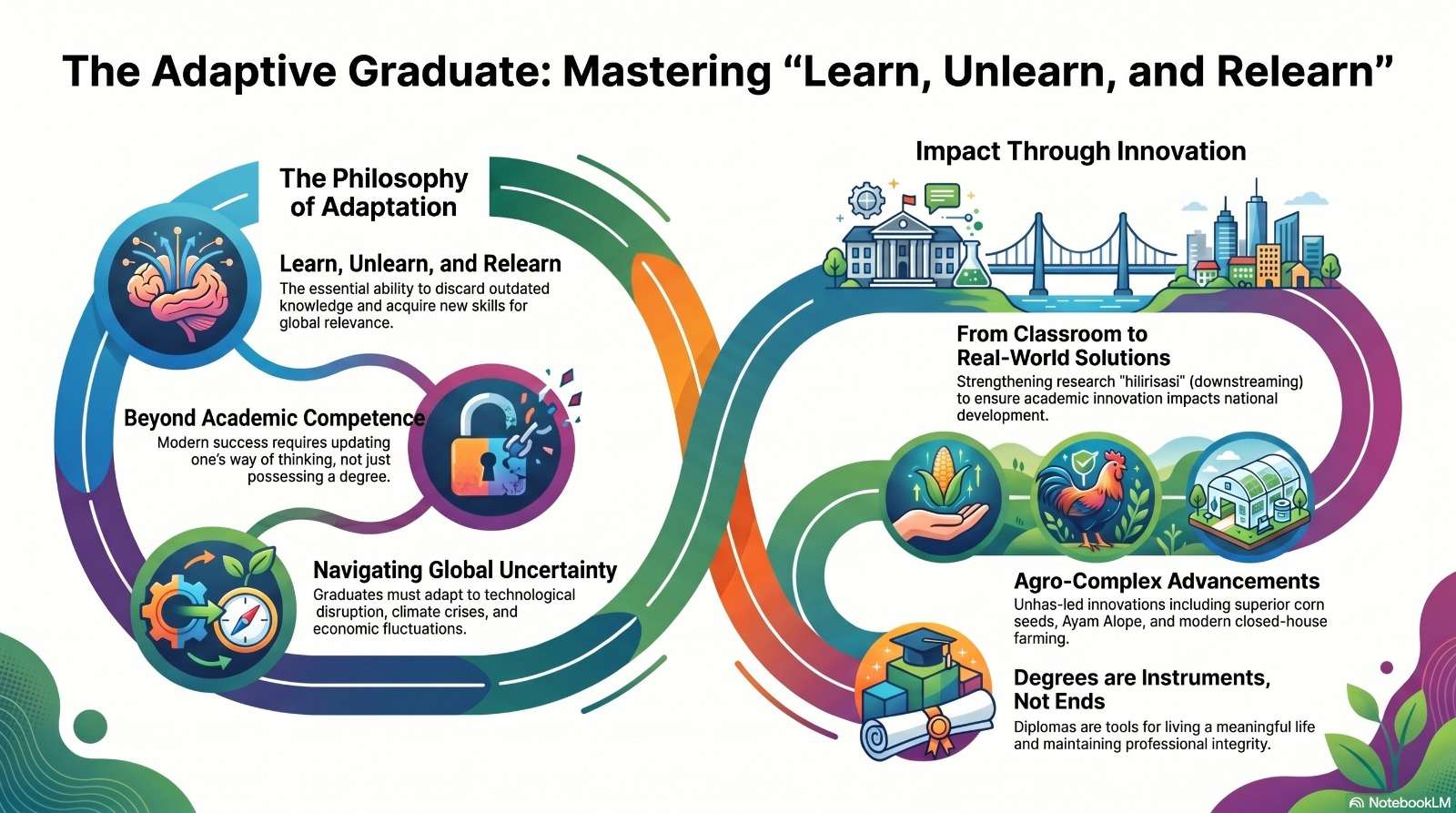
The development of superior corn varieties, livestock research, and modern agricultural technologies demonstrates how the university is beginning to play a strategic role in the national economy.
Universities are no longer just centers of knowledge—they are producers of solutions.
In this context, the transformation into an entrepreneurial university becomes inevitable. Institutions are expected not only to produce graduates but also to create added value—economically and socially.
Social Solidarity: Education Must Not Stop
Amid all these achievements and ambitions, one moral commitment stands firm: no student should be forced to drop out due to financial constraints.
With the growth of an endowment fund, the university is striving to ensure continued access to education. However, the real strength lies in collective solidarity—in the willingness of alumni to step in and help.
At this point, the university is no longer just an institution, but a family.
Looking Ahead
As stated by Prof. Jamaluddin Jompa, the General Assembly of IKA Unhas is not merely an organizational agenda. It is a space for reflection and a نقطة of departure—where past, present, and future converge.
If the relationship between alumni and the university was once dominated by memories, now it must be anchored in a shared vision. The ecosystem that has been built must be maintained, strengthened, and directed.
Because the future of a university is determined not only by who leads within it, but also by how strong its external networks are.
In that context, one truth becomes clear:
a great alma mater is built by alumni who uplift one another.
—
Author: Denun