







MARITIMEPOSTS.COM – The government of Indonesia, through the Ministry of Energy and Mineral Resources (ESDM), has officially approved the Work Plan and Budget (RKAB) for the mineral and coal mining sector as of March 17, 2026.
Under this approval, coal production is set to reach 390 million tons, while nickel production is targeted at 100 million tons.
This decision reflects Indonesia’s strategy to maintain a balance between domestic energy needs, commodity exports, and the push for downstream industrialization based on natural resources.
Production Push Amid Energy Transition
Coal remains the backbone of the national energy mix, particularly for electricity generation. Despite the global shift toward clean energy, Indonesia continues to maintain large-scale production to meet domestic demand and export markets, especially in Asia.
However, the 390 million ton figure also indicates a more measured approach compared to previous production levels, which at times exceeded annual targets. The government appears to be balancing economic interests with global pressure to reduce carbon emissions.
Nickel: A Strategic Commodity for the Future
On the other hand, nickel has become a primary focus in national industrialization policy. The 100 million ton target reflects rising global demand, particularly for electric vehicle (EV) batteries.
Indonesia is currently the world’s largest nickel producer, and its downstream policy—such as the ban on raw ore exports—has driven significant investment in smelters and nickel-based industrial zones.
With increasing production, the government aims to strengthen Indonesia’s position in the global electric vehicle supply chain while boosting domestic value-added.
Field Activities: Infrastructure and Logistics
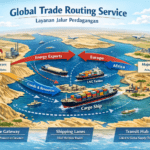
The image in circulation shows mining material transportation via sea routes, with a barge being towed by a tugboat toward a port. On land, heavy equipment and operational vehicles can be seen supporting loading and unloading activities.
This highlights the critical role of logistics infrastructure in the mining industry, particularly in coastal and remote areas. Efficient distribution is a key factor in maintaining the competitiveness of Indonesian commodities in the global market.
Challenges: Environment and Governance
Despite rising production, the mining sector continues to face scrutiny over environmental impacts, including deforestation, water pollution, and degradation of coastal ecosystems.
In addition, RKAB governance remains under attention, particularly regarding transparency, production monitoring, and corporate compliance with regulations.
The government is expected not only to focus on production targets but also to ensure sustainable and responsible mining practices.
Future Outlook
With coal serving as a transitional energy source and nickel as a future-oriented commodity, Indonesia holds a strategic position in the global energy landscape.
However, the success of this policy will largely depend on the ability of the government and industry players to balance economic growth with environmental sustainability.
(KAS)