





By: Ahmad Musawir (Head of Environmental Affairs, Badko HMI South Sulawesi)
PELAKITA.ID – The Makassar City Government’s effort to break free from the grip of its waste crisis has found new momentum.
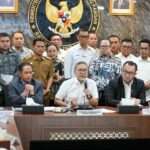
Makassar Mayor, Munafri Arifuddin, attended a Limited Coordination Meeting with the Coordinating Minister for Food Affairs, Zulkifli Hasan, on Tuesday (March 31, 2026), which specifically discussed accelerating the implementation of the National Strategic Project (PSN) for Waste-to-Energy (PSEL).
Amid mounting pressure from ever-increasing waste volumes, PSEL is not merely an infrastructure project—it marks a paradigm shift: from a city burdened by waste to one capable of transforming it into a source of energy.
From Waste Emergency to National Strategic Agenda
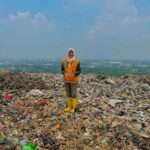
Indonesia is currently facing a waste emergency. National waste production, reaching tens of millions of tons annually, has exceeded the capacity of conventional management systems. Major cities like Makassar are under even greater strain, with daily waste accumulation surpassing the critical threshold of 1,000 tons per day.
For years, the collect–transport–dispose approach has proven insufficient. Landfills, including the Antang landfill (TPA Antang) in Makassar, continue to exceed capacity.
The consequences go beyond urban aesthetics, posing serious threats to public health, the environment, and social stability.
In this context, the central government designated PSEL as a National Strategic Project through Presidential Regulation No. 35 of 2018. The initiative forms part of a broader strategy to integrate waste management with national energy needs while reducing greenhouse gas emissions.
President Prabowo Subianto’s directive to accelerate PSEL implementation across 33 locations in Indonesia underscores that the waste issue has evolved—from a technical problem into a central political development agenda.
Makassar and a Realistic Choice at Antang Landfill
During the coordination meeting, Munafri Arifuddin emphasized Makassar’s readiness to be part of this transformation. One strategic proposal is the construction of a PSEL facility within the Antang landfill area in Manggala District.
This choice is grounded in practical considerations. From both technical and economic perspectives, building within the landfill area is more efficient, eliminating the need for costly waste relocation—long a major burden in the current system.
Socially, the approach is also more realistic. The Antang landfill has long been part of the city’s landscape and its interaction with surrounding communities. Moving the project to a new site could trigger greater social resistance.
“This is a direct order from the President to ensure the project proceeds faster and on a larger scale,” Munafri stated, emphasizing the urgency of acceleration.
He further noted that the Antang landfill holds potential to be developed into an integrated waste-processing industrial zone, including supporting PSEL facilities. The city government now needs to complete land acquisition as a key prerequisite.
PSEL Technology: Turning Burden into Energy
PSEL operates on a simple yet impactful principle: converting waste into electrical energy. Through thermal technologies such as incineration, waste is burned at high temperatures to generate heat, which is then converted into steam to drive electricity-generating turbines.
Modern systems are equipped with strict emission controls, ensuring that exhaust gases remain within safe environmental limits. Even combustion residues such as ash can be reused as construction materials, provided they meet required standards.
With this approach, waste volume can be reduced by up to 80–90 percent. This significantly alleviates pressure on landfills while simultaneously generating new energy for public use.
Between Hope and Challenges
Despite its promise, the path to PSEL implementation is not without obstacles. Major challenges include high investment costs, technological readiness, and public concerns over environmental impacts.
Emission issues—particularly dioxins and furans—often fuel public resistance. This is where transparency, strict oversight, and the use of best-available technology become essential to building trust.
Additionally, the typically high moisture content of waste in Indonesia presents a technical challenge, as it affects combustion efficiency.
Most critically, PSEL must not stand alone. It needs to be part of a broader waste management ecosystem—one that prioritizes reduction, sorting, and recycling as its foundation. Without this, PSEL risks becoming a quick fix that neglects the root of the problem.
Investing in the City’s Future
For Makassar, PSEL is more than a technical project—it is a long-term investment. The city stands at a crossroads: remain trapped in a cycle of waste crisis, or leap toward a modern, technology-based, and sustainable management system.
If successful, PSEL will not only reduce environmental burdens but also create economic and energy value. The electricity generated can contribute to the city’s power supply, while improved waste management will enhance residents’ quality of life.
“Hopefully, this will become a beneficial investment—one that resolves the waste problem while delivering positive impacts for Makassar and its people,” Munafri concluded.
Reshaping the Mindset
Ultimately, PSEL is about changing perspectives. It challenges the old notion of waste as the end of consumption, redefining it as the beginning of a new, productive process.
Yet technology alone is not enough. The success of PSEL will depend on policy consistency, clean governance, and active public participation.
Makassar is now writing a new chapter in its environmental management history. The question is no longer whether waste can be turned into energy—but whether the city is ready to transform itself.
Because behind the machinery of PSEL lies a deeper test: our seriousness in confronting the crisis—and our courage to stop postponing solutions.
Editor Denun