









MARITIMEPOSTS.COM – The phenomenon of children going to school carrying mini fans, classrooms using electric fans or air conditioners (AC), and schools being closed due to flooding and extreme weather can, in fact, serve as entry points for learning about climate change.
These natural phenomena—now part of a global issue and agenda—are already being felt in children’s daily lives. Therefore, their critical awareness needs to be nurtured so that environmentally friendly behavior can be developed early and sustained over time.
In this context, schools play an important role in shaping children’s character to become responsible stewards of their environment.
The impacts of climate change can be observed through direct observation and interviews (image by Rusdin Tompo).
Children can learn science and technology, develop their talents and creativity, while also participating—according to their age and maturity—in caring for the planet.
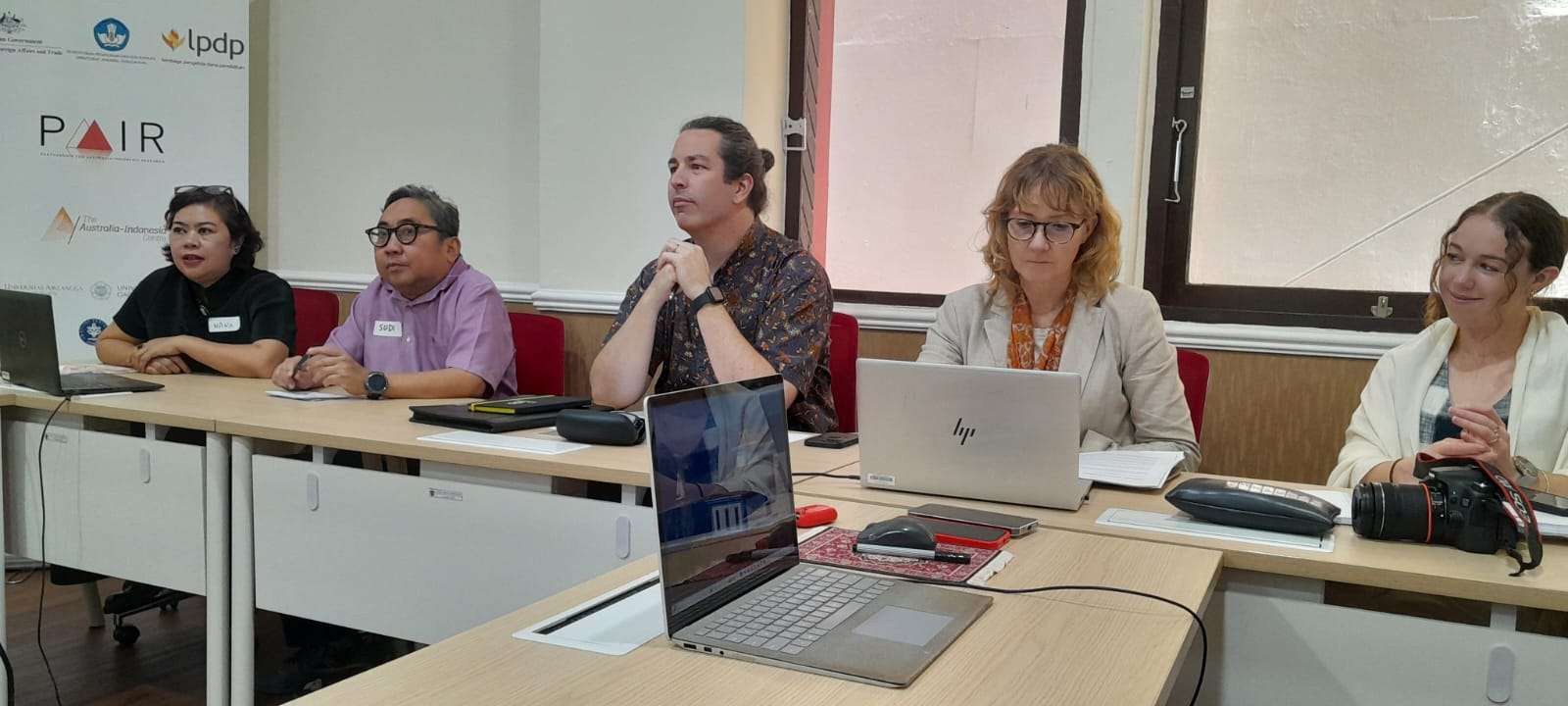
These were among the points I briefly shared during the All Climate Change Reporting Project – Workshops and Field Visit: Supporting Climate Reporting in Indonesian Newsrooms, held on Tuesday, March 10, 2026. The activity was organized by the Australia–Indonesia Centre Lab at UNHAS.
This article also responds to remarks by the Rector of UNHAS, Prof. Jamaluddin Jompa, delivered via Zoom at the time, encouraging the media to consistently voice climate change issues.
Developing Innovative Programs
Climate change education has, in fact, been integrated into the Merdeka Curriculum.
Learning can be incorporated into intracurricular activities across various subjects. For example, in science classes, students learn about climatology, global warming, the greenhouse effect, the carbon cycle, and biodiversity.
In social studies or geography, students explore atmospheric impacts, changing weather patterns, and the socio-economic consequences of climate change.
In addition, learning can take place through co-curricular activities such as the Pancasila Student Profile Strengthening Project (P5) with themes like sustainable lifestyles, as well as extracurricular activities such as scouting, nature clubs, or arts and cultural programs.
The goal is clear: to build climate literacy, critical awareness, and the capacity for adaptation and mitigation of the climate crisis from an early age.
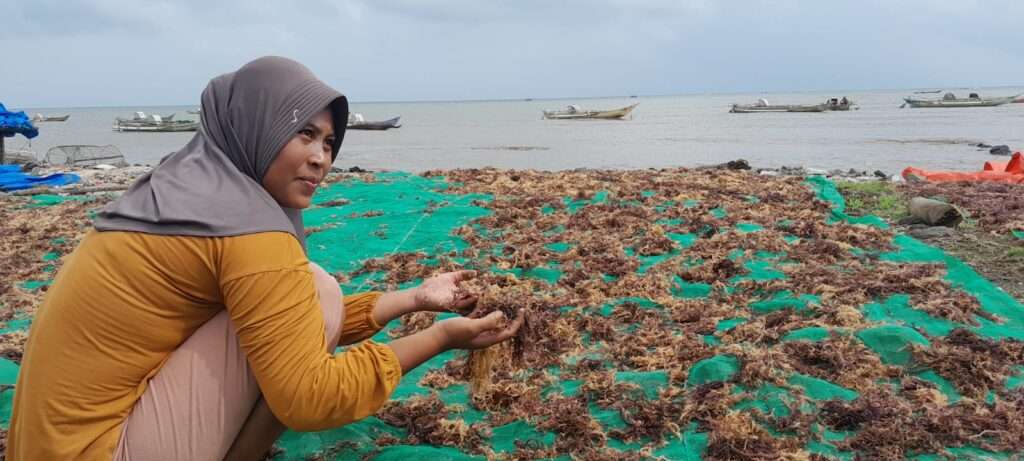
Seaweed and a woman in Laikang Village, a vulnerable coastal community (image by Rusdin Tompo).
The Ministry of Primary and Secondary Education has already provided space for exploration and creativity by issuing guidelines to help educators implement relevant and contextual climate education in schools.
Schools can also develop innovative programs related to Adiwiyata Schools, Healthy Schools, the School Literacy Movement, and others—all within the framework of Child-Friendly Schools (SRA), guided by the principle of the best interest of the child.
Successful learning initiatives and innovative programs can become important success stories to share—strengthening the school’s image while inspiring replication in other schools.
Such achievements are not only a source of pride but also bring tangible benefits to students and their social and natural environments.
Publishing Through Positive Journalism
Best practices developed through innovative programs as problem-solving approaches naturally carry strong news value.
At this stage, schools should be encouraged to proactively produce educational content based on their experiences.
Publications can be shared through social media platforms and school websites, or through professionally managed news outlets.
Mass media and journalists, as part of the school network, can apply Positive Journalism in reporting on learning practices and innovative programs related to the climate crisis.
Positive Journalism is an approach that focuses on solutions, progress, and inspiring stories.
This form of journalism is not only informative but also educative and inspiring, fostering optimism through forward-looking, constructive, and evidence-based reporting.
Also known as Constructive Journalism, Solutions Journalism, or Good News Reporting, this approach represents a new paradigm that emphasizes balanced reporting—not only highlighting conflict but also presenting solutions and positive aspects of events.
Reaching out to field realities (image by Rusdin Tompo).
This approach builds optimism and trust—not only in schools but also in journalism itself.
In many cases, Positive Journalism proves beneficial because it focuses on responses to problems (solution-oriented) and increases audience engagement.
Positive and constructive news attracts readers—especially in the era of social media.
Why? Because schools and featured communities are more likely to share these positive practices through their own social media accounts (Facebook, TikTok, Instagram, X) and through school, parent, family, alumni, and community WhatsApp groups—boosting algorithmic reach.
This, in turn, increases content visibility, builds a positive reputation, and encourages healthy organic interaction.
Ultimately, Positive Journalism content fosters “deep engagement,” where stories are not only clicked or liked but also shared and saved as knowledge archives, documentation of experiences, and sources of inspiration.
Written by Rusdin Tompo (Child-Friendly School Advocate and Coordinator of Satupena South Sulawesi)