





Muliadi Saleh – A Reflective Essayist and Architect of Awareness
PELAKITA.ID – The name of the Strait of Hormuz has become global not because of its size, but because the world’s fate depends on a narrow passage.
Since the escalation of tensions involving Iran, the United States, and Israel, Hormuz is no longer merely a geographical entity—it has transformed into a metaphor for the fragility of modern civilization. It is where the world anchors the pulse of its energy.
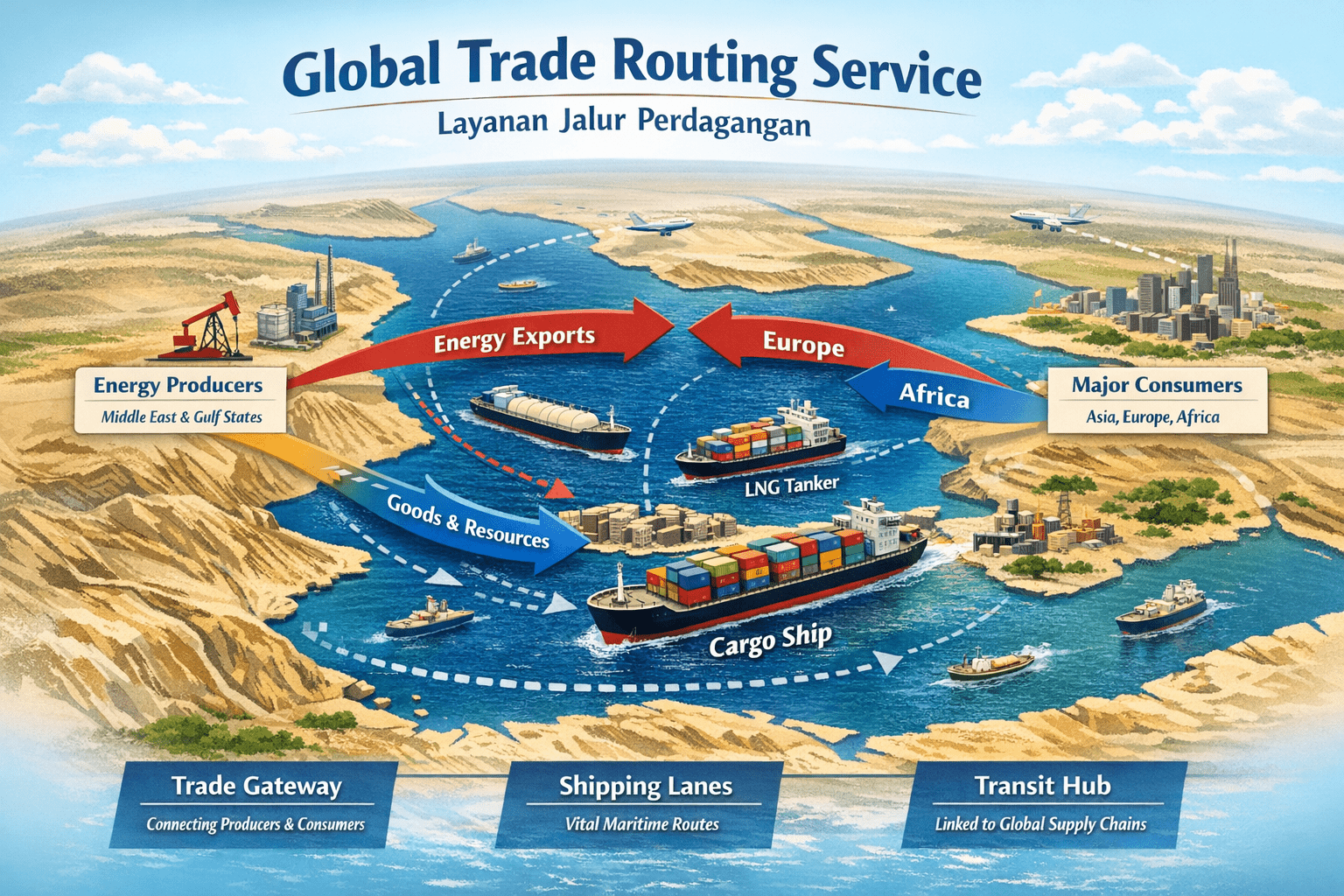
Around 20 million barrels of oil per day—nearly one-fifth of global consumption—pass through this route. In addition, about 20% of the world’s LNG trade flows through it, mostly heading to Asia, including China, India, Japan, and South Korea. Yet these figures are only the surface.
Behind them, Hormuz is a nexus where the global economy meets geopolitical conflict.
War has transformed it from a trade route into an arena of strategic pressure. The threat of closing the strait can shake global markets and potentially remove 13–14 million barrels of daily supply.
Prices surge, inflation rises, trade routes are disrupted—globalization reveals its true face: interconnected, yet vulnerable.
Hormuz is a chokepoint—a narrow passage that determines vast outcomes. Whoever controls it controls the flow. Thus, conflicts around it are not merely military confrontations, but wars of control: over energy, pricing, and global stability. Even mere rumors of closure can trigger worldwide panic.
Ironically, the modern world, proud of its technological advances, still depends on this fragile corridor. Alternatives exist, but they are limited. This means the future of the global economy still hinges on the stability of a narrow space called Hormuz.
From this, a fundamental lesson becomes clear: power does not always arise from vast territory, but from position.
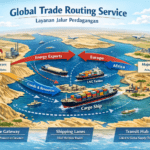
And along the equator, Indonesia holds a similar destiny. Situated between Asia and Australia, and flanked by the Indian and Pacific Oceans, Indonesia is a global crossroads. Routes such as the Malacca Strait, Sunda Strait, and Lombok Strait carry immense strategic potential.
If the Strait of Hormuz makes the Gulf region a focal point of the world, Indonesia holds an equally critical position. The Malacca Strait, for instance, carries more than a quarter of global trade. That is not merely a statistic—it is a civilizational potential.
Data shows that the Malacca Strait is a primary corridor for oil shipments from the Middle East to Asian countries such as China, Japan, and South Korea.
In the first half of 2025, around 23.2 million barrels of oil per day passed through this strait—equivalent to about 29.1% of global seaborne oil trade, making it one of the busiest chokepoints in the world.
The Malacca Strait connects the Indian Ocean and the Pacific Ocean, making it a lifeline of global trade, especially for Asia. Around 80,000–90,000 vessels pass through it annually, placing it among the busiest sea lanes in the world. Its narrow width—about 2.7 km at its tightest point—makes it highly sensitive to disruptions.
Beyond energy, the Malacca Strait is also a vital route for the distribution of manufactured goods, food, and global logistics. Any disruption here has the potential to disturb global supply chains and increase international economic costs.
In short, the Malacca Strait is not merely a sea route—it is a node of modern civilization, where geographic position transforms into geopolitical and economic power.
In an increasingly competitive global landscape, position is no longer just a gift—it is a mandate.
It demands vision, courage, and geopolitical awareness. Indonesia can become a global maritime axis—not as a slogan, but as reality—if it can manage its sea lanes, strengthen maritime security, and treat the ocean as the front yard of civilization.
From Hormuz, we learn about the power of a single point. From Indonesia, we are tested: can we transform that point into strength?
Because in the end, history does not favor the largest, but those most capable of understanding their position. And Indonesia—if it learns from Hormuz—will not merely follow global currents, but has the opportunity to shape their direction.
Muliadi Saleh
“Writing Meaning, Building Civilization”