








In this context, “non-rational” does not imply a lack of intelligence, but rather that actions were dictated by tradition and social cohesion rather than calculated efficiency or the relentless pursuit of surplus value.
MARITIMEPOSTS.COM – Along the sun-bleached shores where the Celebes Sea meets the Flores Sea, a profound transformation is rewriting the destiny of the Konjo community.
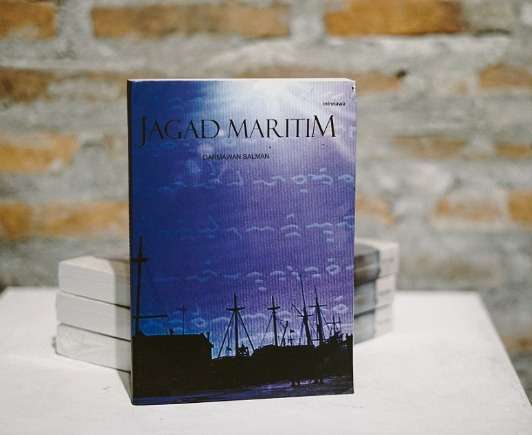
To the casual observer, the towering hulls of Pinisi ships under construction might seem like timeless monuments to tradition, but as sociologist Darmawan Salman argues in his seminal – highly influential, original, and foundational—something that strongly shapes future developments or ideas work Jagad Maritim, these shores are currently the site of a complex “articulation of capitalism.”
What was once a stable, pre-capitalist order is being pulled into the orbit of global markets—a shift that is as much about the internal landscape of the maritime soul as it is about the external arrival of modern industry.
The Three Faces of the Coast: A Structural Map
To grasp the breadth of this transformation, Salman constructs a comprehensive “map” of the Makassar maritime world by analyzing three distinct social groups.
These are not arbitrary selections; together, they represent the three pillars of a complete economic ecosystem. The boat builders represent Production, crafting the iconic vessels that have defined the region for centuries.
The fishermen represent Extraction and Harvesting, the traditional heart of maritime labor. Finally, those inhabiting the coastal tourism sectors represent Service and Consumption, the modern frontier of the coast.
Initially, these communities operated within what Salman describes as a “pre-capitalist” order.
Structurally simple and culturally “non-rational,” their lives were governed by the rhythms of custom and communal necessity rather than the cold logic of profit maximization.
In this context, “non-rational” does not imply a lack of intelligence, but rather that actions were dictated by tradition and social cohesion rather than calculated efficiency or the relentless pursuit of surplus value.
The Engines of Modernity: Investment, Technology, and Management
The transition from this simple heritage into the complexities of the modern world is not an accident of history but a process propelled by the specific catalysts of investment, technology, and management. Salman observes that as these external forces penetrate the Konjo coastline, they trigger a dual-pronged modernization process.
On the structural level, we see “social differentiation”—a fracturing of simple communal roles into specialized, hierarchical layers. Simultaneously, on the cultural axis, a “rationalization of action” takes hold.
The old ways of doing things because “that is how they have always been done” are increasingly replaced by strategic planning, administrative management, and a focus on technical efficiency. This shift marks the moment where the traditional “Maritime Universe” (Jagad Maritim) begins to speak the language of the global market.
The Cultural Paradox: Siri’ and the Drive for Success
One of Salman’s most striking insights is that modernization in Sulawesi does not necessarily mean the erasure of tradition. Instead, capitalism often “articulates” itself through local values. In the boat-building and fishing communities in particular, the engine of capitalist competition is fueled by ancient social codes.
The patron-client system, the profound concept of siri’ (honor and shame), and the pursuit of religious prestige through the haji title are the primary drivers of individual advancement.
This creates a fascinating irony: the very hierarchies and cultural honors of the old world are what compel actors to work harder and compete more fiercely in the new one. Salman captures this point of departure vividly:
“Pada awalnya adalah tatanan sederhana. Tiga komunitas maritim di Sulawesi Selatan… memulai ‘hidupnya’ dengan tatanan pra-kapitalis, sederhana dalam struktur dan tidak rasional secara kultur.”
The “non-rational” culture of the past is being repurposed. The drive to maintain one’s siri’ or to achieve the social standing of a haji provides the psychological energy required to navigate a high-stakes, rationalized economy.
The Inequality of the “New” Modernity
However, this fusion of tradition and capitalism—the “dialectics of modernity”—comes with a cruel edge. While the motivations (honor, status, and prestige) may be shared across the community, the rewards are decidedly unequal. Salman notes that even though the drive toward success is uniform, not all actors are capable of reaching the same social layer.
The structural weight of “social differentiation” ensures that while the patron might leverage traditional siri’ to amass significant capital and influence, the client or the laborer may find themselves working harder than ever just to maintain their standing.
The “articulation of capitalism” thus uses local culture to stabilize a new, more rigid hierarchy, where the motifs of honor fuel a system that primarily benefits those at the top of the specialized social ladder.
Conclusion: A Modern Compass for an Ancient World
Darmawan Salman’s Jagad Maritim provides more than just a sociological study; it offers a modern compass for understanding how the Makassar people are navigating the turbulent waters of the 21st century.
It reveals a world where the “Maritime Soul” is not being lost, but rather re-engineered by the relentless pressures of investment and rational management.
As the Konjo community sails further into these capitalist horizons, we are left with a haunting question: Is the sacred code of siri’ truly surviving this transition, or is it being cannibalized by capitalism—transformed into a mere tool for productivity that will ultimately erode the very cultural foundation it once sought to protect?