




MARITIMEPOSTS.COM – To stand on the shores of Makassar is to be enveloped by a thick, salt-heavy humidity and the relentless warmth of a tropical sun.
It is a world of vibrant coral reefs and teeming maritime life, a far cry from the sterile, lung-chilling dryness of the Antarctic wilderness. Yet, Dr. Muhammad Lukman—known warmly to his friends as “Luky”—spent his career bridging this impossible geographic divide.
Luky was more than a scientist; he was an intellectual voyager who transformed the way Indonesia views its place in the global scientific community. By tracing his journey from the Celebes Sea to the South Pole, we find a story of profound resilience and a legacy that challenges us to rethink the boundaries of our own curiosity.
Antarctica: Breaking the Geographic Ceiling for Southeast Asian Scientists
In the world of global climate and marine research, the perspective of an equatorial scientist is a rare and vital commodity.
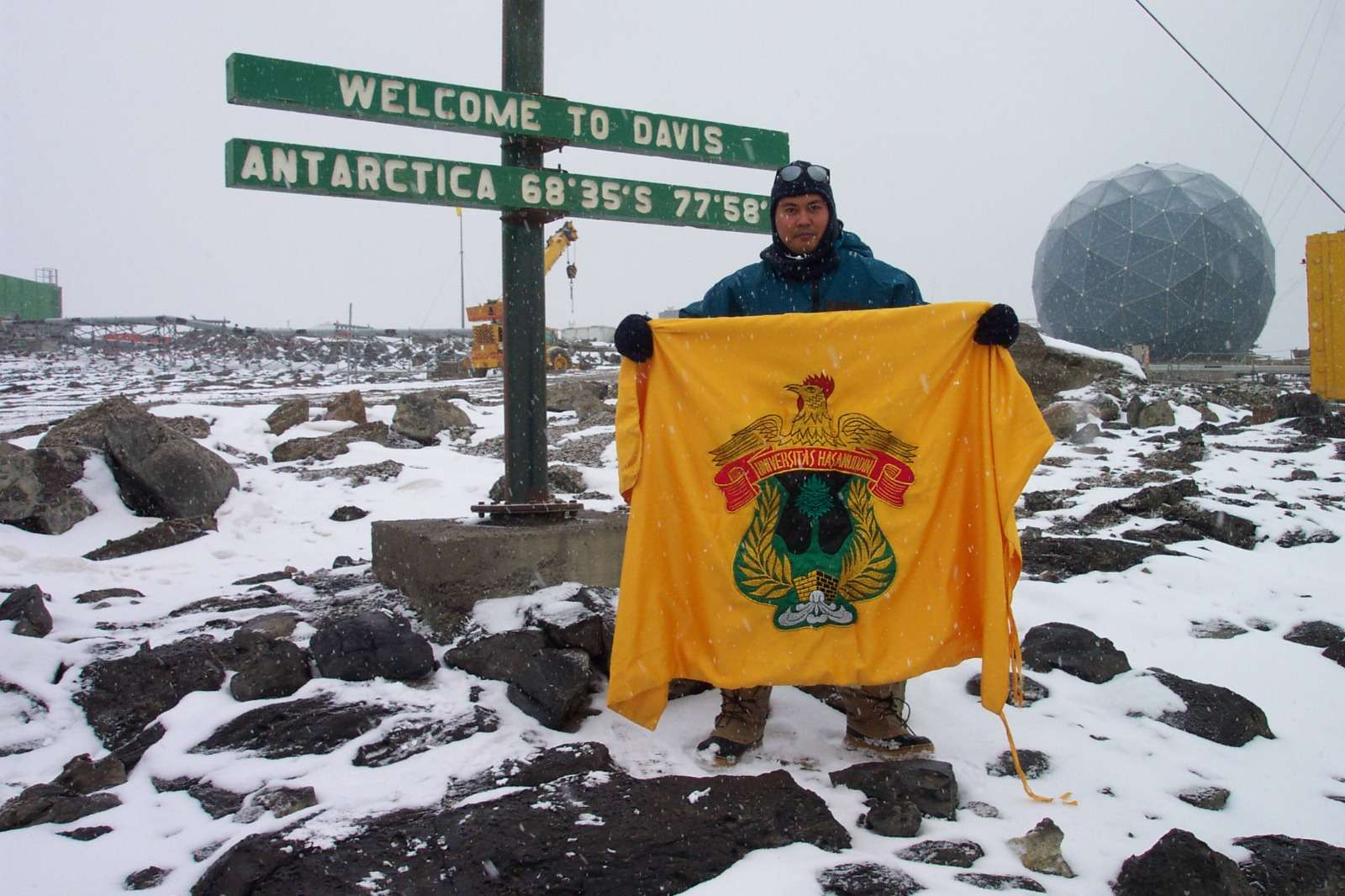
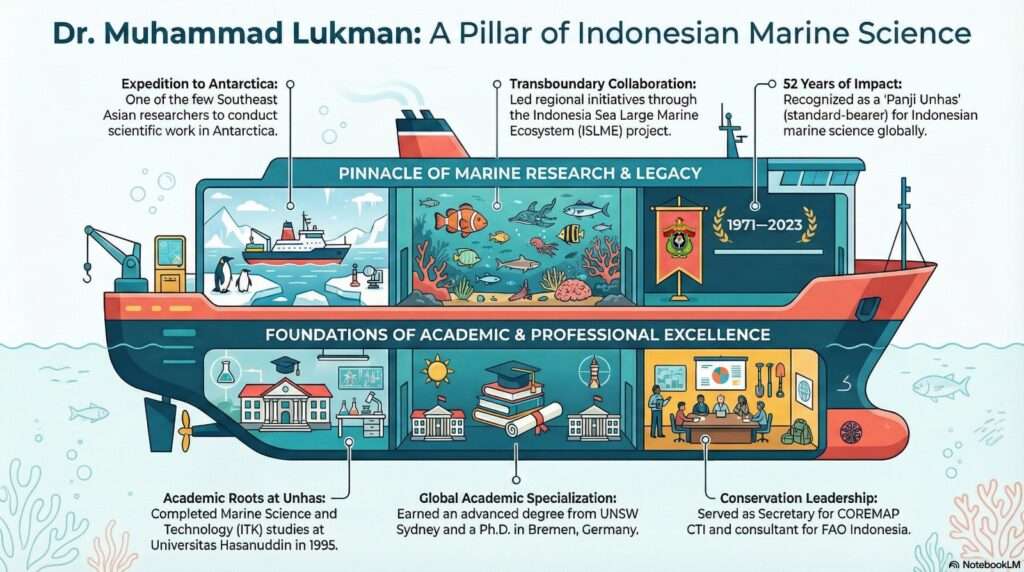
Dr. Lukman’s expedition to Antarctica was a breakthrough, providing a voice for a region—Southeast Asia—that is often underrepresented in polar science. He understood that the health of our tropical oceans is inextricably linked to the shifts occurring in the world’s frozen extremes.
This feat earned him the enduring title of “pembawa panji” (standard-bearer) for Universitas Hasanuddin (Unhas). By unfurling the university’s flag amidst the ice, he proved that Indonesian maritime expertise is not limited to home waters, but is essential to understanding the global ecosystem.
“Almarhum was great, especially when he joined the team to Antarctica,” noted his colleague, Sudirman Nasir, Ph.D. “You can count on your fingers the number of Indonesians or Southeast Asians who have ever conducted research in Antarctica.”
The “Struggle” of Excellence: Resilience in the Face of Academic Burnout
Luky’s academic pedigree appeared flawless: a 1995 graduate of the Marine Science and Technology (ITK) program at Unhas, a Master’s at the University of New South Wales, and a PhD in Bremen, Germany. He was the son of Muhammad Ahsin, a respected English lecturer, carrying a legacy of intellectual rigor in his blood. Yet, his path was defined more by “banting tulang” (working to the bone) than by easy brilliance.
His time in Germany was particularly grueling, pushing him to a state of mental and physical exhaustion that nearly derailed his career. He worked relentlessly to cover his costs and meet the demands of his doctoral studies, facing a level of stress that many high-achievers suffer in silence. Before the triumph of his graduation, there was a real moment of doubt where the finish line seemed entirely out of reach.
Regarding the weight of those years in Bremen, Luky later admitted the toll it took: “It was heavy, it caused so much stress. I almost didn’t get the degree.”
Beyond the Ivory Tower: The Leap from Academic to Global Practitioner
Luky eventually realized that scientific knowledge is most powerful when it is applied to policy and diplomacy. He began a period of what he called “pengembaraan keilmuan” (scientific wandering), transitioning from a campus lecturer to a high-level international official. He argued that Indonesia must have a seat at the table to protect its “extraordinary maritime potential.”
To facilitate this, he moved into influential roles that bridged the gap between local conservation and global management:
- Consultant for the Oxfam Coastal Project: Applying his expertise to community-level coastal resilience.
- Secretary for COREMAP CTI: Leading large-scale coral reef conservation and management initiatives.
- Consultant for FAO Indonesia: Partnering with the Food and Agriculture Organization on strategic marine programs.
- Project Official for ISLME: Coordinating the Indonesia Sea Large Marine Ecosystem project, a critical regional collaboration between Indonesia and Timor-Leste.
A Heart Anchored in Makassar: The Human Behind the Credentials
Despite his life in Jakarta’s Kalibata City and his travels across the globe, Luky’s identity remained anchored in the simple joys of his hometown. He was a man who found balance in the rhythmic swing of a badminton racket, the silence of a morning swim, and the camaraderie of sharing “coto” with friends. He never lost the warmth of the Makassar shores that first shaped his curiosity.
In the final chapter of his life, at age 52, Luky faced a difficult recovery from typhoid (tipus).
His thoughts did not drift toward further global accolades, but toward the comfort of his mother’s home at the Kompleks Perumahan UNM Makassar. It was a poignant reminder that even the most adventurous spirits eventually seek the harbor of family.
In his final days, Luky’s mother recalled his simple, heart-wrenching request: “Ma, I want to return to Makassar.”
A Legacy Beneath the Waves and Across the Ice
Dr. Muhammad Lukman was a pioneer who expanded the scientific horizon of an entire nation. His life serves as a blueprint for the modern Indonesian scientist—one who is technically precise yet humanly vulnerable, and who is as comfortable in the international boardroom as they are in the tropical surf.
As we honor his journey from the warmth of South Sulawesi to the frost of the South Pole, we are left with a compelling challenge.
How can we foster a new generation of scientists with the courage to carry their nation’s flag into the unknown, while never losing sight of the home that gave them their start? Luky’s legacy suggests that the greatest discoveries are made when we dare to span the entire world.
Written by K. Azis