








MARITIMEPOSTS.COM – Our terrestrial lives are defined by rigid boundaries—fences, asphalt, and the heavy, indelible footprints we leave upon the earth. Yet, beyond the continental shelf lies a world without borders, a fluid expanse where “moving continents of life” glide through the water column in majestic silence.
These are the sovereigns of the deep: giants that belong not to any nation, but to the ocean itself. From the sun-drenched tropical shallows to the crushing, lightless pressure of the midnight zone, these creatures connect entire ocean basins through song and shadow.
Some are living archives, born before the first industrial smokestack pierced the horizon; others possess an intelligence so sophisticated it challenges our very definition of culture.
To look upon them is to realize how little we truly understand of our own planet—they are the ethereal messengers between the surface and the abyss.
The Altruistic Titan: Why Humpbacks Intervene in the Hunt
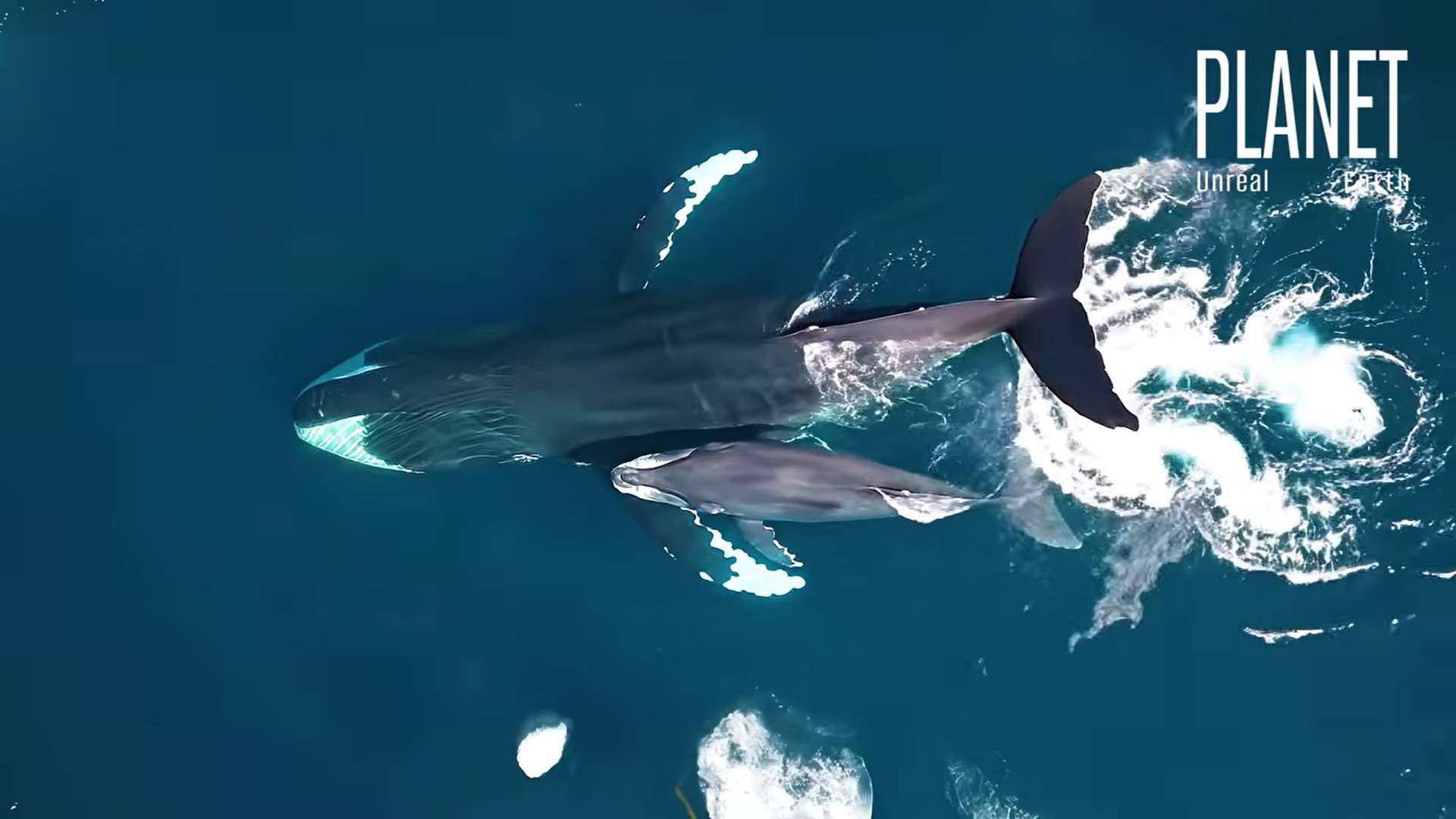
The humpback whale is a 16-meter master of both strength and acrobatics, a 40-ton titan capable of launching its entire bulk into the air in a visceral display of power.
While they are celebrated for their sophisticated “bubble-net feeding”—a cooperative strategy where groups swim in tightening spirals, releasing columns of bubbles to trap thousands of fish—it is their social behavior that truly baffles the scientific community.
Humpbacks have been observed in a role that defies the “harsh and competitive” rules of marine survival: the unlikely bodyguard.
In documented encounters, humpbacks have positioned their massive bodies and powerful flippers between orcas and their intended prey, shielding seals, sea lions, and even grey whale calves from certain death. This intervention suggests a depth of character that transcends simple instinct.
Whether this is a defensive reaction triggered by the distress calls of other species or a rare form of interspecies altruism, it reveals a creature that does not always follow the cold calculus of the wild.
“In the vast open ocean, the humpback whale stands as a symbol of both strength and grace—a giant whose songs echo through the deep blue world beneath the waves.”
Living Archives: The 200-Year-Old Witnesses to History
In the frozen silence of the Arctic, the bowhead whale exists on a temporal scale that dwarfs human memory. These are the oldest giants of the frozen ocean, with some individuals believed to live over 200 years.
Born before modern cities or industrial shipping existed, they are not merely survivors; they are living witnesses to the history of a changing planet.
The bowhead is a biological fortress, equipped with a layer of blubber up to 50 centimeters thick to repel the polar chill. Their skulls are among the strongest in the animal kingdom, capable of shattering solid sea ice to reach the air in a world where breathing holes can vanish overnight. Yet, beneath this rugged exterior lies a profound artistry.
The bowhead produces evolving melodies—complex, improvised songs that are among the most intricate in the animal world. As they navigate the lightless depths beneath the floes, their voices carry the weight of centuries, a reminder that some lives are measured not in seasons, but in epochs.
The Paradox of Scale: Sustaining Giants on Microscopic Life
Nature offers no greater irony than the “paradox of size and diet” found in the Blue Whale and the Whale Shark.
The Blue Whale, a creature longer than a city bus and weighing up to 180 tons, is the largest animal to ever exist. Its heart alone weighs nearly 200 kilograms—the size of a car—pushing blood through a body that dwarfs the greatest dinosaurs. Its offspring are equally staggering; a newborn calf measures seven meters and drinks nearly 200 liters of milk daily.
Yet, this moving continent of life is sustained almost entirely by krill, tiny crustaceans only a few centimeters long. In peak season, a Blue
Whale filters up to four tons of krill a day. Similarly, the 12-meter Whale Shark, the largest fish in the sea, is a peaceful filter feeder that sifts plankton through its colossal mouth. This evolutionary strategy is a masterpiece of efficiency, proving that the ocean’s greatest power does not require a predatory roar.
“Its skin, patterned with white spots and stripes, reflects sunlight like starlight scattered across a dark sky—a design so unique that no two whale sharks are alike.”
Sonic Titans: The Buoyancy and Blasts of the Sperm Whale
The sperm whale is the undisputed titan of the abyss. Reaching 18 meters and 50 tons, these predators carry the largest brain in the animal kingdom.
Their massive heads, comprising a third of their body length, house the mysterious spermaceti organ. This oil-filled chamber is a dual-purpose marvel: it helps control buoyancy during extreme dives and focuses sound into thunderous clicks louder than a jet engine.
Sperm whales are the ocean’s greatest divers, plunging 2,000 meters into the lightless “midnight zone” to hunt giant squid in a realm of permanent shadow. In this darkness, sound replaces sight.
Their echolocation creates a detailed acoustic image of the world, and to be near them is to be shaken by vibrations that pulse through bone and muscle. With “watchful eyes” and ancient intelligence, they navigate the crushing pressures of the deep, returning to the surface scarred from battles with the titans of the dark.
Beyond Instinct: The Learned Cultures of the Orca
Though often called “killer whales,” orcas are actually the largest members of the dolphin family, weighing over six tons. Their true power lies not in their teeth, but in their sophisticated social structures.
Orcas live in tightly bonded pods led by older females—matriarchs who serve as the repositories of the group’s collective knowledge.
These pods possess “distinct cultures,” where hunting strategies are learned behaviors passed down through generations. S
ome pods have mastered the art of flipping sharks to induce “tonic immobility,” rendering the ocean’s most feared predators helpless. Others use waves to wash seals off ice floes.
This reliance on strategy and communication moves the orca from the category of mere “killer” to that of a strategic thinker. They are predators not driven by instinct alone, but by experience, cooperation, and a shared heritage that defines their very existence.
The Canary of the Sea: Navigation Through Shifting Ice
The beluga whale is a creature of ethereal beauty—pure white, smooth, and luminous against the Arctic ice. Lacking a dorsal fin to better navigate beneath thick frozen layers, and possessing a flexible neck that allows for human-like observation, the beluga is the most expressive resident of the north.
Often called the “canary of the sea,” the beluga is a master vocalist. In the dark polar waters where visibility is zero, their constant stream of clicks and whistles acts as a biological sonar, mapping a landscape humans cannot see. However, this dependence on sound makes them uniquely vulnerable.
As the Arctic warms and shipping routes open, the encroaching noise pollution threatens to drown out the signals they rely on for survival. If the “canary” stops singing because it can no longer be heard, the health of the entire Arctic ecosystem is in peril.
Conclusion: A Hidden World in Transition
The giants of the ocean are far more than biological curiosities; they are the messengers between the surface and the deep, offering living evidence of how little we truly know of our planet.
From the 200-year-old bowhead witnessing the passage of centuries to the whale shark gliding with “quiet soul” through the tropics, these sovereigns represent the ocean’s enduring mystery and its current fragility.
As our world grows louder and the ice grows thinner, we are forced to confront a vital question inspired by the whale shark’s quiet majesty: In a world where the largest creatures find their greatest strength in the smallest of lives, can humanity find a way to live with that same level of harmony and grace?
If we are to ensure these titans continue to reign in the silent darkness below, we must learn to respect the survival of a world that was never ours to conquer.