








MARITIMEPOSTS.COM – In an era defined by global trade, energy security, and geopolitical competition, the oceans have once again become the central stage of power.
Maritime strength today is no longer measured solely by the size of a navy, but by a nation’s ability to command shipping lanes, build vessels, manage ports, and govern ocean resources.
From naval dominance to commercial logistics, a handful of countries stand at the forefront of global maritime influence.
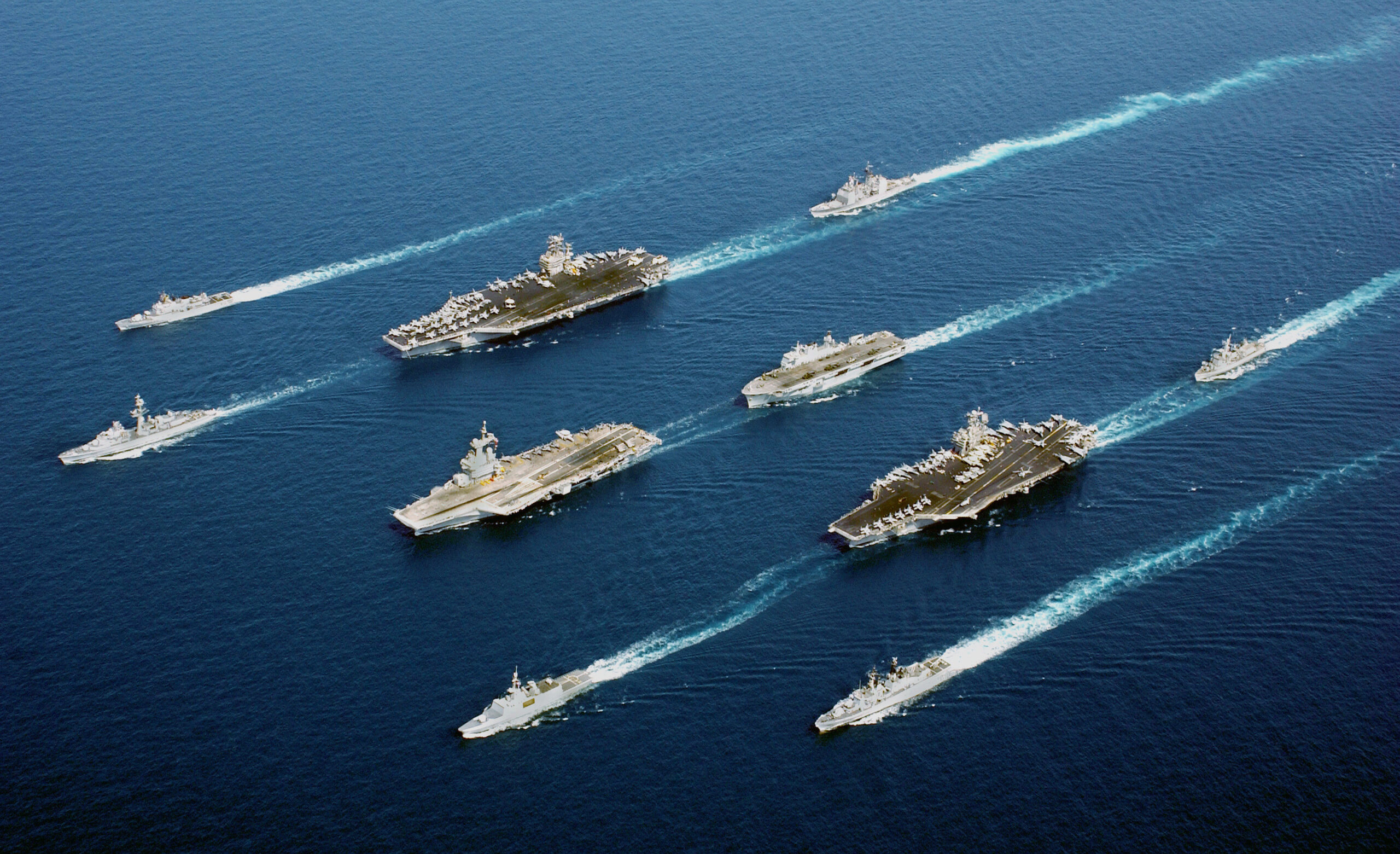
At the top sits the United States, whose United States Navy remains the most powerful in the world. With unmatched global reach, advanced aircraft carriers, and a network of overseas bases, the U.S. ensures maritime security across key international waters.
Close behind is China, which has rapidly expanded both its naval fleet and commercial maritime footprint. Through initiatives such as the Belt and Road Initiative, China has invested heavily in ports and shipping infrastructure across continents, reshaping global maritime trade routes.
In Asia, Japan and South Korea exemplify maritime excellence through technology and industry.
Japan’s sophisticated maritime defense capabilities are matched by its efficiency in shipbuilding and port management, while South Korea stands as one of the world’s largest shipbuilding hubs, led by companies such as Hyundai Heavy Industries. Together, they anchor East Asia’s dominance in maritime manufacturing and innovation.
Europe’s maritime legacy remains strong through countries like the United Kingdom and the Netherlands.
The Royal Navy continues to project British influence globally, while the Netherlands leverages its strategic location and world-class infrastructure, including the Port of Rotterdam, to remain a critical gateway for European trade. Meanwhile, Norway has carved a niche as a leader in sustainable ocean industries, offshore energy, and maritime innovation.
Strategic geography also plays a defining role. Singapore, despite its small size, has emerged as a global maritime powerhouse due to the Port of Singapore—one of the busiest and most efficient ports in the world.
Its dominance in shipping logistics and maritime finance demonstrates that influence at sea is not always tied to territorial size.
Similarly, India is steadily expanding its maritime capabilities, with the Indian Navy playing an increasingly important role in securing the Indian Ocean. Russia, on the other hand, leverages its vast coastline and Arctic access through the Russian Navy, positioning itself strategically along emerging northern sea routes.
Where is Indonesia?
Amid these global giants, Indonesia stands as a nation of immense maritime potential.
With more than 17,000 islands and a strategic position between the Pacific and Indian Oceans, Indonesia possesses all the natural advantages of a leading maritime power.
Yet, challenges in infrastructure, governance, and fleet capacity continue to limit its full realization. The gap between potential and performance highlights a critical opportunity: with the right investments and policies, Indonesia could rise as a central maritime force in the decades ahead.
Ultimately, maritime power in the 21st century is a multidimensional concept. It is shaped not only by warships, but by ports, policies, industries, and innovation.
The nations that dominate the seas today are those that understand this complexity—those that can integrate defense, commerce, and sustainability into a cohesive maritime strategy. As global dependence on the oceans continues to grow, the contest for maritime influence will only intensify, defining the balance of power for generations to come.