




MARITIMEPOSTS.COM – On the western horizon of Makassar, across the vast Spermonde Archipelago—at the heart of Indonesia’s Fisheries Management Area (WPP) 713—Langkai and Lanjukang Islands stand as silent witnesses to the harmony between humans and the ocean.
Behind the mesmerizing gradients of their waters lies a powerful narrative: the ongoing transformation toward a “Blue Economy.”
It is no longer about how much we can extract from the sea, but about how we manage this vital resource so it is not consumed by short-term ambition.
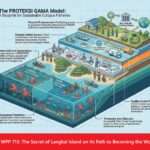
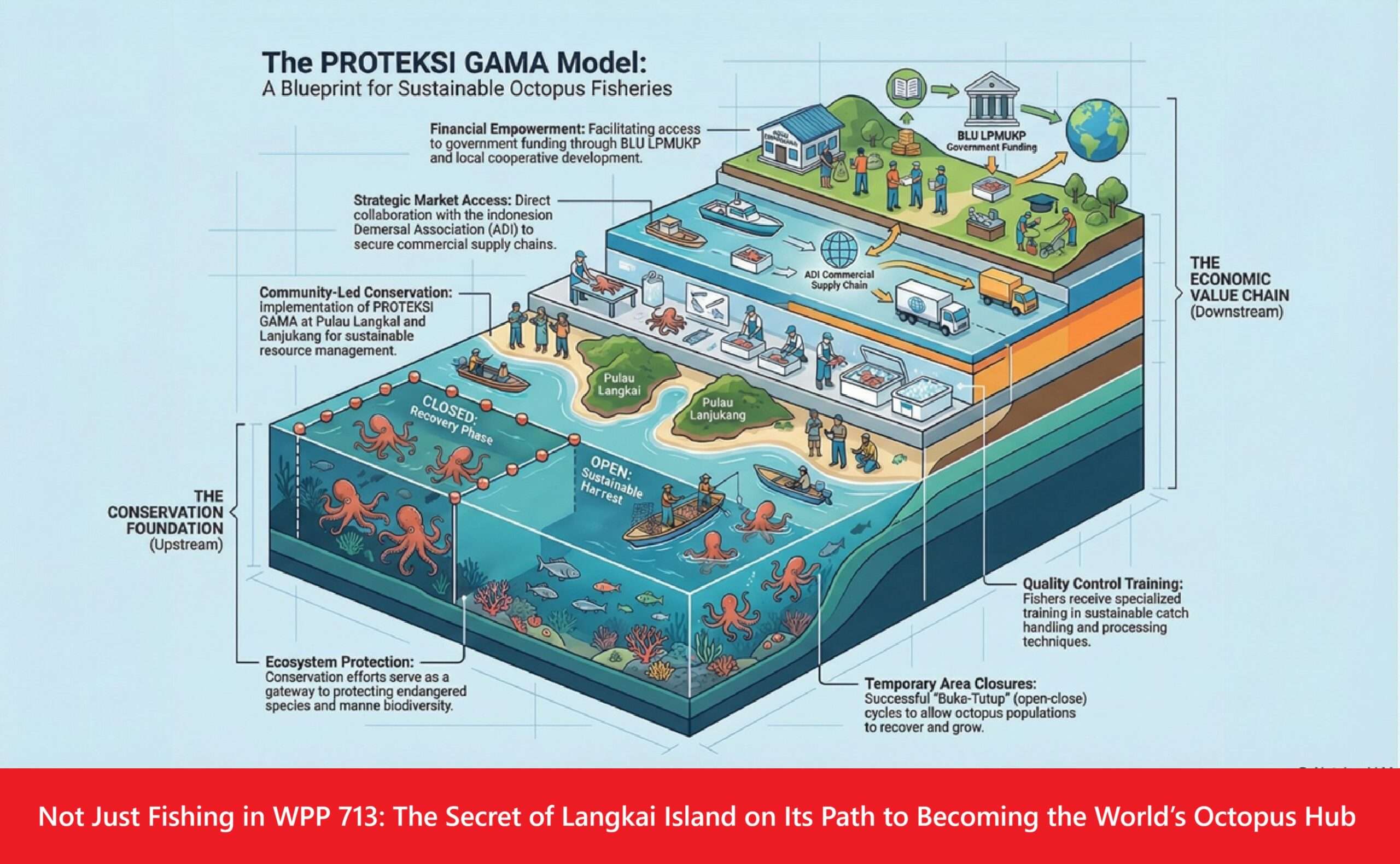
Through the PROTEKSI GAMA program (Community-Based Strengthening of Octopus Economy and Conservation), the Indonesian Marine Conservation Foundation (YKL Indonesia) is weaving new hope—positioning octopus as a symbol of small-scale fishers’ sovereignty.
Making Makassar a Hub for Sustainable Octopus
The grand vision championed by Nirwan Dessibali, Executive Director of YKL Indonesia, goes beyond simply protecting octopus populations in South Sulawesi waters.
He envisions Langkai and Lanjukang as national pilot models for fisheries governance—built on a clear focus: integration from upstream to downstream.
Supported by global conservation networks such as the Critical Ecosystem Partnership Fund (CEPF) and Burung Indonesia, the program seeks to align environmentally friendly fishing practices at sea with price certainty in the market.
At its core, this approach breaks the cycle of conservation projects that often fail because they overlook community welfare. By managing the entire supply chain, conservation is no longer a burden for fishers—it becomes an investment.
This represents the antithesis of reckless exploitation: a transition toward intelligent and dignified fisheries management.
“YKL Indonesia is committed to initiating environmentally friendly and sustainable management of fisheries resources,” — Nirwan Dessibali.
The “Open–Close” Strategy: From Hunters to Managers
One of the most tangible successes of YKL Indonesia’s assistance is the implementation of the “open–close” fishing system for octopus harvesting.
Muhammad Zamrud from the Makassar Fish Quarantine Office highly appreciates this method.
The concept is simple yet impactful: giving nature time to recover. During closure periods, octopus are allowed to grow to optimal size and reproduce before being harvested again at higher quality.
The crucial point lies not in the restriction itself, but in who decides it.
Unlike top-down regulations, the open–close decisions in Langkai and Lanjukang are made through community deliberation. This creates a fundamental psychological shift: fishers no longer see themselves as competitors scrambling for diminishing resources, but as “marine managers” with full control over their waters.
This active participation ensures sustainability beyond any political cycle.
The Paradox: High Demand vs. Supply Consistency
The economic potential of Makassar’s octopus has already attracted the attention of top policymakers.
Muhammad Rheza, Head of the Makassar Office for Cooperatives and SMEs, shared an anecdote about the Mayor’s strong interest in processed products from these islands. However, this interest often encounters a practical barrier: inconsistent supply.
This “consistency crisis” remains a major challenge for coastal SMEs.
A professional market demands not only quality products but also stable supply. Without conservation-based management like the open–close system, supply will continue to fluctuate with local resource depletion.
Consistency is the key to entering premium markets. If fishers can sustain stock levels, the global market will come to them—not the other way around.
“The Mayor likes products from the islands, but when we asked for more supply, it was not available,” — Muhammad Rheza.
Synergy of Public, Private, and Community Sectors
A blue economy cannot thrive in isolation. PROTEKSI GAMA demonstrates that the “secret formula” lies in cross-sector collaboration.
A cooperation agreement between Langkai–Lanjukang fishers and Agus Saputra of PT Kencana Bintang Terang (a member of the Indonesian Demersal Association/ADI) represents a concrete step toward securing market access.
However, market access alone is insufficient without capital.
Here, Dedyansyah from the Marine and Fisheries Business Financing Agency (LPMUKP) under the Ministry of Marine Affairs and Fisheries plays a strategic role. A successful example is the Alhamidi Cooperative from Galesong, which secured billions of rupiah in financing for purse seine vessel development.
The integration of NGO assistance, private-sector market guarantees, and government financial support creates a resilient business ecosystem—transforming small-scale fishers from passive actors into key players in the fisheries industry.
Octopus as a Gateway to Broader Conservation
Often, saving an ecosystem begins with focusing on a single species. The same applies to the ocean.
In PROTEKSI GAMA, octopus serves as a “Trojan Horse”—an entry point for broader conservation efforts.
By protecting octopus habitats—healthy coral reefs—we simultaneously safeguard the homes of many other protected and endangered species sharing Makassar’s waters.
This philosophy teaches that the health of one commodity reflects the health of the entire ecosystem.
Octopus is just the beginning. The ultimate goal is to restore the overall vitality of Makassar’s marine environment.
A single octopus thriving among preserved coral reefs stands as proof that economy and ecology can coexist without compromise.
What is happening on Langkai and Lanjukang Islands offers a glimpse into the future of Indonesia’s fisheries.
The transition from exploitation to sustainable governance brings optimism that Makassar can become a new global hub for sustainable seafood.
With strong collaboration, the dream of a thriving ocean is no longer just a narrative—it is becoming a tangible reality.
Reflection
When you enjoy seafood at your favorite restaurant, have you ever wondered: Is it the result of destructive exploitation, or a product of responsible management?
Would you choose to support products that ensure the ocean’s future for generations to come?
Author: Denun