



Intellectually, he embodied a synthesis between local Bugis-Makassar traditions and global knowledge systems—an early example of “global-minded leadership” from Nusantara.
MARITIMEPOSTS.COM – Karaeng Pattingalloang—often written as Karaeng Pattingalloang or Pattingalloang Daeng Pamatte—was one of the most remarkable intellectuals and statesmen of the 17th-century Gowa Kingdom.
He served as Tumabicarabutta (roughly equivalent to prime minister) under Sultan Malikussaid of Gowa.
What makes him exceptional is not only his political role, but his reputation as a polymath—he was known to master multiple European languages (Portuguese, Spanish, Latin), collected Western scientific books, and had deep interest in astronomy, cartography, and technology.
European visitors, including VOC officials, described him as one of the most learned men in Southeast Asia at the time.
His legacy in the Gowa Kingdom is profound. Administratively, he helped strengthen Gowa as a major maritime and trading power in eastern Indonesia, making Makassar a cosmopolitan port open to global commerce.
Intellectually, he embodied a synthesis between local Bugis-Makassar traditions and global knowledge systems—an early example of “global-minded leadership” from Nusantara.
Under his influence, Gowa maintained a relatively open trade policy, resisting monopolistic control attempts by the Dutch East India Company (VOC).
This stance eventually contributed to tensions that culminated in the Makassar War. Even after his death, his intellectual legacy symbolized resistance, curiosity, and openness—traits often associated with the maritime character of Bugis-Makassar peoples.
Regarding literature, Christian Pelras in The Bugis (often referred to in Indonesian as Manusia Bugis) does discuss figures like Karaeng Pattingalloang within the broader historical and cultural context of South Sulawesi.
While the book focuses more on Bugis society, diaspora, and social structure, it also highlights the interconnected world of Bugis and Makassar elites, including their engagement with global trade and knowledge—of which Pattingalloang is a prime example.
Maritime contexts
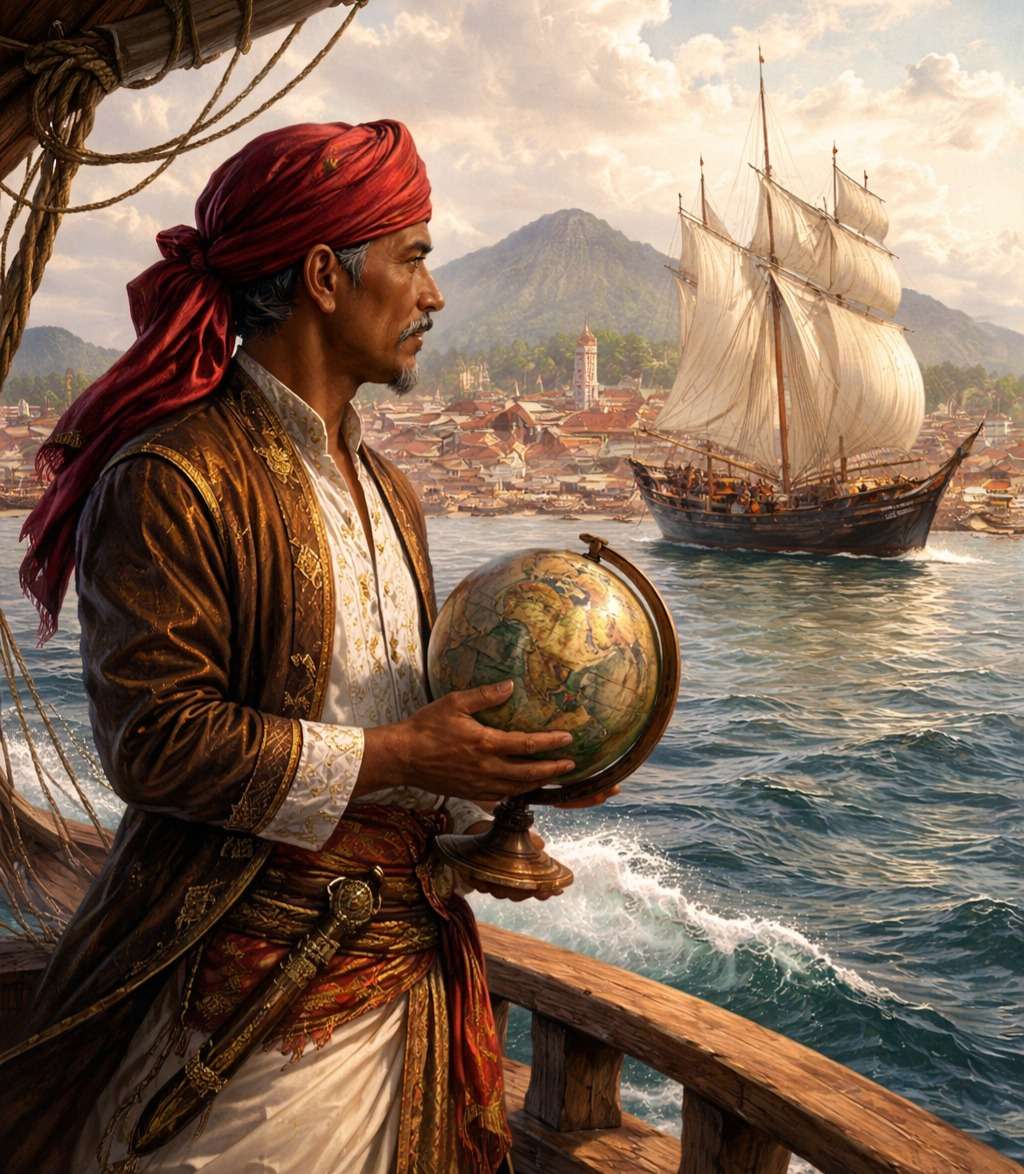
One of the most fascinating aspects of Pattingalloang is his serious engagement with astronomy and scientific instruments. European records—especially from Dutch VOC officials—note that he owned and actively used globes, maps, and astronomical tools that were extremely rare in Southeast Asia at the time.
He reportedly requested a large terrestrial globe from Europe, demonstrating not just curiosity but a working understanding of global geography and celestial navigation.
His interest in astronomy was not abstract; in the 17th century, astronomy was directly tied to navigation, seasonal winds (monsoon cycles), and maritime timing. This suggests that his knowledge likely contributed to improving navigational awareness within the Gowa Kingdom, especially as Makassar functioned as a major international port.
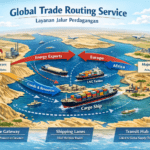
In maritime terms, Pattingalloang played a key strategic role in maintaining Makassar as a free port—a hub where traders from various regions (Malay, Javanese, Portuguese, English, and others) could operate without strict monopoly. His policies reflected a sophisticated understanding of global trade networks.
Rather than isolating Gowa, he positioned it within a wider maritime world system. This openness, however, directly challenged the ambitions of the Dutch East India Company (VOC), contributing to escalating tensions that later erupted into the Makassar War.
In this sense, his maritime legacy is not only technical but also geopolitical: he defended an open-sea trading order against early colonial monopolies.
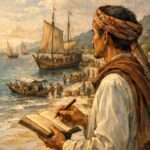
There are also accounts suggesting that Pattingalloang was deeply interested in cartography (map-making) and possibly in ship-related knowledge, although not as a shipbuilder himself. His access to European texts meant exposure to evolving ideas about ocean currents, world mapping, and navigation techniques.
This aligns with the broader seafaring culture of South Sulawesi peoples, whose long-distance voyages later fueled the Bugis diaspora across the Indonesian archipelago and beyond.
While we don’t have detailed records of him directly designing maritime technologies, his intellectual leadership likely elevated the knowledge environment in which Bugis-Makassar sailors operated—bridging local maritime traditions with global scientific knowledge.
In short, Karaeng Pattingalloang stands out not just as a statesman, but as an early Southeast Asian figure who understood that knowledge—astronomical, geographical, and political—was power in a maritime world.
***
In the context of Bugis diaspora, his era represents a formative period: the openness of Makassar as an international port and the later disruptions caused by VOC domination contributed to waves of migration.
Bugis and Makassar traders, sailors, and nobles spread across the archipelago and beyond, carrying with them values of adaptability, trade acumen, and intellectual curiosity—qualities that figures like Karaeng Pattingalloang had already embodied centuries earlier.
Editorial Team