








Lessons from South Sulawesi’s Coffee Scene: From Kopi Api Sorowako to Kampung Kopi Bawakaraeng *)
- The South Sulawesi model offers a profound lesson for the future of global agriculture. It proves that coffee is not merely a drink, but a solution to environmental, social, and economic challenges.
- By viewing the bean as a “guardian of the landscape,” the region has preserved its hills, revived its heritage strains, and built a brand that stretches from the kitchen to the capital.
MARITIMEPOSTS.COM – For the casual consumer, coffee is a global commodity—a simple morning ritual measured in caffeine content and convenience. However, in the rugged highlands of South Sulawesi, the bean has transcended its status as a crop to become a sophisticated tool for environmental survival and economic transformation.
This is the epicenter of a new “Agripreneurship” model, where the landscape is being reshaped not by massive industrial intervention, but by a grassroots revolution.
By exploring the stories of the farmers and entrepreneurs of this region, we discover that coffee is no longer just an export; it is a shield against climate change and a blueprint for regional identity.
The 2013 Coffee “Massacre” and the Climate Comeback
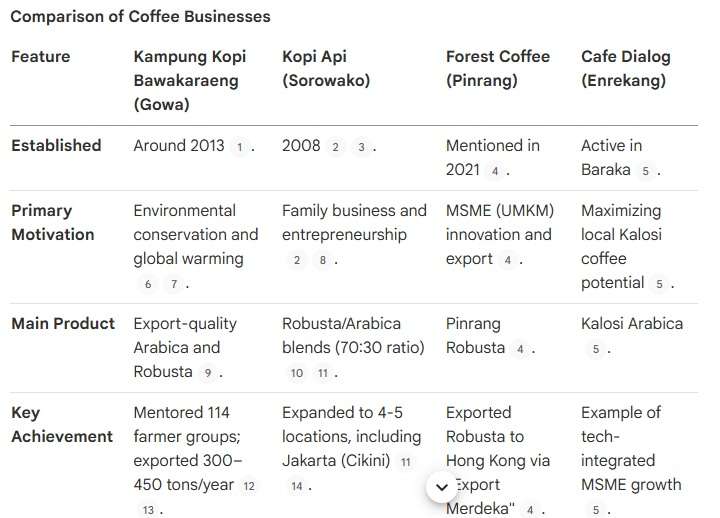
The history of Kampung Kopi Bawakaraeng in Gowa is marked by a visceral event known locally as the “slaughter” (di-babat) of the trees.
In 2013, faced with the creeping pressures of global warming and immediate financial desperation, farmers viewed coffee as an inefficient annual crop that yielded only one harvest a year.
Economic logic dictated a shift to horticultural crops like vegetables, which offered three harvests annually. They leveled their coffee groves, unaware that they were stripping the hills of their primary defense.
Recognizing the impending ecological disaster, the Yayasan Global Mandiri and the Ford Foundation stepped in.
Their mission was high-stakes; they had to navigate a rigorous “power move,” presenting their conservation proposal to three different government ministries to secure support.
They argued that coffee was the “guardian of the landscape,” essential for landslide prevention and water retention in hilly terrains where bare soil invited catastrophe.
“It was critical to assist the farmers so their land remained a conservation area. In hilly terrains, if the land is left bare for vegetables, it leads to climate change and disasters like landslides. Coffee acts as a guardian for that landscape.”
The intervention worked. By establishing a quality-controlled supply chain and connecting farmers directly to exporters, prices jumped from a stagnant 6,000 IDR to 30,000 IDR per liter.
What began in Gowa has now expanded to 114 farmer groups across five regencies, including Bantaeng and Bulukumba, proving that environmental conservation can be the most profitable path forward.
The 800,000 IDR Empire: Scaling Kopi Api from Kitchen to Capital
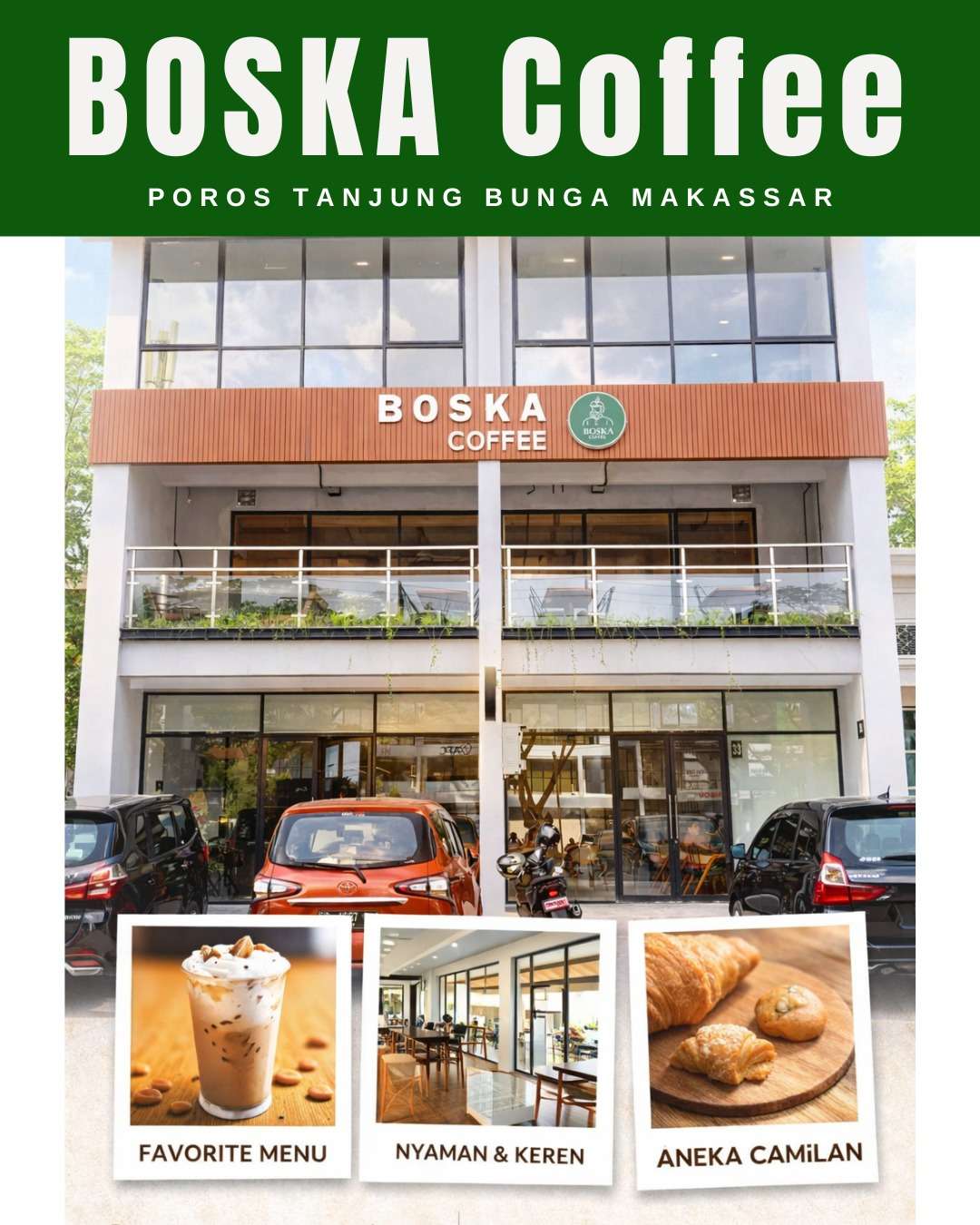
The “Kopi Api” brand is a masterclass in the art of bootstrapping. Founded in Soroako in 2008, the business launched with a modest capital of just 800,000 IDR.
To make the dream a reality, the founders utilized second-hand household items and discarded furniture from their own home, funneling every available rupiah into raw materials rather than optics.
Even the name is a testament to its roots: “Api” is a play on “Raffi,” the founder’s nephew, following the Bugis linguistic tradition of shortening and softening names to create a familiar identity.
Kopi Api’s journey represents a delicate balance of maintaining “the old taste” through “new methods.”
From 2008 to 2010, the coffee was brewed manually in large brass and copper pots (kuningan) over charcoal fires from 4 AM to 10 AM every single morning.
This labor-intensive heritage created a distinct, traditional profile that customers loved. As the brand modernized and transitioned to sophisticated grinding technology and machines, they refused to lose that soul.
Today, Kopi Api has successfully scaled its village-born philosophy to major hubs in Makassar and even the historic Cikini district in Jakarta.
The Resurrection of the “Seven Trees”: Soroako’s Robusta Recovery
While the specialty market often obsesses over Arabica, Soroako’s “Project Origin” initiative has turned its focus toward a remarkable Robusta recovery.
Years ago, the coffee heritage of the Salona/Tebetano region was nearly erased when farmers cleared their land to plant pepper (merica), which was then a surging commodity.
A survey of the area eventually discovered only seven remaining Robusta trees in the wild—the last survivors of a forgotten era. Recognizing the genetic and cultural value of these remnants, a development project was launched to revive the strain. From those original seven trees, the “Robusta Tebetano Sumasang” project has now grown to 300 trees.
The resulting coffee is so prized for its local character that every production batch typically sells out within two to three days through local outlets and the Galeri Reso.
The Export Synergy: Coffee, Candlenuts, and the Hong Kong Connection
In Pinrang, the innovation of “Forest Coffee” (Kopi Hutan) demonstrates how local SMEs can break into international markets by mastering logistics.
Based in the Lembang and Duampanua districts, Forest Coffee successfully penetrated the Hong Kong market through the “Export Merdeka” program, a milestone punctuated by presidential recognition.
The “surprising lesson” here was a logistical masterstroke: the SME bundled its Robusta coffee with candlenuts (kemiri). This wasn’t just a synergy of flavors, but a logistical necessity to fill shipping containers and reduce costs for small-scale production.
Supported by the DPMPTSP (Investment and Integrated One-Stop Service Office), which specifically provided essential grinding technology, the farmers of Pinrang moved from being raw material suppliers to sophisticated international exporters.
The “Kalosi” Epicenter: Coffee as a Catalyst for Regional Identity
In the regions of Enrekang and Toraja, coffee has become the central pillar of regional identity. Modern destinations like Cafe Dialog in Baraka and KAA Toraja Cafe serve as “Agripreneurship” hubs that showcase the world-famous Arabica Kalosi.
At the Dipo Melo site in Toraja, coffee culture is experienced through a breathtaking 180-degree view of the highlands, framed by the traditional architecture of 5 Tongkonan (ancestral houses) and 5 Lumbung (rice barns). This growth is driven by three specific pillars:
- Local Initiative: Modern management and technology are being applied to traditional beans to create a premium, global-standard experience.
- Tourism Appeal: Integrating coffee production with the scenic beauty of sites like Dipo Melo creates a high-value destination for “coffee tourism.”
- Alumni Collaboration: Organizations like IKA Unhas (Hasanuddin University Alumni Association), under the leadership of figures like Muhammad Ramadhan Pomanto, are actively collaborating with local governments to boost SME capacity and regional branding.
Conclusion: The Future of the Indonesian Cup
The South Sulawesi model offers a profound lesson for the future of global agriculture. It proves that coffee is not merely a drink, but a solution to environmental, social, and economic challenges.
By viewing the bean as a “guardian of the landscape,” the region has preserved its hills, revived its heritage strains, and built a brand that stretches from the kitchen to the capital.
Next time you take a sip of your morning brew, ask yourself: is your coffee just a drink, or is it a guardian of the landscape it came from?
___
Author Denun, founder Pelakita.ID
*)This article is inspired by an initiative by the Regent of North Luwu, encouraging coffee shops to use coffee sourced from Rongkong and Seko.