







MARITIMEPOSTS.COM – Welcome to the study of rural development! At its core, this field is about more than just infrastructure; it is about solving “pinch problems”—those urgent, everyday challenges faced by communities.
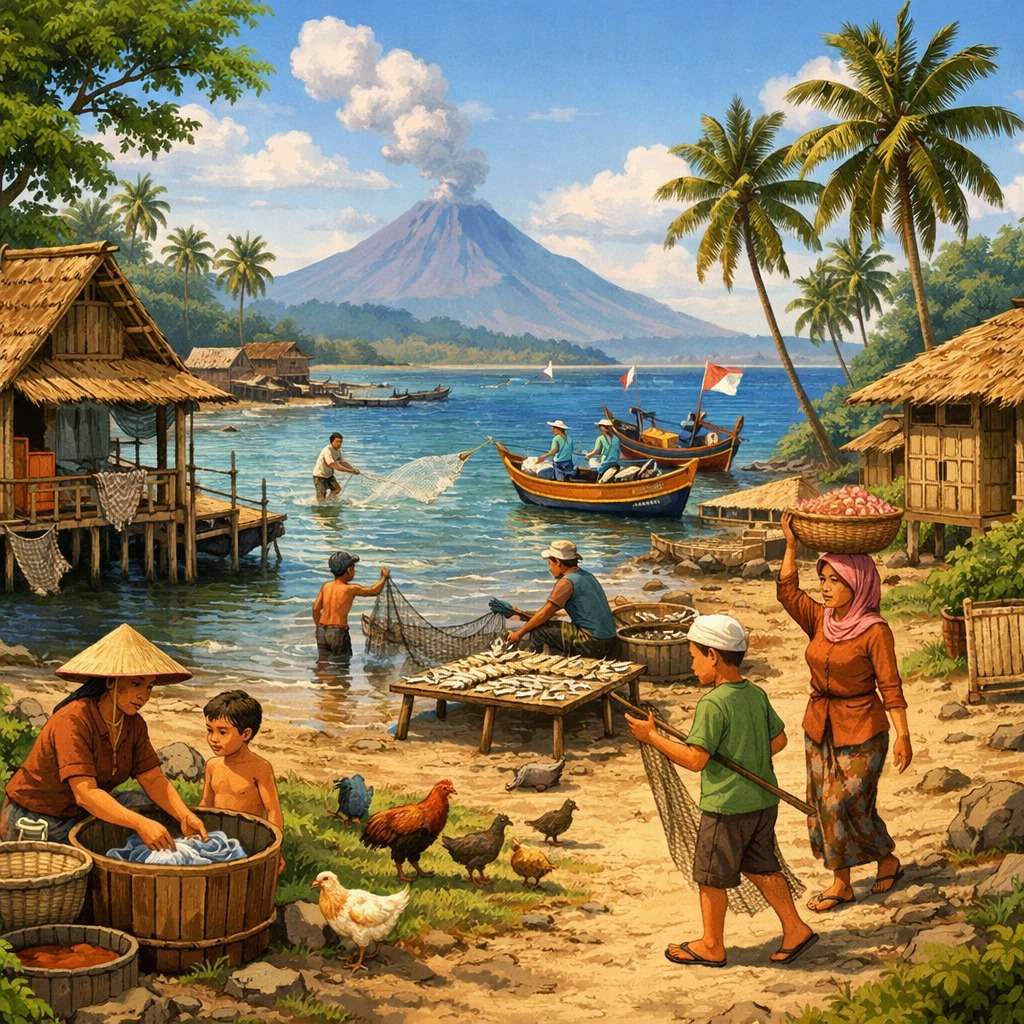
In rural areas like the Nsimbo District Council (NDC) in Tanzania, these problems often manifest as a lack of basic social-economic infrastructure, specifically regarding schools, health facilities, water services, and road services.
You might assume that the solution is straightforward: allocate more money. However, experience shows that even when the government and stakeholders provide funds, many communities remain unchanged.
Why? Because money alone cannot buy success. Without the active involvement of the people who live there, projects often fail to meet expectations or collapse once the funder withdraws. To turn resources into results, we must look beyond the checkbook and toward a specific, collaborative approach known as participatory planning.
This transition from simple funding to sustainable results requires a shift in how Local Government Authorities (LGAs) operate, moving from top-down directives to a decentralized strategy that empowers the community
Defining the Language of Participation
Before we dive into how development happens, we must master the professional terminology used by planners and economists. These concepts form the foundation of a successful “bottom-up” environment.
| Term | Definition (Source-Grounded) | The Student’s “Pro-Tip” |
| Participatory Planning | A process where a community reaches agreed socio-economic goals by analyzing their own problems and suggesting actions. | Think of this as shifting experts from “decision-makers” to “facilitators.” In a decentralization strategy, it puts the power in the hands of the community. |
| Project Performance | A state involving clearly defined, actionable, and measurable goals that flow from a mission down to the program level. | In research, we measure success specifically by the number of completed projects. If a building is unfinished, it hasn’t “performed.” |
| Rural Areas | Geographical areas outside towns/cities, characterized by low populations, agriculture, and poor infrastructure. | Rural projects often rely on the procurement committee process to hire “local fundi” (contractors), making local oversight essential. |
While these definitions give us the “what,” we must now look at the “how” by examining the theoretical models that guide Local Government Authorities (LGA) in their planning efforts.
Theoretical Models: How We Think About Planning
In development planning, we often see a clash between two models: Synoptic Theory and Transactive Theory.
Synoptic Theory represents the “top-down” approach. It is a formalized, controlled effort where top management integrates decisions into a single strategy. In Tanzania, a real-world example of this is the “O and OD” (Opportunities and Obstacles to Development) approach. While it attempts to identify priorities, it can become a “goals approach” that dictates what must be done to a community rather than working with them.
The “hero” of our framework is Transactive Theory, which prioritizes the human element:
“A normative response to improving the practice of planning through a dialogical process that combines various forms of technical and experiential knowledge, through which a deeper understanding of issues surrounding a particular challenge in a community is attained.” — John Friedman (1973)
Transactive Theory is superior for creating sustainable projects because it is:
- Dialogue-Centered: It relies on a “life of dialogue” between individuals, ensuring that communication is person-centered.
- Knowledge-Sharing: It bridges the gap between the technical expertise of planners and the lived experience (experiential knowledge) of the villagers.
- Decentralized: It gives people greater control over their own social processes, moving away from rigid, central-office control.
- Ownership-Focused: It fosters a sense of responsibility; when a community plans a project, they are more likely to maintain it.
Moving from these abstract theories, we can use statistical variables to see exactly how these ideas impact concrete outcomes.
The Variables of Success: Measuring Project Performance
To understand what drives success in Nsimbo, we use a Multiple Linear Regression model. This allows us to see how independent causes (Variables X1 and X2) change the final result (Variable Y).
- Variable X1 (Funds): Measured in total Tanzania shillings allocated per project.
- The “So What?”: Funds have a 53.41% effect on performance. Resource allocation remains the primary engine of project completion.
- Variable X2 (Time): Measured by the implementation window (typically 1–4 years).
- The “So What?”: Time management has a 33.06% effect. Projects need an appropriate “maturation” period; rushing or excessive delays lead to failure.
- Variable Y (Performance): Our success metric, defined as the number of completed projects.
The Complexity Note: While Funds and Time are vital, the model’s R-squared value is 0.163 (16.3%). This tells us that while these two factors are significant, they only explain about 16.3% of why projects succeed. The remaining 83.7% of the puzzle involves the “human engine”—the people and leaders who make the math work.
The Human Engine: Community and Leadership
In Nsimbo, a project isn’t just a budget; it’s a social contract. For a project to move forward, the community typically contributes 20% of the cost. This is the practical application of Transactive Theory: by contributing “in-kind” resources like labor, bricks, sand, or stones, the community applies its experiential knowledge and secures a stake in the project’s future.
Local leaders act as the vital link between these community efforts and the funders.
The Blueprint for Local Engagement
- [ ] The Vital Link (90%): Serving as the primary connection between the village and project funders (government or donors).
- [ ] Authorizers (91%): Acting as the formal gatekeepers who allow project implementation to begin.
- [ ] Information Source (57%): Serving as the primary way villagers learn about upcoming development plans.
- [ ] Sensitization (39%): Educating villagers on the project’s importance and why their 20% contribution is necessary.
- [ ] Mobilization (17%): Organizing the community to attend meetings and participate in the planning stages.
Conclusion: The Path to Sustainability
The study of Nsimbo District Council reveals a powerful truth: “Better understanding results in robust achievement.” When a community knows the funding sources, participates in the 20% contribution, and trusts their local leaders, projects don’t just get finished—they thrive.
Key Lesson Learned Project sustainability is the ultimate benchmark of success. It is achieved through “bottom-up” planning where the community identifies, prioritizes, and helps implement the activities that solve their own “pinch problems.” This requires moving beyond the status quo of “O and OD” toward a truly transactive, inclusive model.
As you move forward in your studies, remember that your role is to ensure that the people intended to benefit from a project are the ones leading the conversation. Your mastery of these frameworks is the first step toward building resilient, self-sustaining communities.