








Criticism of KKP does not negate the importance of the institution. On the contrary, such critique is essential to recalibrate policy direction.
MARITIMEPOSTS.COM– Amid the grand narrative of maritime-based economic development, the Ministry of Marine Affairs and Fisheries (KKP) is expected to serve as a key driver in advancing the downstreaming of Indonesia’s fisheries industry.
However, a closer examination reveals that several strategic programs exhibit a classic symptom of development: grand ambitions without a solid foundation.
Rather than demonstrating a well-orchestrated policy framework, a number of KKP initiatives appear fragmented, reliant on external financing, and lacking sustainability.
This raises a fundamental question: is downstreaming truly a substantive agenda, or merely a development slogan?
Dependence on Debt and Lack of Self-Reliance
The procurement program of 1,500 fishing vessels serves as an early illustration of structural issues. Instead of becoming a product of domestic industrialization that strengthens national shipbuilding capacity, the program depends heavily on foreign financing schemes, including involvement from the United Kingdom.
Moreover, the construction process itself is not entirely under KKP’s control.
This reflects a weak industrial policy design: the state seeks to promote downstreaming, yet the production instruments are not independently developed.
When strategic projects depend on external actors, the expected national value-added risks leaking abroad.
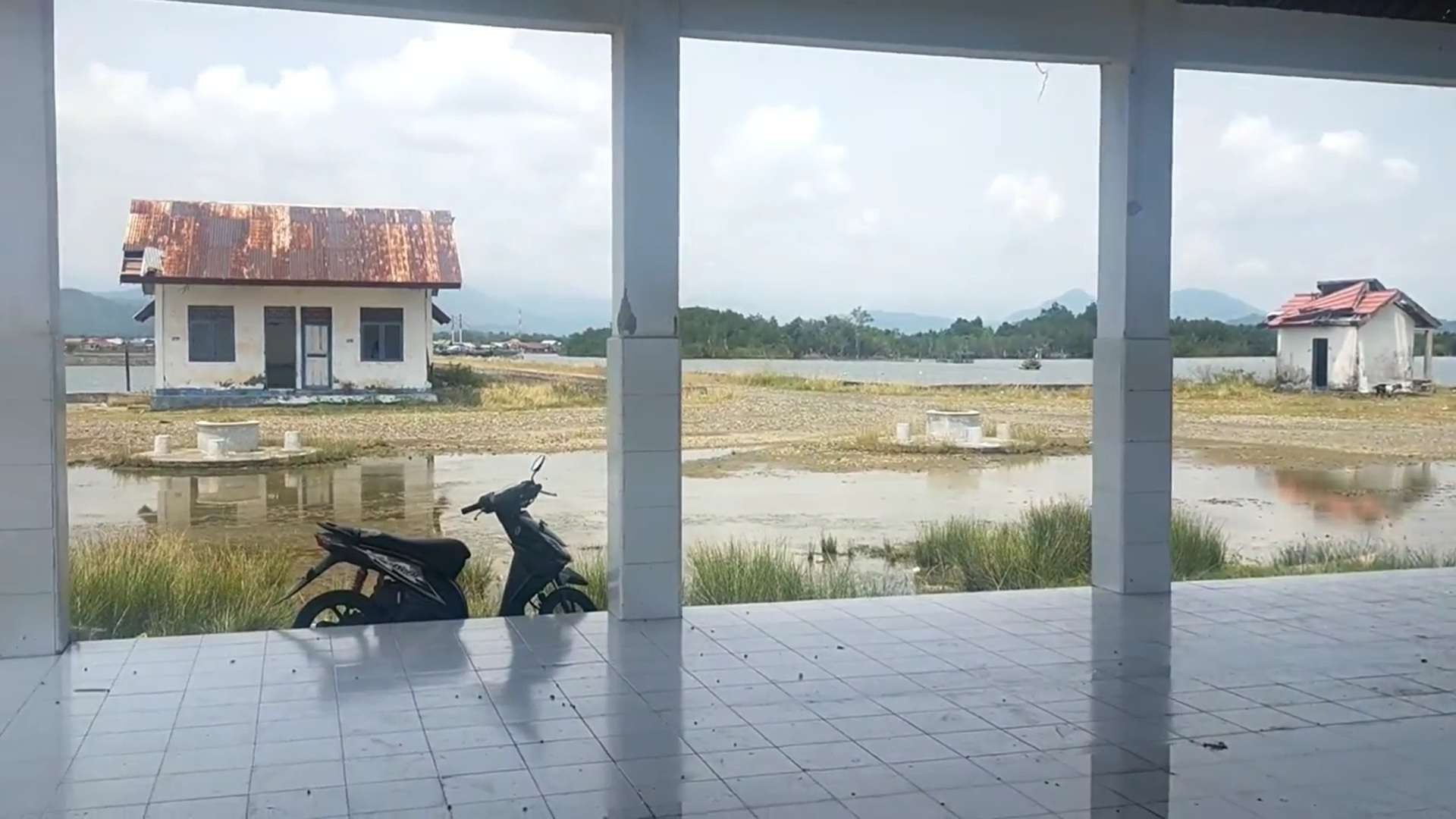
A similar pattern is evident in the construction of fishing ports financed through loans from the Agence Française de Développement (AFD). Infrastructure is indeed important, but when built without a ready ecosystem of production and distribution, ports risk becoming mere physical monuments without meaningful economic activity.
Gap Between Targets and Realization
Another critical issue lies in the gap between targets and actual outcomes. The Red-and-White Fishermen’s Village(KNMP), which aimed to produce 1,000 units, has so far realized only around 35—many of which are reportedly of questionable quality.
This gap is not merely a technical issue; it reflects deeper problems in planning and execution. Overly ambitious targets without adequate implementation capacity will only produce statistics of failure.
In the long run, this undermines public policy credibility and erodes trust among business actors and fishing communities.
Aquaculture Failures: Between Ambition and Field Reality
The aquaculture sector, often promoted as the backbone of downstreaming, is not immune to these challenges. The 80-hectare aquaculture project in Kebumen stands as a clear example.
The program has stagnated due to budget constraints, leading to its management being handed over to another party, Agrinas—reportedly now withdrawing from the project.
Even more concerning, the planned expansion to 2,100 hectares faces similar risks of failure.
A recurring pattern emerges: projects begin with great enthusiasm but lack financial certainty, technological readiness, and solid management.
Dependence on debt-financing schemes for aquaculture projects further compounds the risks. When projects fail, the fiscal burden remains, while the anticipated economic benefits never materialize.
Core Issue: Fragmentation and the Absence of a Grand Design
From these cases, it becomes clear that the main problem is not merely underperforming projects, but the absence of an integrated grand design.
Downstreaming is not simply about building ships, ports, or large-scale ponds. It requires a systemic approach that includes:
- Stable supply of raw materials
- Infrastructure connected to supply chains
- Competitive processing industries
- Access to domestic and global markets
- Skilled human resources
Without such integration, each project operates in isolation and ultimately fails to generate meaningful value-added outcomes.
Toward Policy Correction
Criticism of KKP does not negate the importance of the institution. On the contrary, such critique is essential to recalibrate policy direction.
Several steps should be considered:
- Reorienting from projects to systems
The focus should shift from physical outputs to the functionality of the industrial ecosystem. - Strengthening domestic capacity
Reducing dependence on foreign financing and external implementers. - Realistic target-setting
Aligning targets with actual implementation capacity, rather than political ambition. - Comprehensive program evaluation
Halting or redesigning ineffective projects. - Transparency and accountability
Expanding public space for monitoring and evaluating strategic programs.
Closing
The downstreaming of marine and fisheries industries is a strategic agenda that cannot be compromised. However, without a strong foundation, it risks becoming mere development rhetoric.
KKP now faces a critical choice: continue with a project-heavy approach that yields minimal impact, or undertake fundamental reforms toward more integrated, realistic, and sustainable policies.
Without such changes, downstreaming will remain a promise—not a transformation.
Gowa, March 27, 2026