
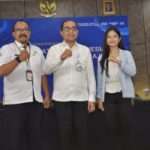





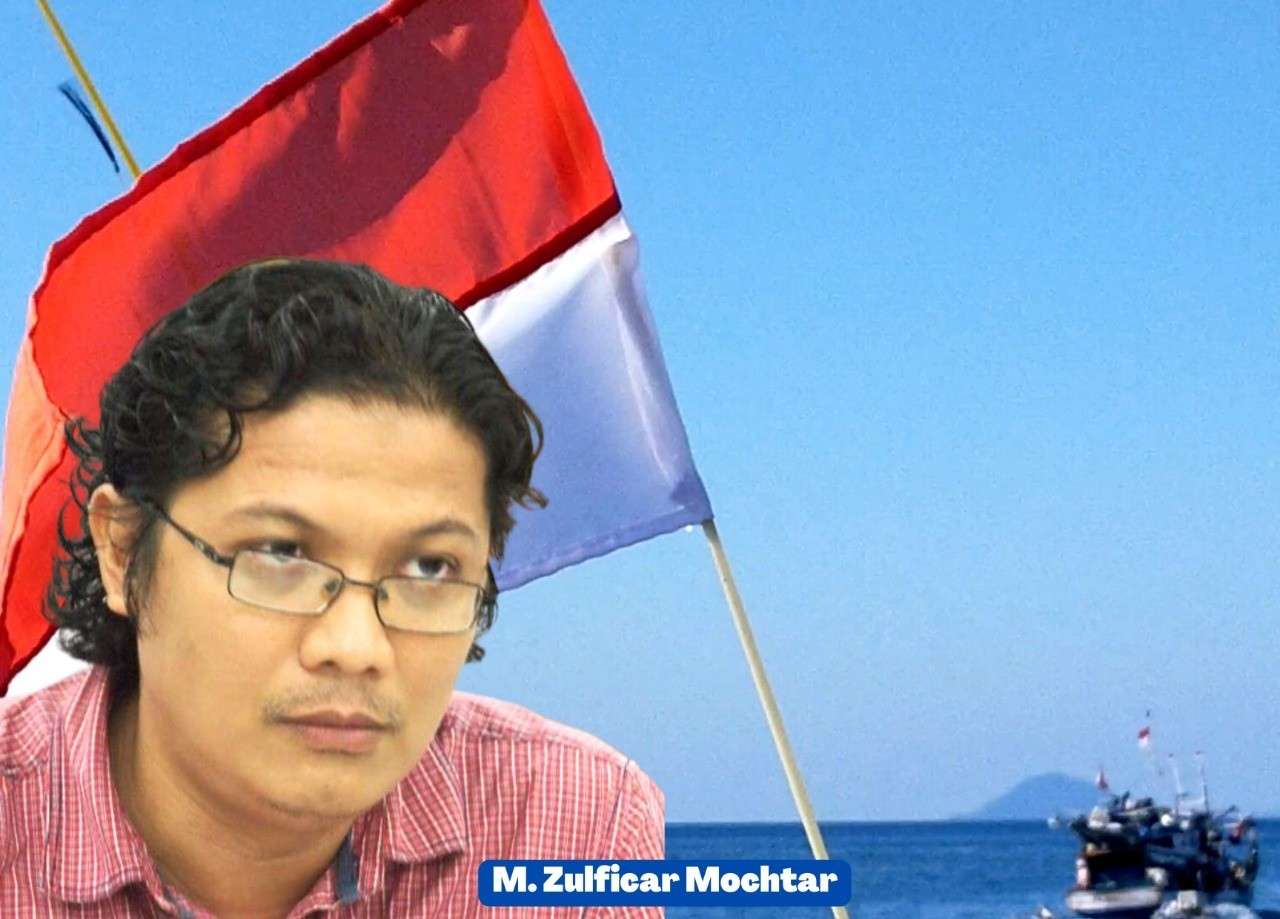
MARITIMEPOSTS.COM – The Founder of maritime consulting organization Ocean Solutions Indonesia (OSI), M. Zulficar Mochtar, shares his key perspectives on the true substance and proper implementation of the Blue Economy concept in the maritime sector.
Speaking to MARITIMEPOSTS.COM, the former Director General of Capture Fisheries at Indonesia’s Ministry of Marine Affairs and Fisheries (2019–2020) expressed his appreciation for all initiatives aimed at improving the function and governance of the country’s maritime sector.
“We must remain optimistic. If managed properly, our maritime and ocean potential is more than sufficient to help repay the nation’s debt. Our resource advantages are significant. However, the strategy needs to be more refined,” he stated.
Avoid Getting Lost in Terminology
Regarding the Blue Economy concept, Zulficar emphasized the importance of not being trapped in jargon or lost in competing conceptual frameworks.
“There is Gunter Pauli’s Blue Economy concept, which promotes zero waste. Then there are terms like Sustainable Ocean Economy, Circular Economy, and Blue Economy,” he explained.
“Some even interpret all activities at sea as ‘blue.’ Misinterpretations like this can create confusion in implementation. It is better to remain consistent by defining Blue Economy as a Sustainable Ocean Economy,” he added.
He stressed that both the conceptual design and its implementation must be well prepared.
Learning from Other Countries
Zulficar pointed to examples from other countries:
“Singapore has limited natural resources, yet it has become a global hub for goods and services. The Netherlands is one of the world’s leading food exporters despite having limited agricultural land. Why? Because they have strong long-term planning and solid strategies.”
Mainstreaming Sustainable Ocean Economy
He further emphasized the importance of mainstreaming the Sustainable Ocean Economy through a comprehensive strategy.
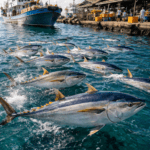
“Aquaculture, conservation, capture fisheries, marine tourism, maritime services—these cannot be handled by the Ministry alone. Budget constraints and limited capacity make it necessary to involve broader stakeholders.”
Zulficar, who also previously served as Head of the Marine and Fisheries Research and Human Resources Agency during Minister Susi Pudjiastuti’s tenure, highlighted governance as a fundamental issue.
“We need a clear and workable model that can evolve into a mass movement. Once it becomes a movement, the government can play a more strategic role.”
The Importance of Readiness and Continuity
He warned against short-term, inconsistent programs:
“Readiness criteria must be well prepared. Seasonal programs will only lead to inconsistency because the concepts, strategies, and orientations are unclear. We have seen initiatives like the Global Maritime Fulcrum and Sea Toll—widely discussed, but with outcomes that fall short of expectations.”
From Upstream to Downstream
Zulficar emphasized the need to manage the entire value chain:
“If there are obstacles at any stage, they must be addressed within the supply chain. Take financing as an example—if the target is 30,000 hectares, even one hectare of intensive aquaculture can cost up to one billion rupiah.”
“Who will provide the funding? Where will the feed come from? Most aquaculture depends on feed, and much of it is imported. Where is the market? Many issues also arise in licensing and land use. The same applies to capture fisheries—96 percent of fishers are small-scale, with limited capital and savings.”
He stressed that program design must be highly sensitive to real conditions on the ground.
Capacity, Technology, and Digital Transformation
Zulficar highlighted the importance of strengthening capacity, technology, data, and digital transformation:
“We must ensure that our human resources are ready—what capacities they have, what technologies are needed and relevant. This must be carefully prepared. Generations are changing. We cannot rely on the same approaches. Innovation is essential.”
Geopolitics and Global Trends
He also underscored the need to understand geopolitical dynamics and international trends:
“Other countries are not standing still. They continue to innovate in governance and technology. We should not be inward-looking. Hundreds or even thousands of MoUs need to be implemented, not just signed.”
The Ocean as the Future Solution
In closing, Zulficar emphasized that the ocean holds the key to future challenges:
“Ultimately, the ocean is the solution to many future challenges. But it requires seriousness, careful planning, and the right strategy—one that can inspire all stakeholders to work together. It must be realistic, grounded, and developed into an effective movement.”
Editor: K. Azis