







MARTIEIMPOSTS.COM – Imagine a baby born on a cruise ship in the middle of the Atlantic Ocean. This hypothetical scenario isn’t just a legal riddle; it is a window into a massive hole in our understanding of global order.
While we are accustomed to living within the clear-cut borders of nations, 70% of the planet remains a “Wild West” where no single country holds absolute rule.
This geographic reality creates a unique legal vacuum where rules shift as quickly as the tides. Maritime law exists to reconcile the rigid sovereignty of nations with the vast, ungoverned reaches of the high seas.
It is a world where your rights and responsibilities depend entirely on your proximity to the shore.
The Cannonball Standard: How History Defined the 12-Mile Limit
Modern borders are dictated by 18th-century ballistics. For centuries, a nation’s reach was defined by its ability to defend its shores from the beach, leading to the “three-mile limit.”
This standard was based on the “distance a cannon could shoot” off shore, a definition that has since evolved into the modern 12-mile territorial limit measured from the “lowest low tide.”
Beyond this 12-mile line, sovereignty exists in layers, including a “contiguous zone” for customs enforcement and a 200-mile “exclusive economic zone” for oil and fishing.
It is a striking irony that our digital-age geopolitics remains anchored to the ballistic range of the colonial era. We have built a complex global economy on top of a military standard that is hundreds of years old.
The “Innocent Passage” Loophole
Even within those 12 miles of territorial waters, a nation’s sovereignty is surprisingly porous.
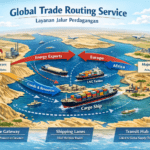
The principle of “innocent passage” ensures that the world’s shipping lanes remain open, allowing foreign vessels to pass through without seeking explicit permission.
This rule serves as the essential lubricant of global trade, preventing coastal nations from choking off essential maritime traffic.
However, this right is strictly conditional on the ship moving “quickly and without stopping” on the shore. To maintain “innocent” status, vessels are forbidden from engaging in specific activities: fishing, polluting, weapons practice, or spying.
This loophole represents a delicate compromise between a nation’s desire for total control and the world’s need for frictionless movement.
Why Panama “Owns” the World’s Shipping Fleet
Every oceangoing vessel is required to carry a “nationality” through registration, but for many owners, this is a strategic business choice rather than a geographic one.
This has given rise to the “flag of convenience,” where ships register in nations with the most favorable regulatory environments.
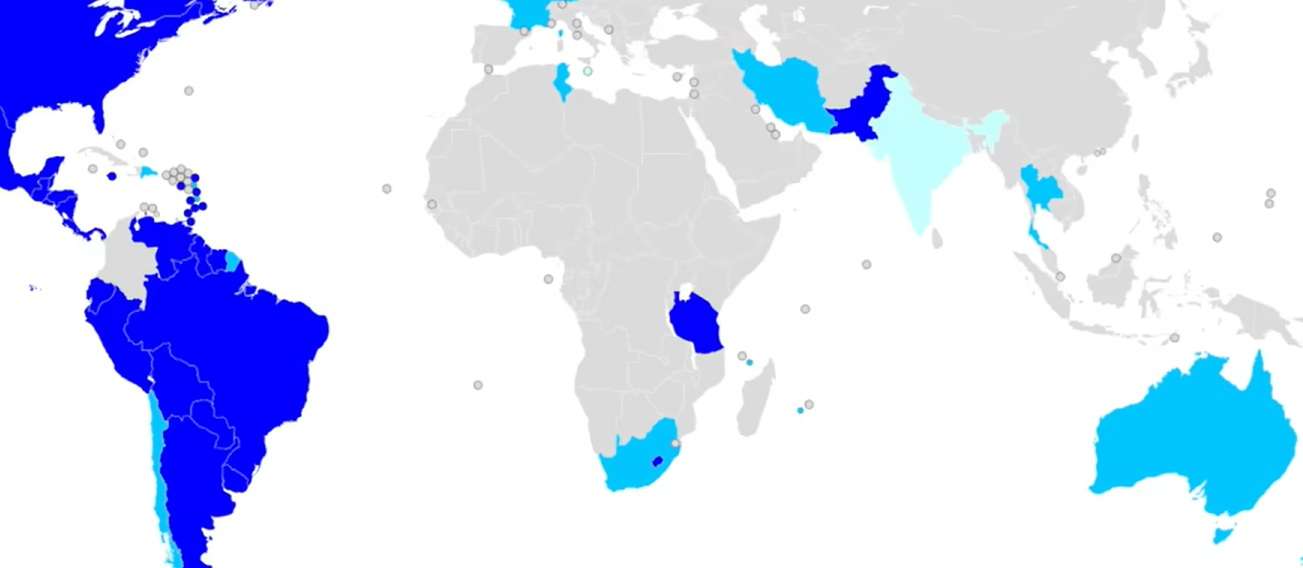
Panama, a country with fewer people than Minneapolis, is the undisputed titan of this system, holding the registrations for 25% of the world’s shipping fleet.
By offering low taxes and minimal labor costs, this small nation has become the legal home for a massive portion of global commerce. This reality reveals a profound decoupling of corporate power from national identity, where “home” is simply wherever the overhead is lowest.
The Legal Chameleon: When the Rules Change Overnight
A ship is a legal chameleon that fundamentally transforms as it crosses invisible lines in the water.
In international waters, the vessel is an extension of its country of registration, but once it hits the 12-mile mark, its internal legal framework switches to the domestic laws of the nearby coast.
Consider a ship registered in Amsterdam. On the high seas, it could legally host a brothel or offer marijuana to its passengers.
However, as it approaches a foreign coast, the captain must effectively “turn off” these legalities, shuttering the businesses and disposing of substances before entering territorial waters. It is a logistical absurdity where morality and legality are governed by a single GPS coordinate.
The Birthright Lottery: Citizenship at Sea
Birthright at sea is a jurisdictional lottery that exposes the granular nature of international law. A child born on a ship within 12 miles of the U.S. coast is technically born in America, granting them the world’s 8th most powerful passport.
There are, however, two specific exceptions: children of foreign diplomats and children of individuals staging a hostile invasion or occupation are denied this automatic citizenship.
These rules show how birthright can be weaponized or withheld based on the specific status of the parents.
In international waters, the United Nations Treaty on the Reduction of Statelessness suggests the child should take the parents’ nationality.
If the parents’ nation does not recognize the birth, the child may default to the citizenship of the country where the ship is registered. This prevents a child from becoming a “person without a country” in the middle of the ocean.
Exploiting the Void: From Casino Boats to Offshore Coding
The ocean’s status as a regulatory vacuum has long invited creative—and sometimes cynical—exploitation. During Prohibition, U.S. ships re-registered in countries like Panama to serve alcohol the moment they hit international waters.
Similarly, mid-century casino boats would depart from cities where gambling was illegal, sailing just far enough from the coast to open their tables.
One of the most modern attempts to use this loophole was the 2005 “SeaCode” proposal. The plan involved anchoring an old cruise ship 12 miles off the coast of California to house foreign tech workers.
By doing so, the company aimed to bypass U.S. wage laws and the difficult visa application process entirely. While the project never launched, its technical legality highlights the ocean’s role as a bypass for land-based restrictions.
The Final Frontier of Sovereignty
The principles of maritime law are no longer confined to the water; they have ascended into the skies and orbit.
Aircraft and spacecraft follow similar jurisdictional rules, meaning a British Airways flight from New York to London can serve alcohol to 18-year-olds because it follows the laws of its country of registration.
As humanity looks toward the stars, we are carrying these 18th-century “cannonball” frameworks into the 21st-century space age. Our current laws provide a shaky bridge between national sovereignty and the vast “Wild West” of the high seas and beyond.
This reliance on ancient concepts reveals the underlying fragility of our borders, which seem to dissolve the moment they meet the water.