








MARITIMEPOSTS.COM – In conversations about Indonesia’s maritime transformation, the spotlight often falls on bold, visible actions—crackdowns on illegal fishing, the sinking of foreign vessels, and the assertion of sovereignty at sea.
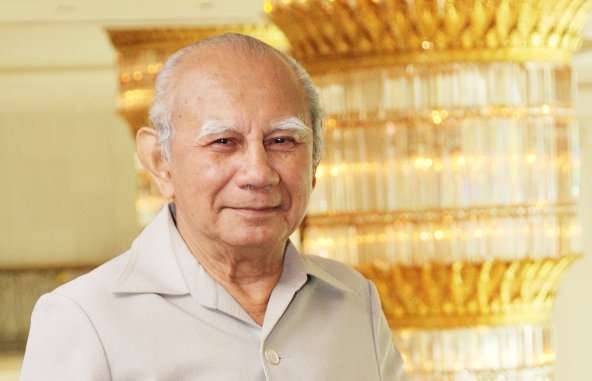
Yet, beneath these dramatic shifts lies a quieter, more foundational revolution. At its center stands Emil Salim, a figure whose influence on Indonesia’s oceans is profound, even if rarely framed in maritime terms.
Emil Salim did not command fleets or patrol coastlines. Instead, he reshaped the way Indonesia understands development itself.
As one of the earliest champions of sustainable development—both in Indonesia and globally—he challenged the long-standing assumption that natural resources, including the vast riches of the sea, were inexhaustible. He introduced a new paradigm: that economic growth must be balanced with environmental preservation.
This shift would later become the intellectual backbone of marine conservation and sustainable fisheries policies.
During his tenure as Minister of Environment, Emil Salim laid the legal and institutional foundations that continue to govern Indonesia’s natural resources, including its oceans.
The introduction of environmental legislation, environmental impact assessments (AMDAL), and regulatory frameworks ensured that development—whether on land or at sea—would no longer proceed unchecked. Coastal infrastructure, offshore extraction, and fisheries management would all, in time, be shaped by these principles. In effect, he embedded environmental accountability into the DNA of governance.
His contribution also extended to institution-building. By strengthening environmental governance and promoting science-based policymaking, Emil Salim ensured that decisions affecting ecosystems—including marine ecosystems—would rely on data, research, and long-term thinking. This approach remains critical today, particularly as Indonesia grapples with overfishing, coral reef degradation, and the growing pressures of climate change on its oceans.
Perhaps his most enduring contribution to maritime Indonesia lies in his role in transforming the national mindset. Before his influence, development was largely synonymous with extraction—taking as much as possible from nature to fuel growth.
Afterward, a more nuanced understanding began to take hold: that the sea is not merely a resource, but a living system that must be sustained. This philosophical shift is what enables modern policies that emphasize conservation, ecosystem protection, and equitable resource distribution.
Institutions and initiatives linked to biodiversity conservation, such as those supported by organizations like KEHATI Foundation, further reflect his long-term vision.
By emphasizing the importance of protecting biodiversity—including marine biodiversity—he helped position Indonesia as a steward of one of the richest ocean ecosystems on Earth.
It is no coincidence that later maritime reforms—particularly those aimed at combating illegal fishing and restoring fish stocks—align closely with the principles Emil Salim championed decades earlier.
Policies that prioritize sustainability, protect small-scale fishers, and seek to restore ecological balance are, in many ways, the practical realization of his ideas.
Emil Salim’s legacy, therefore, is not measured in patrol boats or enforcement statistics. It is measured in the frameworks that make sustainable ocean governance possible. He did not fight battles at sea; he redefined the battlefield itself.
In the grand narrative of Indonesia’s maritime journey, Emil Salim stands as a quiet but indispensable figure—a pioneer who ensured that the nation’s seas would not only be utilized, but preserved.
His work reminds us that true maritime strength is not only about control over waters, but also about wisdom in how those waters are sustained for generations to come.
___
Emil Salim is a prominent Indonesian economist, statesman, and environmental pioneer widely regarded as one of the architects of sustainable development in the country. Born in 1930, he served as Indonesia’s Minister of Environment for over a decade (1978–1993), where he introduced key environmental policies and regulatory frameworks that integrated ecological considerations into national development. Educated in economics at the University of Indonesia and the University of California, Berkeley, he also played an influential role on the global stage, including as a member of the World Commission on Environment and Development (Brundtland Commission). Throughout his career, Emil Salim has been known for bridging economic growth with environmental stewardship, shaping Indonesia’s long-term approach to natural resource management, including its vast marine ecosystems.