








A Kingdom Written in Saltwater
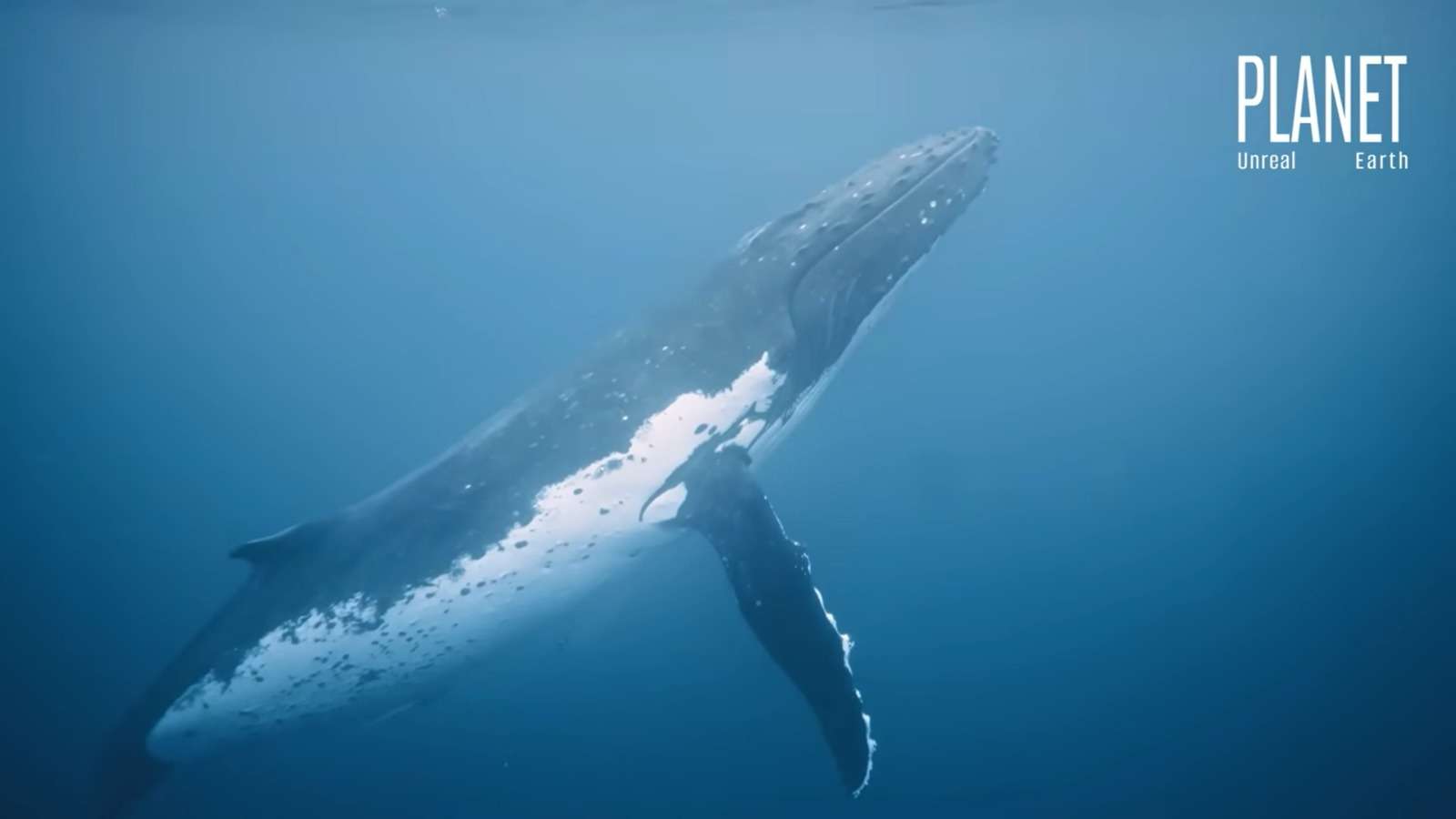
MARITIMEPOSTS.COM – The ocean is a realm without borders—a vast, shifting expanse where sunlight eventually surrenders to a crushing, absolute dark. It is a kingdom written in silence and saltwater, home to the greatest leviathans to ever draw breath on Earth.
Beneath the waves, these giants move with a presence that commands both reverence and humility, reminding us of our own fragility in the face of the deep.
For centuries, these titans have navigated the liquid weight of the abyss, their stories hidden in migrations that span entire hemispheres.
How does a creature the size of a city block thrive in a world of extreme pressure and eternal night? From the sunlit tropics, where starlight seems to scatter across the skin of gentle wanderers, to the fractured glaciers of the Antarctic, we are only beginning to translate the ocean’s ancient language.
To witness them is a privilege; to understand them is to glimpse the very history of our planet.
The Great Dietary Paradox: Architecture Sustained by the Invisible
In one of nature’s most staggering contradictions, the largest biological structures on Earth are fueled by the ocean’s most microscopic inhabitants. This “dietary paradox” defines the lives of the Antarctic Blue Whale and the Whale Shark.
The Blue Whale—a 180-ton monument with a heart the size of a small car and a tongue as heavy as an elephant—exists almost exclusively on tiny, translucent krill.
Similarly, the Whale Shark, the largest fish in the sea stretching 12 meters in length, is not a predator of teeth, but a languid cruiser of the tropics, sifting plankton through colossal gill rakers.
“When the ice recedes and the waters bloom, the leviathan opens its maw to nature’s strangest contradiction: During feeding season, a single blue whale can consume up to four tons of krill in a day, filtering them through its baleen plates with each monumental gulp of seawater.”
This absolute reliance on the smallest organisms creates a precarious “trophic cascade.” Because these giants anchor their survival to the base of the food web, they are uniquely vulnerable to a changing climate.
As warming seas shift the fate of Antarctic krill, the heaviest rungs of the ecological ladder are the first to feel the tremors.
Matriarchs and Choreography: The Sophisticated Culture of the Pod
The Orca, or Killer Whale, represents the pinnacle of marine cognitive complexity. Though they are the largest members of the dolphin family—reaching nine meters in length—their true power lies in their social architecture. These pods are often led by a wise matriarch who passes down “dialects” and distinct calls unique to her family line. Orcas do not merely hunt; they perform. Their success is rooted in a refined choreography of generational traditions:
- Ice-Wave Engineering: Pods coordinate their swimming to create synchronized wakes, washing seals off drifting ice floes with mathematical precision.
- Bait-Ball Corralling: Working as a single unit to drive schools of fish into dense spheres for efficient, tactical feeding.
- The Pursuit of Giants: Using endurance and strategy to take down even the swiftest minke whales or calves of the great baleen species.
These “storytellers of the deep” prove that intelligence is a social currency, where survival is governed by memory and shared culture.
Titans of the Abyss: Mastering Deep-Sea Physics
Surviving the crushing embrace of the Hadal zone requires biological engineering that defies human technology. The Sperm Whale is the master of this realm, plunging 2,000 meters into the “midnight zone” to battle giant squid. Its massive head, comprising one-third of its body, houses the largest brain in the animal kingdom and the enigmatic “spermaceti organ.”
By regulating the temperature of the oil within this organ, the whale can shift its density to control buoyancy, while simultaneously using it to focus sound.
“The abyss is not silent; it pulses with the mechanical precision of a titan’s sonar. With clicks louder than a jet engine, these whales can map the darkness of the deep, detecting prey hundreds of meters away.”
In a display of evolutionary mastery, the Great White Shark employs “countershading”—a pale underbelly and steel-gray back—to vanish against the light from below and the dark from above.
While the Sperm Whale dominates through sheer pressure-resistance and acoustic power, the 30-centimeter Giant Amphipod survives at even deeper extremes, thriving in freezing, lightless trenches where the pressure would liquefy most other life forms.
Sentience Without a Spine: Solitude vs. Sociality
In the ocean, intelligence is a diverse evolutionary tool rather than a human-like trait. We see this in the sharp contrast between the Octopus and the Manta Ray. The Octopus is a utilitarian genius of solitude. With its regenerative limbs and the ability to mimic the texture of its surroundings, it uses its problem-solving skills to navigate mazes and use tools—an intelligence geared toward camouflage and survival.
Conversely, the Manta Ray, possessing the largest brain of any fish relative to its body, displays a social and curious sentience. Mantas often approach divers with a “knowing” gaze, their movements a form of poetry written in currents. Their thunderous leaps from the water remain a mystery—perhaps a ritual of communication or a display of vitality. While the Octopus uses its mind to hide, the Manta uses its large brain to explore, proving that awareness in the sea is as varied as the currents themselves.
The Minimalist Giant: The Ghostly Scale of the Lion’s Mane
The Lion’s Mane Jellyfish is a creature of mythic scale, possessing tentacles that stretch over 30 meters—longer than even the Antarctic Blue Whale. Often called a “living net,” this “ghostly giant” dominates its environment not through strength, but through a strategy of minimalism.
Consisting of 95% water, it is a paradox of fragility and lethality. It does not chase its prey; it surrenders to the currents, trailing a “fiery crown” of crimson filaments that ensnare anything in their path. Its existence is a lesson in passive power, showing that a creature can command the northern depths simply by being an extension of the ocean itself.
The Illusion of Invincibility
Despite their ancient lineages, these giants face an uncertain future. They are timeless yet increasingly vulnerable to the rapid pace of human-driven change. We must confront the “Four Horsemen” of the modern ocean:
- Noise Pollution: The mechanical roar of industry that shatters the echolocation and low-frequency songs of the great whales.
- Climate Change: The shifting of polar currents that threatens the krill and plankton sustaining the largest species.
- Over-fishing and By-catch: The depletion of the ocean’s resources and the accidental entanglement of rays and cetaceans.
- The Shark Fin Trade: The targeted destruction of apex predators like the Great White, which maintains the health of the entire food web.
Protecting these beings is a duty to the planet’s history. As guardians of the ocean’s mysteries, their decline warns us of the broader health of our world.
Conclusion: A Message from the Silence
The giants of the deep remind us that power in the ocean does not always roar; sometimes, it simply glides. From the resonant vibrations of the Blue Whale to the silent, winged flight of the Manta Ray, these creatures embody a balance of strength and grace that we have yet to master. They are the pulse of the wild, keepers of a balance that stretches across the globe.
In a world where the largest fish lives on the smallest food, can we find a way to live with the same grace? The answer lies in our willingness to safeguard the ocean’s quiet soul before its greatest voices fade forever into the deep.