

This cooperation is not only oriented toward academic outputs, but also toward generating lessons learned in the integrated management of mangrove areas and aquaculture. The model produced from this pilot project is expected to be replicated across various coastal regions in Indonesia.
Prof. Jamaluddin Jompa
maritimeposts.com/ – The commitment to strengthening collaboration in sustainable marine research was once again reaffirmed by Universitas Hasanuddin through the reception of a visit from Kazuhiko Koike, Vice President (International Exchange/Japanese Language Education) and Director of the Morito Institute of Global Higher Education.
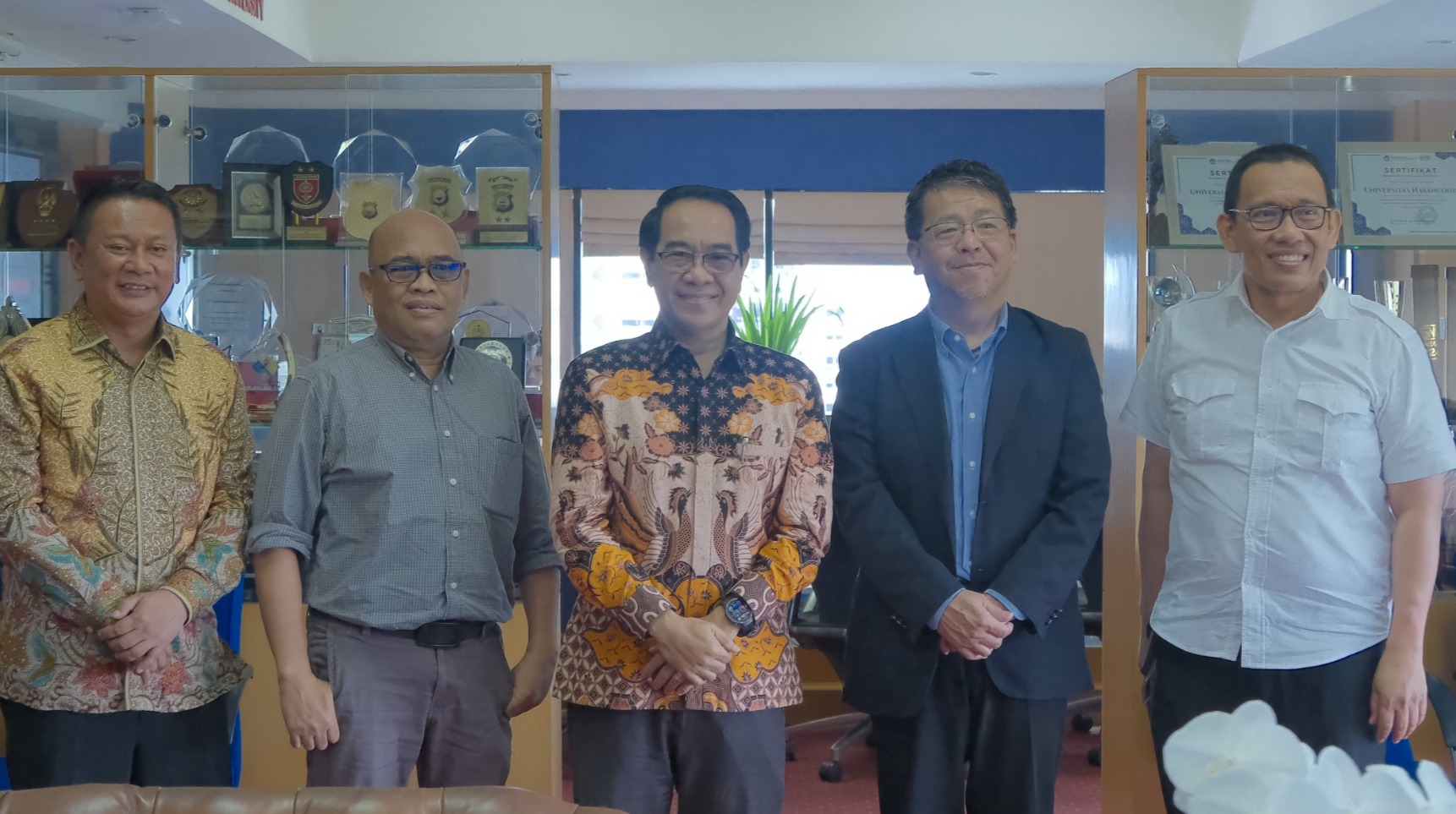
The delegation from Hiroshima University was officially received by the Rector of Unhas, Jamaluddin Jompa, at the Rector’s Office, 8th Floor of the Unhas Rectorate Building, Tamalanrea Campus, Makassar, on Wednesday (18/02).
The strategic meeting discussed the development of a collaborative Mangrove Restoration and Aquaculture project as a model for science- and innovation-based coastal management.
The program is designed to integrate mangrove ecosystem restoration approaches with environmentally friendly, productive aquaculture systems.
On the occasion, Prof. JJ emphasized that mangrove restoration and aquaculture are strategic sectors closely aligned with Indonesia’s character as an archipelagic nation.
According to him, this collaboration can drive impact-oriented research that delivers direct benefits to both communities and the environment.
Furthermore, Prof. JJ outlined several concrete steps undertaken by Unhas to strengthen the marine and fisheries sector.
One of these initiatives is the development of ice production facilities on Barrang Lompo Island to maintain the quality of fishermen’s catches. This initiative aims to produce fresher fish, increase market value, and enhance the welfare of coastal communities through science- and technology-based interventions.
“This cooperation is not only oriented toward academic outputs, but also toward generating lessons learned in the integrated management of mangrove areas and aquaculture. The model produced from this pilot project is expected to be replicated across various coastal regions in Indonesia,” explained Prof. JJ.
He also underscored the importance of developing double degree programs as part of accelerating campus internationalization. In the context of collaboration with Hiroshima University, Unhas opens opportunities to utilize funding support from Lembaga Pengelola Dana Pendidikan (LPDP) to expand student access to globally standardized education.
On the same occasion, Kazuhiko Koike stated that Hiroshima University has a strong commitment to advancing sustainable marine and fisheries sciences.
He emphasized the importance of integrating Japan’s experience in coastal management with the resource potential and research excellence possessed by Unhas.
“This collaboration is expected not only to produce sustainable mangrove restoration models, but also to deliver tangible impacts on strengthening the marine and fisheries sector. We believe that, with the quality of Unhas researchers, science- and innovation-based coastal management can be optimally realized,” Prof. Koike explained.
As a follow-up, the two institutions are designing a three-year pilot project to be implemented at Unhas-owned ponds in Barru Regency.
The site is projected to serve as a field laboratory to test the integration of mangrove rehabilitation systems with productive aquaculture that is adaptive to climate change.
In its implementation, Unhas has appointed the Shrimp Tech Research Collaboration Center as the lead institution responsible for coordinating program execution. This research center will play a key role in developing sustainable pond models, mangrove ecosystem rehabilitation, and the integration of science-based aquaculture technologies.
Beyond applied research, the collaboration also includes student exchange programs and the development of startup innovation programs in the fields of mangroves and aquaculture.
This academic collaboration is expected to strengthen knowledge and technology transfer while opening opportunities for double degree schemes.
From a policy perspective, the project also targets the formulation of policy recommendations based on field research findings. These recommendations are expected to serve as references for managing mangrove areas and aquaculture ponds productively without compromising ecosystem balance.
The visit of Prof. Kazuhiko Koike marks a significant strengthening of international collaboration between Unhas and Hiroshima University in building sustainable coastal management models.
Through synergy in research, education, and innovation, both institutions are expected to make tangible contributions to strengthening the blue economy and the resilience of Indonesia’s coastal ecosystems.
The event concluded with a joint discussion attended by the Vice Rector for Partnerships, Innovation, Entrepreneurship, and Business (Prof. Dr. Eng. Adi Maulana, S.T., M.Phil), the Head of LPPM (Prof. dr. Muh. Nasrum Massi, Ph.D., Sp.MK(K)), and the Head of the Research Team (Prof. Dr. Ir. Iqbal Djawad, M.Sc.). (* /mir*)