

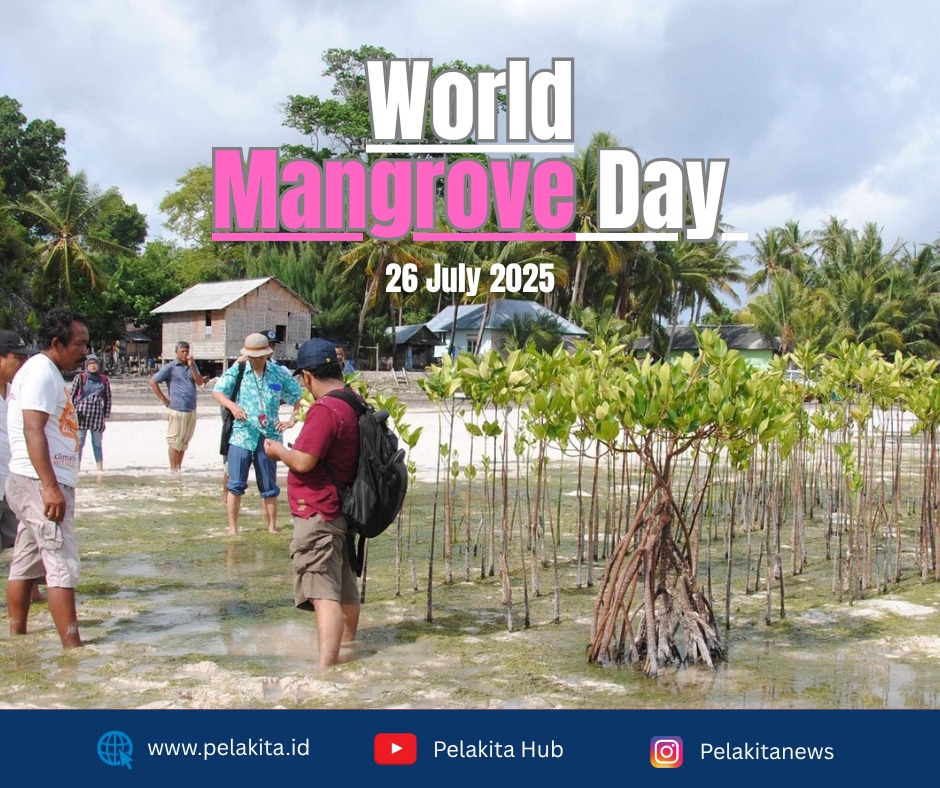
World Mangrove Day 2025: Safeguarding Coastal Guardians for the Future
maritimeposts.com/ – Every July 26, the world commemorates the International Day for the Conservation of the Mangrove Ecosystem, or World Mangrove Day. Established by UNESCO in 2015, the observance highlights the crucial role of mangroves in protecting coastlines, storing carbon, and supporting biodiversity.
Although they occupy less than one percent of tropical forests, mangroves can store three to four times more carbon per hectare than rainforests.
They also serve as nurseries for countless fish species and as natural barriers against erosion and storms. Yet, despite their immense value, mangroves are disappearing at an alarming rate, largely due to aquaculture, agriculture, and coastal development.
Today, half of the world’s mangrove provinces are considered threatened, with many at risk of collapse within decades if urgent action is not taken.
Several countries play an outsized role in global mangrove conservation. Indonesia is home to the world’s largest mangrove area, covering around 3.36 million hectares, or nearly a quarter of the global total.
Brazil follows with about 1.1 million hectares, while Tanzania has around 110,000 hectares, much of it in the Rufiji Delta. These ecosystems are vital for fisheries, biodiversity, and climate regulation, yet all three countries face mounting pressures from land conversion, resource extraction, and unsustainable development.
Their experiences reflect both the urgency of the crisis and the opportunity to lead global restoration efforts.
Encouragingly, mangrove restoration is gaining momentum. Indonesia has set ambitious targets to rehabilitate 600,000 hectares, including Gold Standard–certified projects that link conservation with poverty reduction and women’s empowerment. Brazil is working to protect critical mangrove regions in Amapá and Bahia, while Tanzania is finalizing a National Mangrove Strategy to expand restoration beyond the Rufiji Delta.
Many successful initiatives center on community-based management, empowering local people—especially women—to lead restoration, monitoring, and sustainable livelihood programs. Tools such as Global Mangrove Watch provide vital data to track changes and measure the success of interventions.
The future of mangroves depends on scaling up these efforts through strong policies, effective monitoring, and innovative financing, including carbon markets and blue-economy investments.
By aligning global commitments with local stewardship, countries like Indonesia, Brazil, and Tanzania can show that conserving mangroves is not merely an environmental duty but a pathway to protect livelihoods, biodiversity, and climate stability.
World Mangrove Day 2025 is therefore more than a symbolic event—it is a call to action to safeguard these coastal guardians for generations to come.
Sorowako, 30 July 2025