

By Achmad Yasir Baeda (Dr.Eng.)
Ocean Engineering Laboratory, Universitas Hasanuddin___
Presented at The 3rd International Conference on Research in Engineering and Science Technology 2025 (IC-REST 2025) – CSA Building, Gowa Campus of Engineering, Universitas Hasanuddin
Wednesday, August 27th, 2025
maritimeposts.com/ – El Niño is one of the most influential climate phenomena shaping weather and environmental conditions around the globe. Indonesia, being located in the tropics and heavily reliant on agriculture and fisheries, is particularly vulnerable to its impacts.
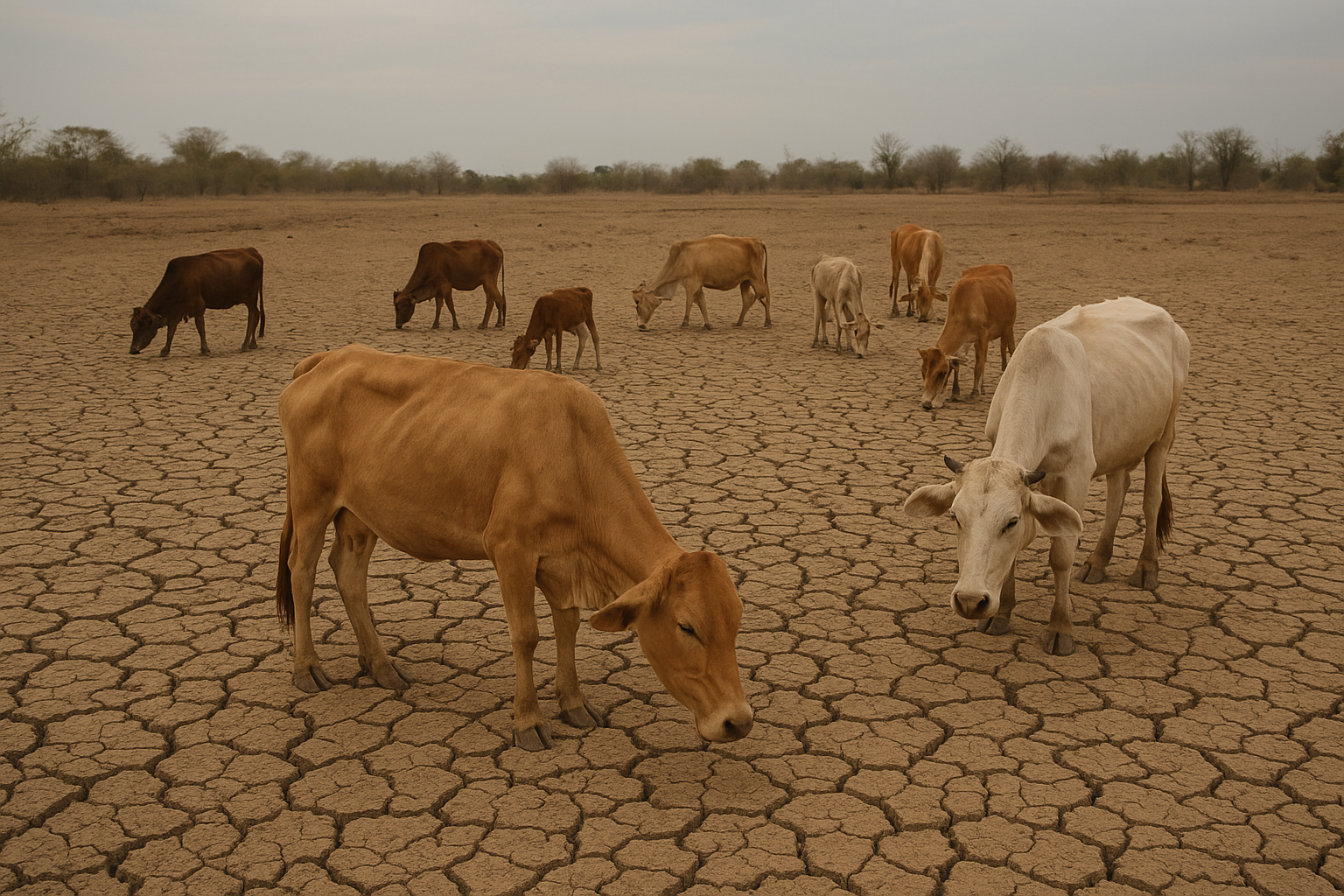
Among the most pressing challenges is livestock feed security, as El Niño-induced droughts and extreme weather conditions threaten forage availability, crop yields, and ultimately food security.
This paper provides a structured overview of El Niño: its definition, characteristics, impacts, and specifically its relation to livestock feed security in Indonesia. It also explores mitigation strategies to strengthen resilience and improve quality of life in the face of this immutable climate shift.
Definition and Historical Context
Definition
El Niño refers to the abnormal warming of sea surface temperatures in the tropical Pacific Ocean, typically occurring every two to seven years. This warming alters rainfall patterns, wind circulation, and ocean currents, often triggering extreme weather across continents.
The Niño 3.4 Index is the primary indicator used to declare an El Niño event, measured as the average sea surface temperature anomaly in the region (5°N–5°S, 120°W–170°W). A three-month running average anomaly above +0.65°C for at least five consecutive months officially signals the onset of El Niño.
Historical Findings
On June 8, 2023, the National Oceanic and Atmospheric Administration (NOAA) declared the presence of El Niño conditions, indicating that 2023–2024 would once again be an El Niño period. The last major El Niño in 2015–2016 was one of the most severe in history:
-
Globally, 60 million people were affected.
-
Southeast Asia lost 15 million tonnes of rice production compared to the previous two years.
-
In Vietnam, drought and saltwater intrusion into the Mekong Delta caused losses of US$674 million (0.35% of GDP).
-
In the Philippines, nearly 200,000 rice and corn farmers suffered losses, sparking social unrest and an 11% decline in production.
-
Across the region, El Niño intensified wildfires, haze, and reservoir depletion.
The 2023–2024 event, compounded by unprecedented ocean warming since early 2023, is projected to cause even more severe food production shortfalls, possibly surpassing those of 2015–2016.
Characteristics of El Niño
El Niño is part of the El Niño–Southern Oscillation (ENSO), a recurring climate pattern marked by shifts in sea surface temperature, sea-level pressure, winds, and tropical rainfall across the Pacific basin.
ENSO Index
The Oceanic Niño Index (ONI) uses a three-month running average of sea surface temperatures in the Niño 3.4 region, compared against a 30-year baseline (1986–present). This index helps classify El Niño and La Niña events by their strength and duration.
Interactions with Other Phenomena
-
Indian Ocean Dipole (IOD): In 2023, a positive IOD was observed, with the index reaching +1.69°C by October—its seventh consecutive week above threshold levels. Such conditions typically intensify El Niño’s drought effects in Indonesia.
-
Madden-Julian Oscillation (MJO): A weak MJO pulse during late 2023 further reduced tropical cyclone activity in the Indian Ocean, amplifying drought conditions across Southeast Asia.
Impacts of El Niño
Global and Regional Climate
-
Strong El Niño events typically persist for 9–12 months.
-
In 2023–2024, El Niño is projected to peak between November 2023 and January 2024, with a 90% chance of lasting until April 2024.
-
The result is rising global land and sea temperatures, shifting rainfall patterns, and increased extreme weather events.
Ecosystems and Human Communities
-
Positive impacts: Certain regions, such as the southern United States, experience higher rainfall, which can benefit water resources.
-
Negative impacts: Southeast Asia suffers droughts, wildfires, reduced fisheries productivity, and agricultural losses.
Food Production
Food security is particularly vulnerable. During the 1997–1998 and 2015–2016 El Niño events, Southeast Asia saw:
-
Declines in rice and livestock productivity.
-
A 16% global rice price surge due to reduced supply.
-
Severe stress on smallholder farmers and food-dependent rural populations.
For Indonesia, livestock feed security is a critical concern. Drought reduces the availability of natural forage and water, forcing farmers to rely on expensive feed alternatives. This increases production costs, threatens animal health, and reduces the overall resilience of the livestock sector.
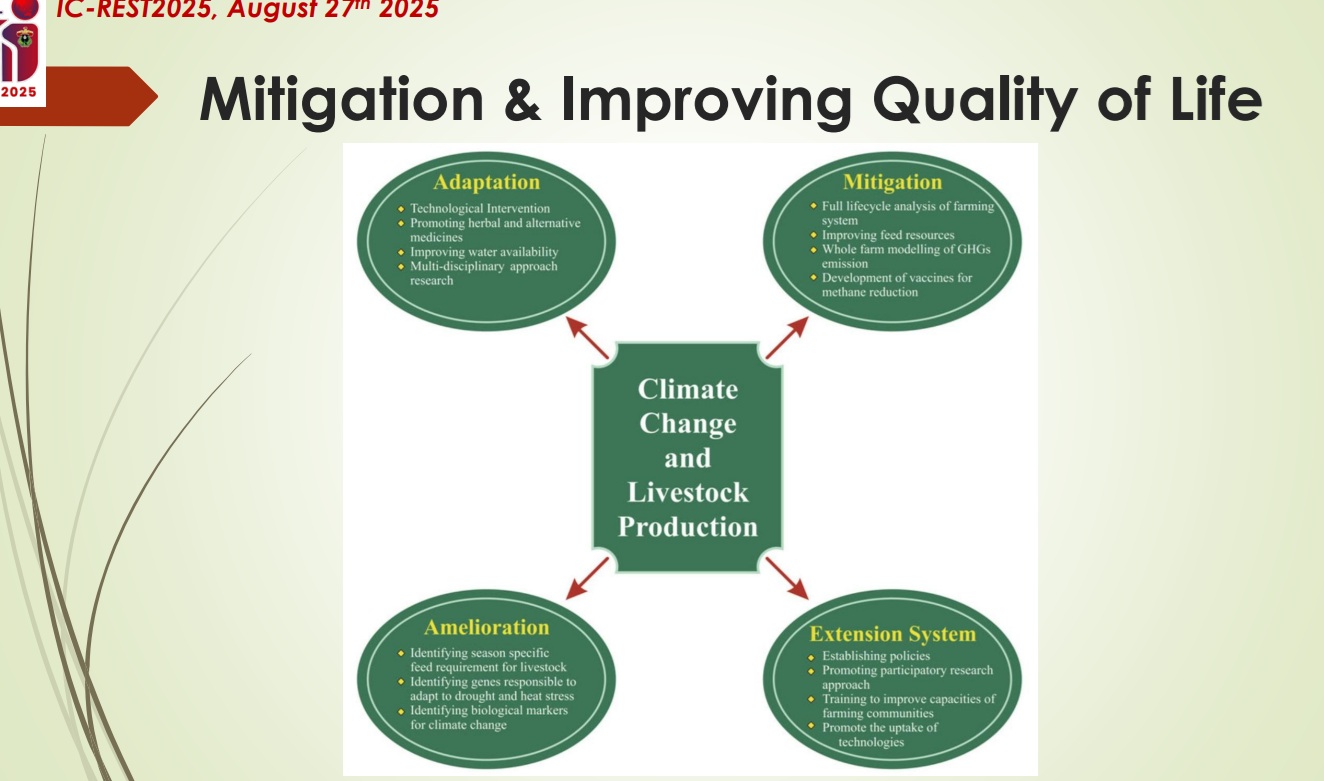
Mitigation and Pathways to Improve Quality of Life
Addressing El Niño impacts requires integrated mitigation strategies combining science, technology, and community resilience:
-
Climate-Smart Agriculture
-
Promote drought-tolerant crops and fodder varieties.
-
Expand water harvesting, efficient irrigation, and soil moisture conservation practices.
-
-
Feed Security Systems
-
Develop feed reserves and silage systems to buffer against forage shortages.
-
Encourage the use of alternative feed resources (agricultural by-products, seaweed-based feed, etc.).
-
-
Early Warning and Forecasting
-
Strengthen El Niño monitoring using ENSO indices, IOD, and MJO analysis.
-
Provide timely advisories to farmers through government extension and digital platforms.
-
-
Community-Based Adaptation
-
Foster farmer cooperatives to share feed, water, and risk management strategies.
-
Support local feed banks and farmer-led insurance systems.
-
-
Policy and Research
-
Integrate El Niño risk into national food security policies.
-
Support continuous research from institutions like Universitas Hasanuddin’s Ocean Engineering Laboratory to provide data-driven solutions.
-
Conclusion
El Niño is not a new phenomenon, yet its impacts are becoming more severe in a warming world. Indonesia’s vulnerability lies in its dependence on climate-sensitive sectors such as agriculture, fisheries, and livestock.
As the 2023–2024 El Niño unfolds, proactive mitigation—especially in securing livestock feed—will be essential to reduce risks and safeguard livelihoods.
By combining scientific monitoring, resilient agricultural practices, and strong community engagement, Indonesia can not only withstand El Niño’s challenges but also transform them into opportunities for building a more adaptive and sustainable future.