

Esteva’s critique is not limited to Latin America; it resonates strongly with Indonesia’s history and present. Since independence in 1945, Indonesia has also been shaped by the promises and pitfalls of development.
He argued that development is not a universal human aspiration, but rather a Western invention that emerged after World War II. The turning point came in 1949, when U.S. President Harry Truman declared vast parts of the world “underdeveloped.”
PELAKITA,ID – When we speak of development today, it often sounds like an unquestionable good: roads, schools, hospitals, industry, technology, and “progress.”
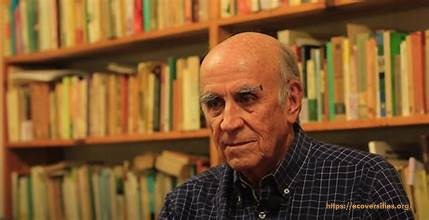
Yet, for Mexican thinker and activist Gustavo Esteva (1936–2022), the very idea of development is not neutral. It is a concept born out of Western history, carrying with it assumptions that may not suit every society.
His ideas, particularly from the post-development school, offer fresh lenses through which to reflect on Indonesia’s own struggles with growth, modernization, and cultural survival.
Esteva and the Critique of Development
Esteva rose to prominence with his essay “Development” in Wolfgang Sachs’ influential book The Development Dictionary (1992).
In that piece, he argued that development is not a universal human aspiration, but rather a Western invention that emerged after World War II. The turning point came in 1949, when U.S. President Harry Truman declared vast parts of the world “underdeveloped.”
Suddenly, billions of people were placed on a ladder of progress, with the West on top and the rest of the world expected to “catch up.”
For Esteva, this framework was problematic. It created dependency, erased cultural plurality, and measured success only through Western standards of industrialization and economic growth. In his view, development became a justification for intervention, often at the cost of local knowledge and community autonomy.
Instead of aspiring to become “developed,” Esteva called for embracing alternatives to development: ways of living rooted in local traditions, communal practices, and ecological balance.
He engaged with indigenous movements in Mexico, supported experiments in grassroots education like the Universidad de la Tierra in Oaxaca, and championed ideas like Buen Vivir (living well) as viable paths beyond the Western paradigm.
Resonance with the Indonesian Context
Esteva’s critique is not limited to Latin America; it resonates strongly with Indonesia’s history and present. Since independence in 1945, Indonesia has also been shaped by the promises and pitfalls of development.
-
The Truman Moment in Indonesia: Indonesia was among the countries implicitly labeled “underdeveloped” by Truman’s 1949 speech. From then on, “development” (pembangunan) became a guiding mantra of state policy, especially during the New Order era (1966–1998). President Soeharto’s regime equated development with economic growth, modernization, and stability, often sidelining local voices and indigenous systems of knowledge.
-
Top-Down vs. Local Autonomy: Large-scale projects, from the Green Revolution in agriculture to infrastructure megaprojects, reflected the Western-inspired model Esteva critiqued. While these brought measurable gains in rice production, electrification, or connectivity, they also produced new vulnerabilities: loss of biodiversity, marginalization of small farmers and fishers, and weakening of community self-reliance.
-
Echoes of Esteva’s Alternatives: Many Indonesian communities, particularly in rural and indigenous areas, have long practiced forms of life outside the mainstream development model. The adat (customary) systems of resource management—such as sasi in Maluku for marine conservation, or communal irrigation systems (subak) in Bali—are examples of autonomous, locally rooted ways of “living well.” These echo Esteva’s call for valuing diversity and self-determination.
-
Post-Development in Practice: Recent Indonesian experiments in community-based resource management, social forestry, eco-tourism, and cooperative economies also resonate with Esteva’s vision. They challenge the idea that there is a single path toward modernity, and instead celebrate multiple ways of achieving dignity and sustainability. The growth of indigenous movements and NGOs advocating for rights over land, forests, and seas shows that alternatives to development are alive in Indonesia.
Rethinking Development
Esteva’s legacy pushes us to ask difficult but necessary questions: Should Indonesia measure its success only through GDP growth, infrastructure projects, and foreign investment? Or should it also recognize and strengthen local forms of knowledge, economy, and governance that have sustained communities for centuries?
In the Indonesian context, post-development thinking does not mean rejecting all forms of modernization. Rather, it means putting people, culture, and ecology first—ensuring that development does not erode but enhances community autonomy. As Esteva would remind us, there are many ways to live well, and no single model should dominate.
Conclusion
Gustavo Esteva’s work offers Indonesians a mirror to reflect on their own developmental journey. Just as he argued in Mexico, the challenge here is to resist being trapped in a narrative of “catching up” to the West and instead to value the rich tapestry of local ways of life. By embracing diversity and supporting grassroots initiatives, Indonesia can carve out its own path—one that is not about becoming “developed” but about becoming more fully itself.
Source: Internet/Books/Unhas